



The pharmaceutical industry is undergoing its most profound transformation since the advent of high-throughput screening. Generative artificial intelligence — once a novelty for creating images and text — has become the cornerstone of modern drug discovery, slashing development timelines from decades to months and opening therapeutic avenues previously considered impossible.
The New Paradigm: From Trial and Error to Intelligent Design
For decades, drug discovery relied on a laborious trial-and-error process. Scientists would screen millions of compounds hoping to find a promising candidate — a method akin to finding a needle in a haystack. Generative AI has flipped this model entirely. Instead of searching existing chemical space, AI models now create entirely new molecules optimized for specific therapeutic targets.
At the heart of this revolution are generative models such as variational autoencoders (VAEs), generative adversarial networks (GANs), and most recently, diffusion models adapted from image generation. These models learn the underlying grammar of molecular structures — the rules that govern atomic bonding, three-dimensional conformation, and chemical stability — and then generate novel compounds that satisfy desired drug-like properties.
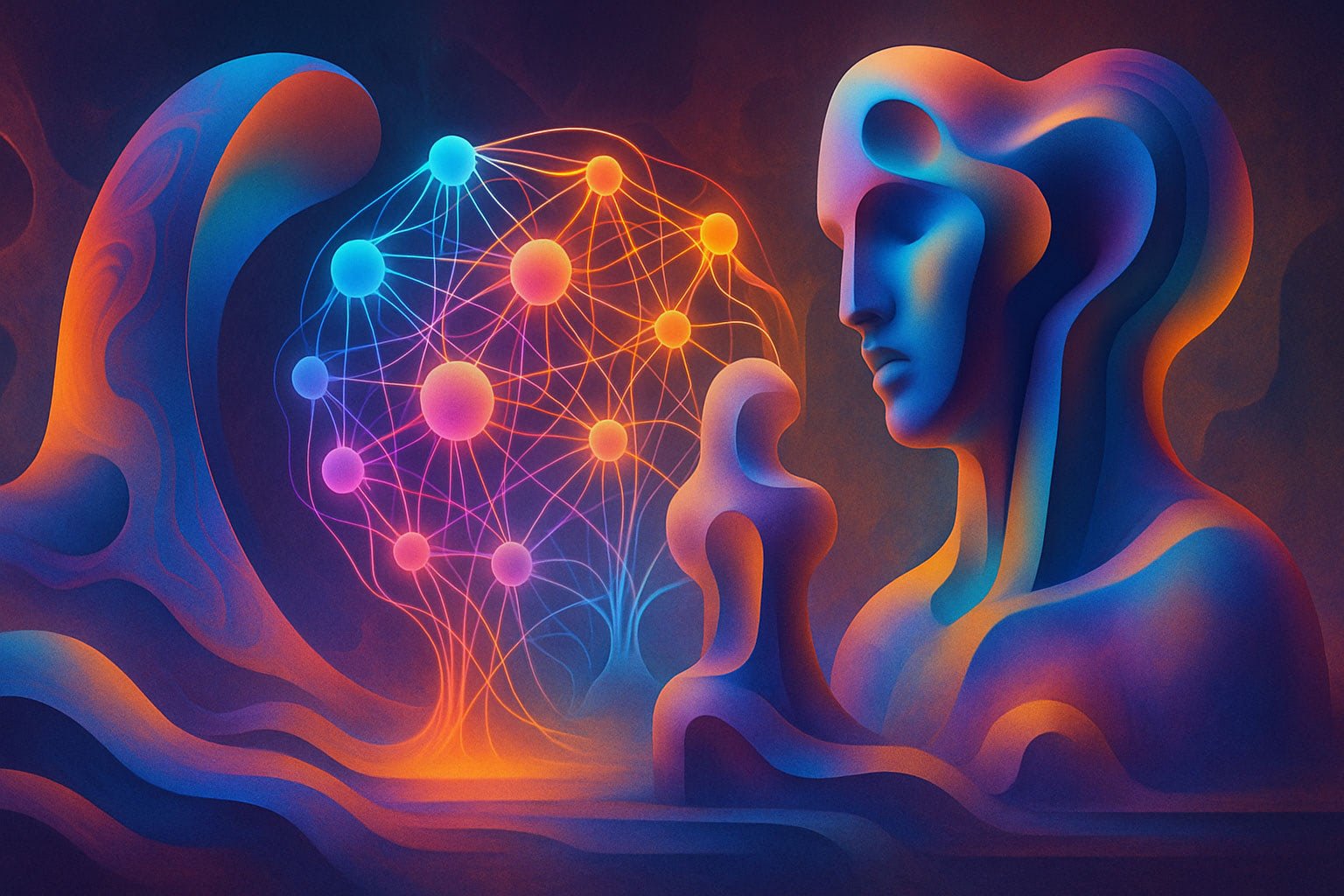
DeepMind’s AlphaFold, now in its third generation, represents perhaps the most celebrated breakthrough. By predicting protein structures with near-experimental accuracy, AlphaFold has unlocked the three-dimensional shapes of over 200 million proteins — a discovery that would have taken centuries using traditional methods. Pharmaceutical researchers now feed these predicted structures into generative AI pipelines that design molecules to fit precisely into protein binding pockets.
Reinforcement learning adds another dimension of intelligence. After a generative model proposes a candidate molecule, reinforcement learning algorithms optimize it for properties like solubility, toxicity, metabolic stability, and synthetic feasibility. This iterative refinement loop — generate, predict, optimize, repeat — can produce viable drug candidates in weeks rather than years. Companies like NVIDIA have built dedicated platforms such as BioNeMo that integrate these capabilities into end-to-end drug discovery workflows.
Real-World Impact: Drugs Designed by AI Entering Human Trials
The promise of generative AI in pharma is no longer theoretical. A growing number of AI-discovered molecules have entered clinical trials, demonstrating that computer-generated drugs can safely modulate biological targets in humans.
Insilico Medicine leads the pack with its AI-discovered drug for idiopathic pulmonary fibrosis (IPF), which became the first AI-discovered and AI-designed molecule to enter Phase II clinical trials. The company used its end-to-end AI platform, Pharma.ai, to identify a novel target and generate a candidate molecule in just 18 months — a process that traditionally takes four to six years. Early clinical data has shown promising safety and efficacy signals, validating the AI-driven approach.

Recursion Pharmaceuticals has taken a different but equally compelling approach. By combining high-content cellular imaging with generative AI models, Recursion screens thousands of phenotypes simultaneously and uses the resulting data to train models that predict drug efficacy across hundreds of diseases. Their platform has generated multiple clinical-stage candidates, including programs for cerebral cavernous malformations and familial adenomatous polyposis.
Major pharmaceutical companies are not sitting on the sidelines. Novartis has partnered with Microsoft’s AI for Health initiative and Isomorphic Labs to deploy generative chemistry across its therapeutic areas. Roche established a multi-year collaboration with Recursion, committing billions of dollars to access AI-driven drug discovery capabilities. Pfizer has integrated generative AI into its vaccine development pipeline, including the rapid optimization of mRNA sequences for pandemic preparedness. Sanofi, Bristol Myers Squibb, and Bayer have all announced significant AI partnerships, collectively representing over $20 billion in AI-related pharma R&D commitments.
Beyond Small Molecules: Generative AI for Biologics and Personalized Medicine
While much of the early focus has been on small molecule drugs, generative AI is now making transformative contributions to biologics — the complex protein-based therapies that represent the fastest-growing segment of the pharmaceutical market.
Antibody design has been revolutionized by generative models that can propose novel antibody sequences targeting specific antigens with high affinity and low immunogenicity. Companies like Absci and BigHat Biosciences use deep learning to generate millions of antibody variants in silico, then validate the top candidates experimentally. Absci’s generative AI platform successfully created de novo antibodies against multiple therapeutic targets, including HER2 and TNF-alpha, in a fraction of the time required by traditional hybridoma or phage display methods.
Personalized medicine is perhaps the most exciting frontier. Generative AI enables the design of custom cancer vaccines tailored to an individual patient’s tumor mutational profile. Moderna and BioNTech, building on their mRNA platform successes, now use generative algorithms to predict which neoantigens will elicit the strongest immune response and design mRNA sequences encoding those targets. Early clinical trials of personalised cancer vaccines have shown remarkable results, with some melanoma patients achieving complete remission.
Enzyme engineering for industrial and therapeutic applications has also been transformed. Generative models can design enzymes with novel catalytic activities, optimized stability, and altered substrate specificity — capabilities that are accelerating the development of new biologic drugs, biosensors, and sustainable manufacturing processes.
Challenges and the Road Ahead
Despite the extraordinary progress, significant challenges remain before generative AI becomes the universal standard in drug discovery. Data quality remains a persistent bottleneck — AI models are only as good as the training data they receive, and pharmaceutical datasets are often noisy, incomplete, or biased toward well-studied target classes. The “black box” problem of deep learning also creates regulatory hurdles; regulators including the FDA and EMA require interpretable evidence of why a particular molecule was chosen, which current generative models struggle to provide.
Clinical validation is the ultimate test, and many AI-discovered candidates have yet to prove they can successfully navigate the full regulatory pathway from Phase I through approval. The integration of AI tools into existing pharmaceutical workflows also presents cultural and operational challenges — medicinal chemists and biologists who have worked with traditional methods for decades must learn to trust and collaborate with AI systems.
Interestingly, the same principles that drive generative AI in drug discovery are also transforming other areas of technology. For instance, just as AI models generate novel molecular structures by learning from vast chemical datasets, smart home systems powered by IoT and AI learn from behavioural data to automate and optimize everyday living environments. Both fields demonstrate how generative and predictive AI can create systems that are greater than the sum of their data.
Looking ahead, the convergence of generative AI with quantum computing, advanced robotics for automated synthesis, and real-world evidence from wearable devices promises to further accelerate the drug development cycle. By 2030, experts predict that AI-discovered drugs could account for over 30% of all new molecular entities entering clinical trials, fundamentally reshaping the pharmaceutical landscape and delivering hope to patients with diseases that currently have no effective treatments.