
Artificial intelligence is fundamentally transforming the landscape of education in 2026, moving beyond the era of one-size-fits-all instruction to deliver truly personalised learning experiences. From intelligent tutoring systems that adapt in real time to a student’s comprehension level, to AI-powered administrative tools that free teachers to focus on mentoring, the classroom of 2026 bears little resemblance to its predecessor. This article explores the key innovations driving this transformation, the challenges that remain, and what the future holds for learners and educators alike.
The Personalised Learning Revolution: How AI Tailors Education to Every Student
Personalised learning has been an educational ideal for decades, but until recently, it was practically impossible to deliver at scale. AI has changed that equation entirely. In 2026, adaptive learning platforms powered by large language models and machine learning algorithms can assess a student’s knowledge, learning style, and pace within minutes of their first interaction. These systems then dynamically adjust the curriculum, selecting appropriate materials, exercises, and assessments for each individual learner.
Platforms like Khan Academy’s AI tutor, Duolingo Max, and Carnegie Learning’s MATHia have evolved into sophisticated intelligent tutoring systems capable of natural-language conversation. Students can ask questions in plain English, receive explanations tailored to their grade level, and get instant feedback on their work. The AI doesn’t just mark answers right or wrong — it identifies the underlying misconception and addresses it directly.
Research published in the Journal of Educational Computing Research in early 2026 found that students using AI-powered personalised learning platforms showed an average improvement of 34% in standardised test scores compared to traditional instruction. More importantly, the gap between high-performing and struggling students narrowed by nearly 40%, suggesting that AI is particularly effective at helping those who have been left behind by conventional approaches.
Intelligent Tutoring Systems and AI Teaching Assistants in the Classroom
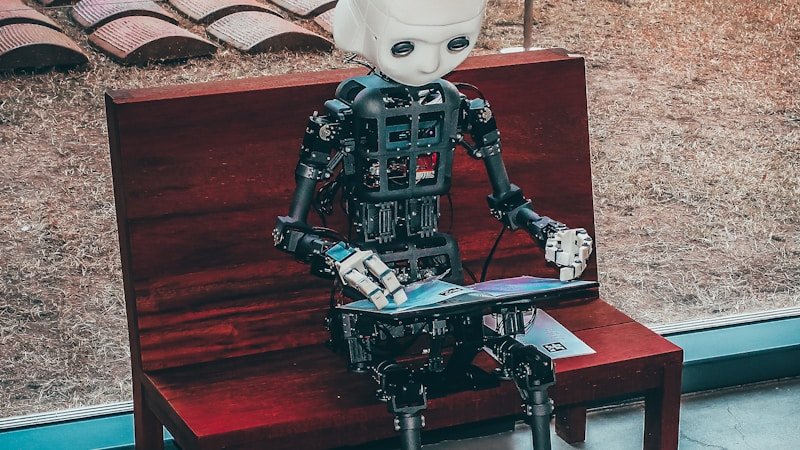
While some feared that AI would replace teachers, the reality in 2026 is quite the opposite. AI is augmenting teachers, handling the repetitive and time-consuming aspects of instruction so educators can focus on what they do best: mentoring, inspiring, and providing emotional support to their students. Intelligent tutoring systems now serve as always-available teaching assistants that never get tired, never lose patience, and can work with dozens of students simultaneously.
In classrooms across the United States, United Kingdom, and Singapore, AI teaching assistants are becoming standard tools. These systems can grade written assignments with near-human accuracy, provide detailed feedback on essays within seconds, and flag students who are struggling before they fall too far behind. Teachers report spending 40% less time on grading and administrative work, allowing them to dedicate more time to lesson planning and individual student support.
One notable example is the AI Tutor programme deployed in 3,000 public schools across India since January 2026. The system, developed in partnership between the Indian Institute of Technology and several ed-tech companies, provides personalised mathematics and science instruction to over 1.5 million students. Early results show a 28% improvement in pass rates for standardised exams, with particularly strong gains among girls and students from rural areas where access to quality teachers has historically been limited.
Key Applications Transforming Education Through AI
The application of AI in education in 2026 extends far beyond tutoring. Several key areas are experiencing transformative change:
- Automated Essay Scoring and Feedback: Natural language processing systems can now evaluate essays for structure, argumentation, grammar, and style, providing actionable feedback that helps students improve their writing skills incrementally over time.
- Language Learning and Translation: AI-powered language learning apps like Duolingo and Babbel use speech recognition and natural language generation to provide immersive conversational practice, while real-time translation tools are breaking down language barriers in multilingual classrooms.
- Special Education and Accessibility: AI tools are proving especially valuable for students with learning disabilities. Text-to-speech, speech-to-text, and predictive text technologies help students with dyslexia and other conditions participate fully in classroom activities.
- Early Intervention and Dropout Prevention: Predictive analytics models analyse student engagement data, attendance patterns, and academic performance to identify at-risk students months before traditional warning signs appear, enabling timely interventions.
- Curriculum Design and Content Creation: AI systems are helping teachers generate lesson plans, create custom worksheets, and develop assessment materials that align with curriculum standards, saving hours of preparation time each week.
Challenges and Ethical Considerations
Despite the tremendous potential, the integration of AI into education is not without its challenges. Data privacy remains a paramount concern, as AI systems require extensive data about students to function effectively. Questions about who owns this data, how it is protected, and whether it can be used for purposes beyond education remain hotly debated. Several US states and European countries have introduced legislation specifically governing the use of AI in educational settings, requiring parental consent and regular data audits.
There are also concerns about algorithmic bias. If AI systems are trained on historical data that reflects existing educational inequalities, they risk perpetuating or even amplifying those disparities. A 2025 study by the AI Now Institute found that several commercially available AI tutoring systems showed measurable performance differences across demographic groups, with students from minority backgrounds receiving less accurate assessments. Developers are working to address these issues through more diverse training data and regular bias audits.
The digital divide is another significant obstacle. While wealthy school districts are rapidly adopting AI-enhanced education, many underfunded schools lack the necessary infrastructure — reliable internet access, modern devices, and technical support staff — to implement these tools effectively. Closing this gap will require substantial investment from governments and the private sector.
The Future of AI in Education: What Lies Ahead
Looking ahead, the trajectory of AI in education points toward even deeper integration. By 2028, many experts predict that AI-powered lifelong learning platforms will become the norm, with workers continuously updating their skills through personalised AI learning pathways. Virtual reality classrooms powered by AI will enable immersive historical reenactments, scientific simulations, and collaborative projects with students from around the world.
Perhaps most exciting is the potential for AI to democratise access to quality education globally. With the cost of AI-powered learning platforms continuing to fall, students in developing countries will increasingly have access to instruction that rivals what is available in the wealthiest nations. Initiatives like UNESCO’s AI in Education programme and partnerships between tech companies and non-governmental organisations are already working toward this goal.
For readers interested in exploring related topics, our article on how AI agents are transforming enterprise automation in 2026 examines how similar AI technologies are reshaping the business world. The parallels between AI’s impact on education and its impact on industry are striking, with both sectors experiencing a fundamental shift toward personalisation, efficiency, and data-driven decision-making.
The AI revolution in education is not coming — it is already here. While challenges remain, the potential to create a more equitable, effective, and engaging educational experience for learners of all ages is unprecedented. As these technologies continue to evolve, the most successful educational systems will be those that embrace AI not as a replacement for human teachers, but as a powerful tool to enhance and extend their reach.