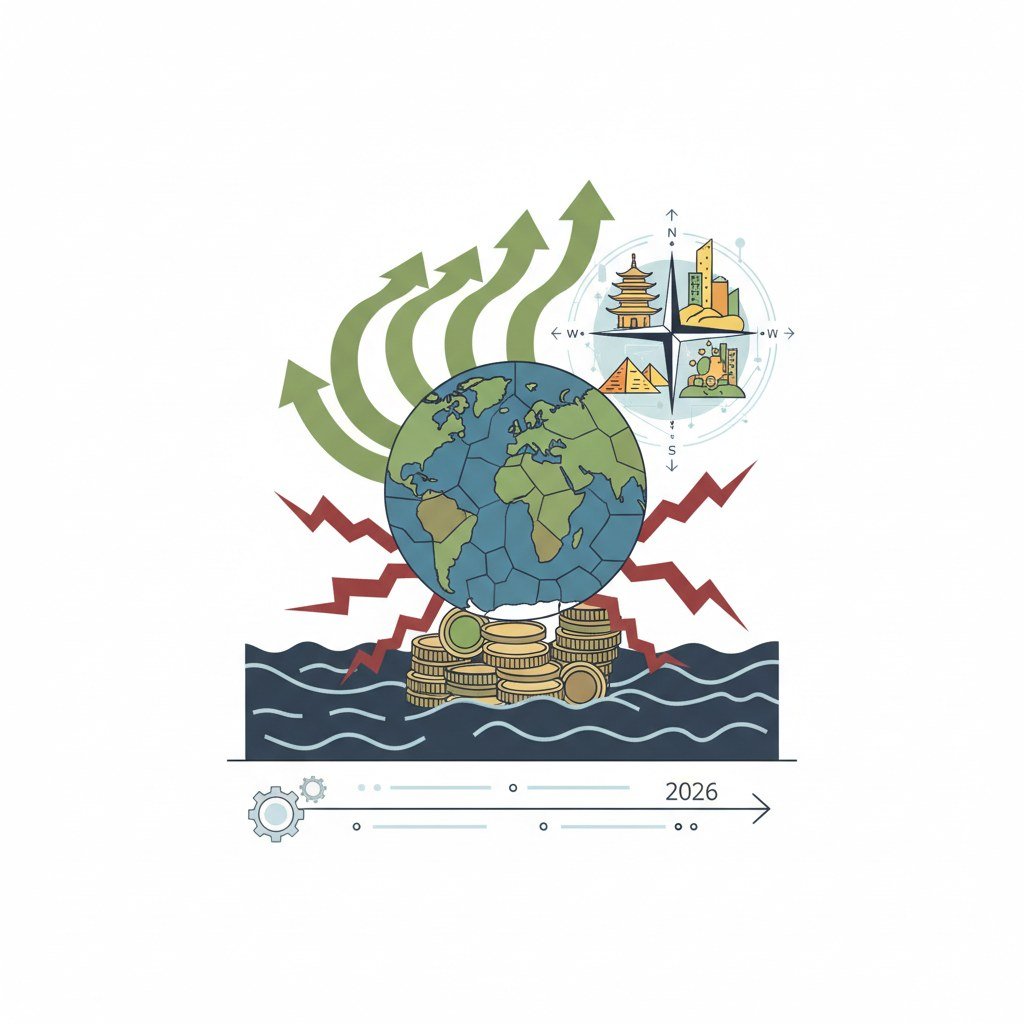
The global economy stands at a precarious crossroads in 2026, with emerging markets bearing the brunt of mounting debt pressures that threaten to reshape the international financial order. As developed nations grapple with their own fiscal challenges, developing economies face a perfect storm of rising borrowing costs, currency depreciation, and slowing growth that has pushed several nations to the brink of sovereign default.
The Scale of the Emerging Market Debt Challenge
According to the International Monetary Fund, total emerging market debt has surpassed $100 trillion for the first time in history, representing approximately 250 percent of combined GDP for these economies. This staggering figure masks significant variation between regions, with several Southeast Asian nations maintaining relatively healthy debt-to-GDP ratios while countries in Sub-Saharan Africa and Latin America face increasingly dire circumstances.
The debt servicing burden has become particularly acute as global interest rates remain elevated. The US Federal Reserve’s prolonged tightening cycle, combined with the European Central Bank’s hawkish stance, has pushed the cost of dollar-denominated debt to levels not seen since the early 2000s. For emerging markets that borrowed heavily in foreign currency during the era of ultra-low interest rates, the adjustment has been brutal.
“We are witnessing the most severe debt crisis in emerging markets since the 1980s,” explains Dr. Maria Santos, chief economist at the Institute for International Finance. “The difference this time is the sheer diversity of creditors involved. It’s no longer just Western banks and the IMF. We have Chinese lenders, private bondholders, and multilateral institutions all with competing interests.”
China’s Role as the World’s Emerging Market Lender
Beijing has emerged as the single largest bilateral lender to developing nations over the past two decades, with Chinese policy banks extending over $1.5 trillion in loans to emerging economies through the Belt and Road Initiative and other development programs. The opaque nature of many of these loan agreements has created unique challenges for debt restructuring efforts.
The so-called “debt trap diplomacy” narrative has given way to a more nuanced understanding of China’s lending practices. While some nations have indeed found themselves in difficult positions with Chinese creditors, others have successfully renegotiated terms. Zambia’s recent debt restructuring agreement with Chinese lenders, which included extended maturities and reduced interest rates, has been hailed as a potential model for future negotiations.
However, the sheer volume of Chinese lending has created a coordination problem. Traditional Paris Club creditors, Chinese lenders, and private bondholders must all agree on restructuring terms, a process that has proven far more complex than past debt crises. The introduction of the Common Framework by the G20 was intended to streamline this process, but implementation has been slow and uneven.
The Climate Finance Intersection
One of the most significant developments in the 2026 debt landscape is the growing intersection between sovereign debt and climate action. Several emerging economies have pioneered “debt-for-nature” swaps, where creditor nations forgive portions of sovereign debt in exchange for commitments to environmental protection and climate adaptation measures.
Ecuador’s landmark $1.6 billion debt conversion for Amazon conservation in 2023 set the stage for a wave of similar agreements. In 2026, Indonesia, Kenya, and Costa Rica have all pursued debt-for-climate swaps that simultaneously reduce debt burdens and finance renewable energy transitions. The World Bank estimates that such mechanisms could unlock up to $100 billion in climate finance over the next decade if scaled appropriately.
“Debt-for-climate swaps represent a genuine win-win opportunity,” argues Amina Diallo, a senior fellow at the Center for Global Development. “Creditors reduce their exposure to distressed assets, debtor nations lower their debt servicing costs, and the planet gets meaningful climate action. The challenge is making these deals big enough to matter.”
Domestic Reform Agendas in Distressed Economies
For emerging markets facing the most acute debt pressures, domestic reforms have become unavoidable. Countries like Ghana, Pakistan, and Sri Lanka have all implemented significant fiscal adjustment programs as conditions for IMF support. These reforms typically include subsidy reductions, tax base broadening, and improvements in public financial management.
The political economy of these adjustments remains deeply challenging. Austerity measures in already-stressed economies have triggered social unrest in several countries, underscoring the delicate balance between fiscal sustainability and political stability. The IMF has increasingly emphasized the importance of social protection mechanisms in its programs, learning from past experiences where adjustment programs triggered widespread protests.
Digitalization of tax collection has emerged as a bright spot. Several emerging economies have dramatically improved their revenue collection through digital tax systems, reducing leakage and broadening the tax base without raising rates. Rwanda’s digital tax administration system, which has increased tax revenues by over 30 percent since 2020, has become a model for other African nations.
The Path Forward: Multilateral Reform and Private Sector Engagement
The structural nature of the current debt crisis demands systemic solutions rather than case-by-case accommodations. Calls for reform of the international financial architecture have grown louder, with the Bridgetown Initiative and other proposals advocating for fundamental changes to how the global financial system supports developing economies.
Key proposals include expanding the IMF’s Special Drawing Rights allocations to channel resources to vulnerable nations, creating a sovereign debt restructuring mechanism that can bind holdout creditors, and establishing a global climate resilience fund financed by developed nations. Progress on these fronts has been slow but not entirely absent, with the IMF’s Resilience and Sustainability Trust representing a modest step in the right direction.
Private sector engagement remains critical. Bondholders have become increasingly sophisticated in their approach to distressed debt, with dedicated sovereign debt restructuring teams at major asset managers working alongside official creditors. The development of “state-contingent” debt instruments that adjust payment terms based on economic conditions could reduce the frequency and severity of future debt crises.
For emerging markets themselves, the path forward requires a combination of prudent macroeconomic management, institutional strengthening, and strategic engagement with both traditional and new creditors. The countries that navigate this challenging period most successfully will be those that maintain policy credibility while investing in the human and physical capital needed for long-term growth. The stakes could not be higher: the global economic stability of the coming decade depends on getting this right.
Related: The Global Shift Toward Digital Currencies: CBDCs Reshaping International Finance in 2026
The Netherlands, for internationals
One email a week: the week's news for internationals in the Netherlands, new practical guides and what changed in the cities. No spam, unsubscribe any time.