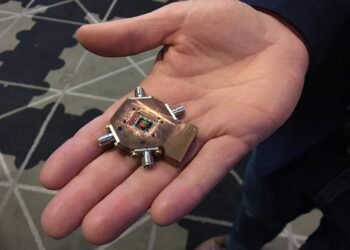
Brain-computer interfaces have crossed a critical threshold in 2026, transitioning from experimental laboratory research to real-world clinical and consumer applications. The technology, which establishes direct communication pathways between the human brain and external devices, is now being implanted in patients with paralysis, enabling them to control computers, robotic limbs, and even communicate through thought alone. The rapid acceleration of BCI development is being driven by breakthroughs in neural recording technology, miniaturized electronics, and advanced artificial intelligence that decodes neural signals with unprecedented accuracy.
Neuralink’s First Commercial Implants
Elon Musk’s Neuralink has taken the lead in the commercial BCI race, having received regulatory approval in the United States, Canada, and the European Union for its N1 implant. The device, a coin-sized chip surgically placed beneath the skull with ultra-thin electrode threads that penetrate the brain tissue, has been implanted in over 200 patients since clinical trials began in 2024. The results have been remarkable: patients with spinal cord injuries have regained the ability to control digital devices at speeds approaching natural typing and browsing.
The most celebrated case involves a 38-year-old quadriplegic who, after receiving the Neuralink implant, was able to compose messages at 65 words per minute using only his thoughts — a speed that approaches average natural typing rates. Beyond communication, Neuralink has demonstrated cursor control for digital design software, enabling paralyzed patients to create digital art and perform CAD modeling for engineering work. The company has ambitious plans to expand beyond medical applications into consumer wellness, including focus enhancement and memory augmentation.
Synchron’s Endovascular Approach
While Neuralink has captured the most headlines, Synchron has been quietly advancing a less invasive approach that is winning favor among clinicians and regulators. The company’s Stentrode device is delivered to the brain through the jugular vein in a minimally invasive procedure that avoids open brain surgery. The device, resembling a small stent with electrode contacts, is positioned in the superior sagittal sinus — a major blood vessel near the motor cortex — where it can detect neural signals associated with movement intention.
Synchron’s approach offers significant advantages in safety and accessibility. The endovascular procedure can be performed by interventional radiologists using techniques that are already widespread in hospitals, dramatically reducing the barrier to adoption. The company has treated 75 patients across clinical trials in the United States, Australia, and Europe, with all participants showing improved ability to perform digital tasks. Synchron has received breakthrough device designation from the FDA and is expected to receive full commercial approval by late 2026.
The Role of AI in Decoding Neural Signals
The rapid progress in BCI technology is inseparable from advances in artificial intelligence. Decoding neural signals — translating the electrical activity of millions of neurons into meaningful commands — requires sophisticated machine learning models that can interpret noisy, high-dimensional brain data in real time. Transformer-based neural networks, originally developed for natural language processing, have proven remarkably effective at this task.
Modern BCI systems use deep learning models that continuously adapt to each individual user’s neural patterns. These systems can distinguish between intended movements, background thoughts, and physiological artifacts like heartbeats or eye blinks with greater than 95 percent accuracy. The decoding latency has fallen below 50 milliseconds, making the experience feel instantaneous to users. As these AI models become more efficient, they are being deployed directly on the implant hardware itself, eliminating the need for external processing units.
Ethical Considerations and Privacy Concerns
The rapid commercialization of BCI technology has raised significant ethical questions about neural data privacy, cognitive liberty, and long-term safety. Advocacy groups and bioethicists have called for strong regulatory frameworks that protect users against unauthorized access to their neural data — a uniquely intimate form of personal information that could reveal thoughts, emotions, and intentions.
Chile became the first country to enact neurorights legislation in 2025, establishing constitutional protections for brain data as a separate category of personal information. The European Union has followed with proposed regulations under an expanded framework for neurotechnology, requiring explicit opt-in consent for any collection or processing of neural data. In the United States, the FDA has taken a product-safety approach rather than a privacy one, focusing on device safety and clinical efficacy while leaving privacy protections to existing health data regulations, which critics argue are inadequate for the unique threats posed by BCI technology.
The Rise of Non-Invasive BCI Devices
Alongside surgical implants, non-invasive BCI devices have experienced a consumer boom in 2026. Headbands and wearable headsets that use electroencephalography to monitor brain activity are being marketed for productivity enhancement, meditation, and gaming. Companies like NextMind, Emotiv, and a flood of startups are offering devices priced between 200 and 2,000 dollars that can detect basic neural signals associated with attention, relaxation, and visual focus.
While these consumer devices are far less precise than surgical implants — capable of distinguishing only broad mental states rather than specific thoughts — they have found a ready market in a population increasingly interested in quantified cognition. Workplace wellness programs are piloting the use of EEG headbands to monitor employee fatigue and optimize break schedules. The video game industry, always eager for novel input methods, has begun integrating basic BCI controls into popular titles, allowing players to cast spells or accelerate vehicles through focused attention alone.
Future Trajectory: From Medical to Mainstream
The BCI industry is projected to reach 15 billion dollars in annual revenue by 2030, driven primarily by medical applications in the near term but increasingly by consumer and workplace uses in the latter half of the decade. Both Neuralink and Synchron are already developing second-generation devices with higher channel counts, wireless power, and bidirectional communication capabilities that would enable not just reading brain signals but writing information back into the brain — a development with immense therapeutic potential for treating blindness, hearing loss, and memory disorders.
The convergence of BCI with augmented reality headsets, haptic feedback systems, and AI assistants points toward a future where human-computer interaction is fundamentally reimagined. The keyboard, mouse, and touchscreen — the dominant input modalities for the past four decades — may eventually be supplemented, and in some cases replaced, by direct neural interfaces. 2026 will be remembered as the year the science fiction of direct brain-computer communication became a practical, commercial reality.
Related: Edge AI Revolution: How On-Device Intelligence Is Reshaping the Tech Industry in 2026
The Netherlands, for internationals
One email a week: the week's news for internationals in the Netherlands, new practical guides and what changed in the cities. No spam, unsubscribe any time.