Dutch Offshore Wind Hits Record 21 Gigawatts as North Sea Becomes Europe’s Green Powerhouse
The Netherlands has reached a landmark 21 gigawatts of installed offshore wind capacity as of June 2026, solidifying its position as Europe’s second-largest offshore wind producer behind the United Kingdom. The milestone comes as the latest turbines at the Hollandse Kust (west) wind farm zone began feeding power into the national grid this week.
The Dutch government’s ambitious target of 21 GW by 2030 — set in the 2022 Offshore Wind Energy Roadmap — has been achieved four years ahead of schedule. The acceleration is attributed to faster permitting processes, advances in turbine technology (including the deployment of 18 MW turbines by Vestas and Siemens Gamesa), and significant private investment from pension funds and energy majors.
“This is a defining moment for Dutch energy independence,” said Climate and Energy Minister Sophie Hermans during a press conference at the Port of Rotterdam. “The North Sea is no longer just our maritime heritage — it’s our energy future.”
The economic impact extends beyond electricity generation. The Port of Rotterdam has become Europe’s main hub for offshore wind logistics, supporting over 25,000 direct jobs in manufacturing, installation, and maintenance. Dutch companies like Van Oord, Boskalis, and Damen Shipyards dominate the global market for wind farm installation vessels. The Netherlands now exports more offshore wind services than any other European nation.
Grid integration has been a crucial piece of the puzzle. TenneT, the Dutch-German transmission system operator, has invested €8 billion in offshore grid infrastructure, including the groundbreaking IJmuiden Ver Alpha and Beta platforms — the world’s largest offshore converter stations. These HVDC (high-voltage direct current) connections minimise energy losses when transmitting power from turbines located up to 80 kilometres offshore.
The environmental benefits are equally significant. With 21 GW of offshore wind online, the Netherlands now generates approximately 35% of its total electricity from wind power. Combined with solar (24%) and biomass (7%), renewable sources supplied 66% of Dutch electricity demand in May 2026 — a record that puts the country on track for its 2030 target of 70% renewable electricity.
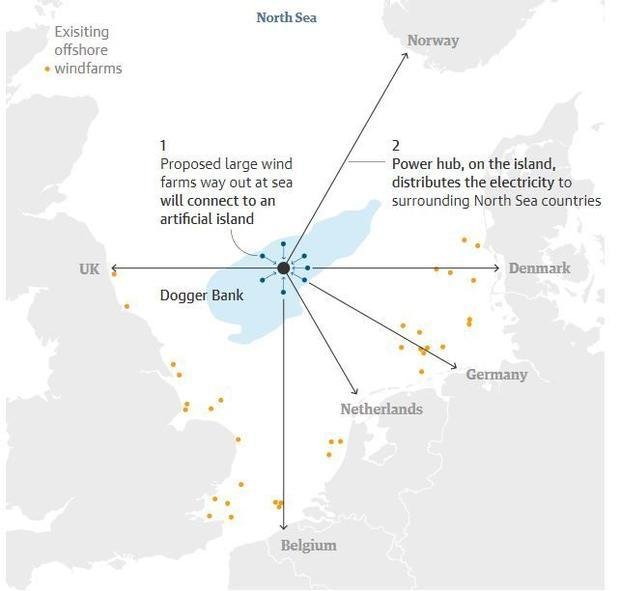
Looking ahead, the Netherlands is already planning the next phase: 28 GW by 2035 and a pioneering cross-border energy island in the Dogger Bank area, jointly developed with Denmark and Germany. The “North Sea Energy Island” project, expected to break ground in 2028, would create the world’s first artificial energy hub, distributing wind power to multiple European countries through interconnected HVDC cables.
The Netherlands, for internationals
One email a week: the week's news for internationals in the Netherlands, new practical guides and what changed in the cities. No spam, unsubscribe any time.