At this year’s GTC conference, Nvidia and Google squared off in a high stakes battle for control of the AI chip market. Each company unveiled significant new hardware and software initiatives aimed at shaping how large language models and other AI systems are trained and deployed. The event made one thing clear: the race to build the most efficient and powerful AI infrastructure is accelerating.
Nvidia doubles down on its hardware fortress
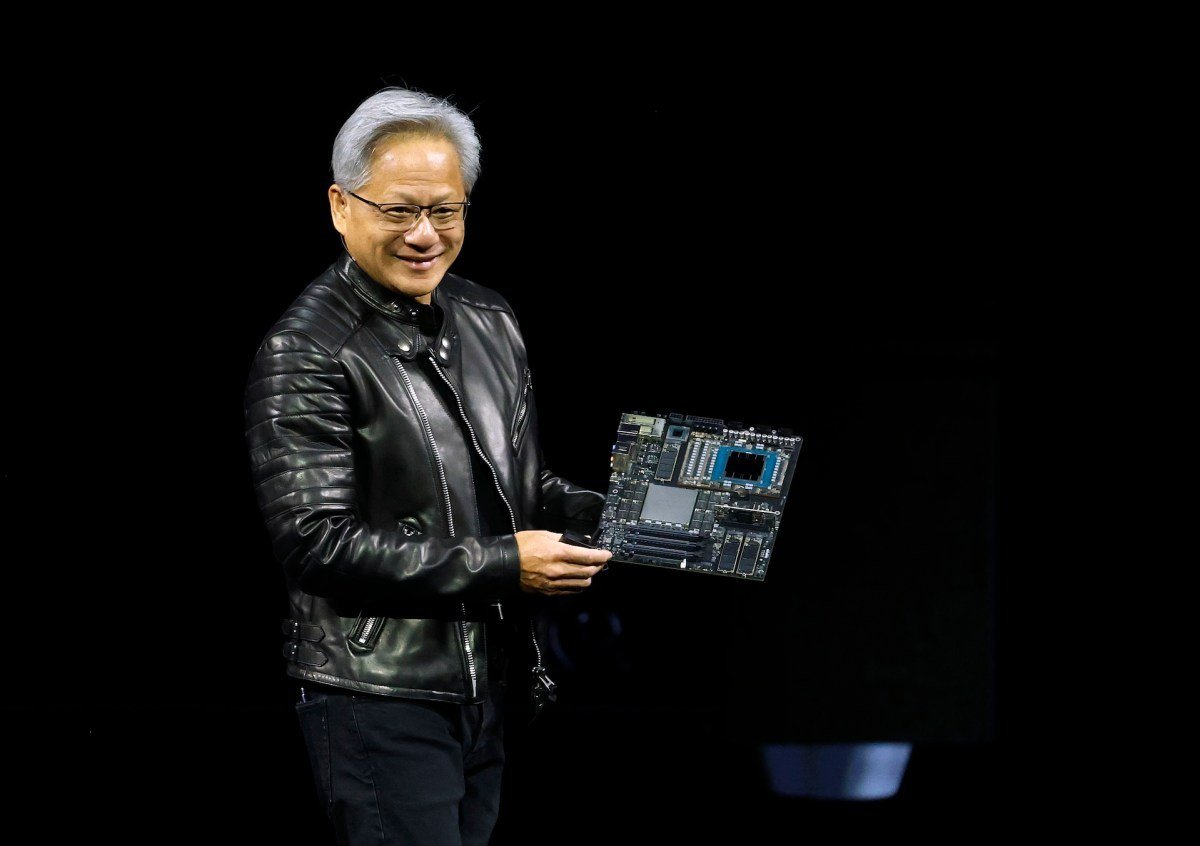
Nvidia used GTC 2025 to showcase its next generation GPU architecture, which the company claims delivers a 40 percent improvement in training throughput over its previous generation. The new chip, code named Blackwell Ultra, is designed specifically for the largest transformer models, which underpin modern AI chatbots and image generators. Nvidia also introduced a new networking technology that reduces data transfer bottlenecks between GPUs, a critical factor when scaling up to thousands of chips.
Beyond raw silicon, Nvidia emphasized its software ecosystem. The company updated CUDA with new libraries for sparse computation and mixed precision training, tools that let developers squeeze more performance out of existing hardware. Jensen Huang, Nvidia’s CEO, argued that the combination of hardware advances and software optimizations makes Nvidia the only platform capable of handling the next wave of trillion parameter models.
Google strikes back with custom chips and open tools
Google countered with its own announcements, focusing on its TPU v6 processor and a new open source framework for chip design. The TPU v6, which Google says offers 2.5 times better performance per watt than the previous generation, is now available to cloud customers through Google Cloud. The company also revealed that it is opening up parts of its internal chip design toolchain to external developers, a move intended to foster a broader ecosystem around custom AI accelerators.
Google’s strategy is to offer an alternative to Nvidia’s closed ecosystem. By making its design tools more accessible, Google hopes to encourage startups and researchers to build their own specialized chips for niche AI workloads. Sundar Pichai, Google’s CEO, framed this as a democratization effort, stating that the future of AI should not depend on a single vendor’s roadmap. He also hinted at deeper integration between Google’s TPUs and its TensorFlow and JAX frameworks, making it easier to move from research to production.
The clash between Nvidia and Google is not just about faster chips. It reflects a fundamental disagreement about how the AI industry should be structured. Nvidia believes in a vertically integrated model where the chip, the networking, and the software are tightly coupled and controlled by one company. Google advocates for a more modular approach, where open standards and custom silicon allow for greater flexibility and competition.
For enterprises building AI infrastructure, this competition creates both opportunity and complexity. Companies can now choose between Nvidia’s turnkey solutions and Google’s more customizable cloud based offerings. The decision often comes down to scale and existing technical expertise. Large cloud providers and AI labs with deep engineering teams are more likely to explore Google’s open approach, while smaller firms may prefer Nvidia’s easier to use platforms.
GTC 2025 also highlighted a growing trend: the convergence of AI hardware and software into unified platforms that span from data center to edge device. Both Nvidia and Google are investing heavily in tools that allow developers to write code once and deploy it across different hardware configurations. This could lower the barrier to entry for AI development, especially in fields like healthcare and climate modeling where customized models are needed.
Looking ahead, the rivalry between Nvidia and Google is likely to intensify as more players enter the market. Startups like Cerebras and Groq are also pushing boundaries with novel architectures, while traditional chipmakers like AMD and Intel are trying to regain lost ground. The net effect for the industry is a faster pace of innovation and lower costs over time. For a deeper look at how these developments affect startup strategies and funding, read our analysis on Mylistingo.
The AI chip wars are no longer a sideshow. They are the central battleground where the future of computing is being decided. As both companies continue to invest billions and refine their visions, the choices they make will shape which AI applications become practical and which remain science fiction for years to come.
The Netherlands, for internationals
One email a week: the week's news for internationals in the Netherlands, new practical guides and what changed in the cities. No spam, unsubscribe any time.