How the Netherlands Is Using AI to Fight Rising Sea Levels — and Winning
The Netherlands has been managing water for over 1,000 years — but the tools have changed. In 2026, Dutch water authorities are deploying artificial intelligence across every layer of the country’s flood defence system, from predictive modelling to real-time pump station control, and early results suggest it’s working.
Rijkswaterstaat, the national water management agency, now operates a machine learning platform called HydroPredict that ingests data from over 6,000 sensor points — river gauges, rainfall stations, groundwater monitors, and North Sea tide buoys — to generate 72-hour flood risk forecasts with a claimed 94% accuracy. The system went live in late 2025 and has already been credited with enabling pre-emptive water releases that prevented flooding in Gelderland during the February 2026 storm season.
From Dykes to Data Centres
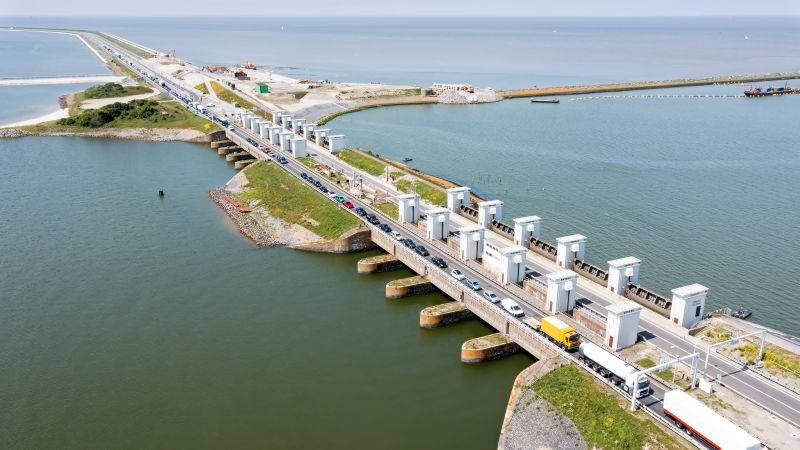
The shift is generational. The post-1953 Delta Works were a triumph of civil engineering — massive physical barriers like the Oosterscheldekering that remain among the world’s largest movable flood defences. The 2020s layer is digital: reinforcement learning models that decide when to close those barriers, balancing flood risk against shipping traffic disruption. A single unnecessary closure of the Maeslantkering costs an estimated €2 million in delayed cargo. AI reduces false closures by factoring in granular wind-direction data that the previous rule-based systems couldn’t process.
Deltares, the independent water research institute based in Delft, has been running a parallel track: AI-powered satellite imagery analysis that monitors dyke integrity across the Netherlands’ 22,000 kilometres of flood defences. A 2025 trial identified 47 previously undetected “seepage zones” — areas where water was penetrating dyke structures — by training convolutional neural networks on thermal and multispectral satellite data. Traditional manual inspection had missed every single one.
Climate Stakes Are Rising
The urgency is not theoretical. The Royal Netherlands Meteorological Institute (KNMI) updated its climate scenarios in 2025, projecting up to 2 metres of sea level rise along the Dutch coast by 2100 in the worst-case emissions pathway — up from the previous estimate of 1 metre. Summer drought, which weakens peat-based dykes through desiccation cracking, is now expected to affect the western Netherlands roughly every three years instead of every decade.
Dutch water technology exports have surged alongside the domestic deployment. The Netherlands exported €9.3 billion in water-related technology and services in 2025, according to the Netherlands Water Partnership, with AI-integrated flood modelling software representing the fastest-growing segment. Countries facing similar sea-level threats — Bangladesh, Vietnam, and Indonesia — are the primary buyers.
The Dutch approach to water has always been pragmatic: the problem is too dangerous for ideology. AI is now simply the latest tool in that centuries-old toolkit.