Humanoid Robots Are Walking Into the Workforce
The warehouse floor of 2026 looks increasingly like a science-fiction film. Humanoid robots — standing on two legs, equipped with dexterous hands and AI-powered vision systems — are beginning to take on roles once reserved exclusively for human workers. From Amazon fulfilment centres to automotive assembly lines, the era of general-purpose humanoid robots has arrived.
Several companies are racing to scale production. Tesla’s Optimus robot, now in its third generation, is being deployed in the company’s own factories for tasks like sorting, lifting, and basic assembly. Figure AI has partnered with BMW to test its Figure 02 robot on the production line in South Carolina. Meanwhile, Boston Dynamics’ new electric Atlas can perform complex manipulation tasks that were unthinkable for a bipedal robot just two years ago.
Why Humanoid Form Factors Matter
Critics have long questioned why robots need to be human-shaped when specialised machines — robotic arms, autonomous mobile robots — already excel at specific tasks. The answer lies in adaptability. Warehouses, factories, and retail environments are designed for human bodies: stairs, doorways, shelves at human height. A humanoid robot can navigate these spaces without costly retrofitting.
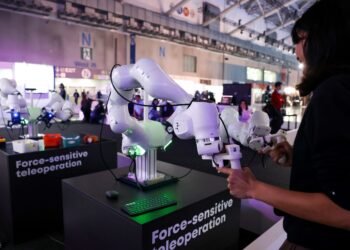
Advances in reinforcement learning and imitation learning have been key. Instead of painstakingly programming each movement, engineers now train robots in simulation using human demonstration data. The robot watches a human perform a task via VR, learns the motion policy, and transfers it to the physical robot — a process that can take hours instead of months.
The Economics Are Shifting
The unit cost of humanoid robots is dropping fast. Chinese manufacturers like Unitree and Xiaomi are pushing prices below $50,000 per unit, while U.S. companies target $20,000 to $30,000 at scale. At those price points, the return on investment for a robot working two shifts becomes compelling, especially in markets facing chronic labour shortages.
But the rise of humanoid robots also raises urgent questions about workforce displacement, safety standards, and regulation. The EU is drafting the first comprehensive legislation on general-purpose robots, expected to be tabled in late 2026.