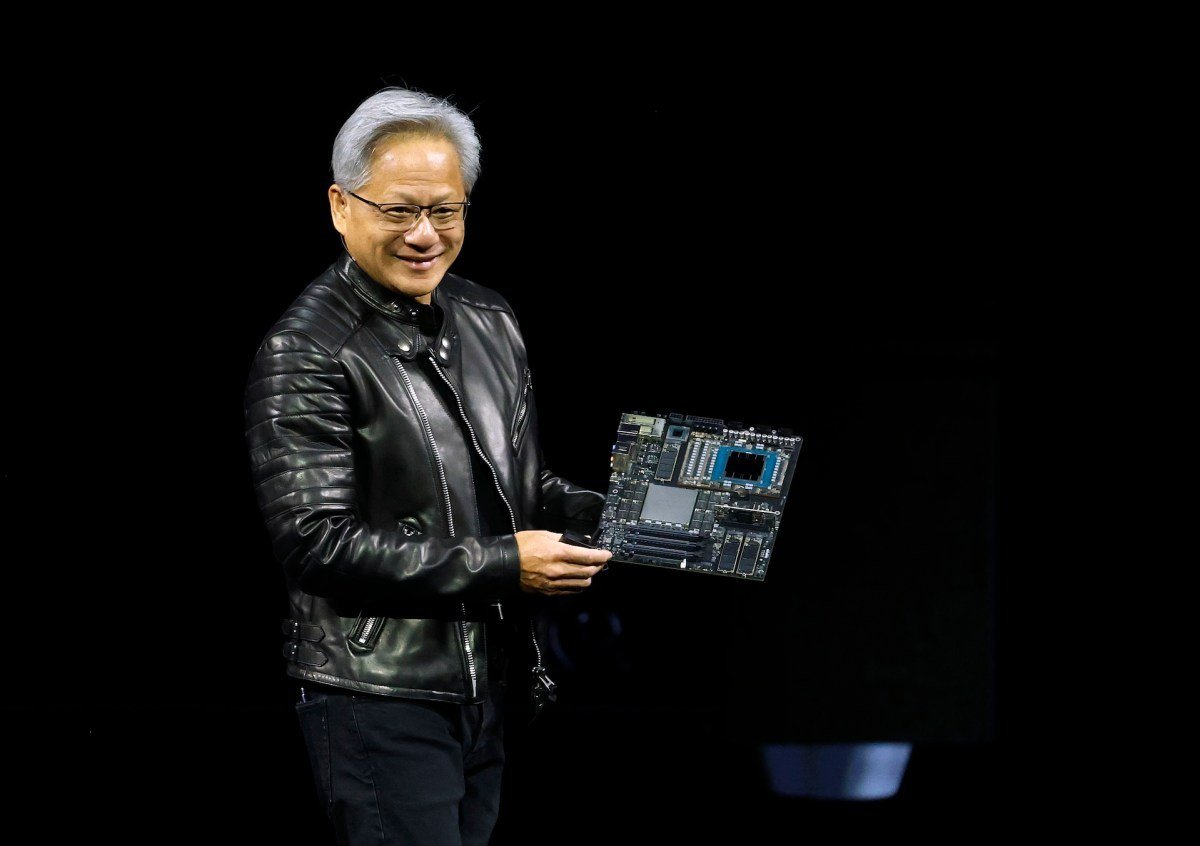
The artificial intelligence landscape is undergoing a fundamental transformation in 2026, as the center of gravity shifts from massive cloud data centers to the devices in our pockets, homes, and factories. Edge AI — the deployment of machine learning models directly on local devices rather than in the cloud — has moved from experimental technology to mainstream infrastructure, reshaping everything from smartphone capabilities to industrial automation.
The Hardware Revolution Powering Edge AI
The rapid advancement of specialized AI processors has been the primary catalyst for the edge AI revolution. Neural processing units (NPUs) have become standard components in virtually every new smartphone, laptop, and tablet, with companies like Apple, Qualcomm, MediaTek, and Samsung all shipping chips dedicated to on-device AI inference. The latest generation of these processors can perform over 40 trillion operations per second while consuming less than 5 watts of power.
This hardware capability has opened doors that were firmly closed just three years ago. Complex models that once required cloud connectivity can now run entirely on-device with real-time performance. Language models with billions of parameters, computer vision systems capable of object detection and facial recognition, and audio processing pipelines for voice assistants all execute locally without sending data to remote servers.
“The fundamental insight that drove the edge AI revolution is that latency and privacy are non-negotiable for many AI applications,” explains Dr. James Chen, director of edge computing research at MIT. “When you need real-time response for autonomous driving or medical diagnostics, waiting for a round trip to the cloud is simply unacceptable. Edge AI solves this by bringing computation to the data source.”
Privacy-First AI: The Killer App for Edge Intelligence
Perhaps the most compelling argument for edge AI is privacy. As consumers and regulators have become increasingly concerned about data collection practices, on-device processing offers a clear path forward that does not sacrifice AI capabilities for privacy protection. Apple’s approach to on-device intelligence, which processes the vast majority of user data locally, has become the industry gold standard.
The European Union’s AI Act, which came into full effect in 2026, has further accelerated the shift toward edge AI. The regulation’s stringent requirements for high-risk AI systems have made on-device processing particularly attractive for applications in healthcare, finance, and public services. By keeping sensitive data local, organizations can avoid many of the compliance burdens associated with cloud-based AI deployments.
However, privacy-first edge AI is not without its trade-offs. On-device models cannot benefit from the continuous learning and improvement that occurs when user data is aggregated in the cloud. Federated learning techniques, where model updates rather than raw data are shared, have emerged as a promising middle ground, though significant technical challenges remain in making federated learning efficient and secure at scale.
Healthcare has emerged as a particularly important proving ground for privacy-focused edge AI. Hospitals are deploying on-device diagnostic models that process patient data locally, never transmitting sensitive medical information to external servers. The Netherlands, a leader in this space, has seen its hospitals pioneer edge-based AI diagnostic tools that can detect abnormalities in medical imaging with accuracy rivaling cloud-based systems while keeping patient data fully secure.
Industrial and IoT Applications Driving Adoption
The industrial sector has been the fastest adopter of edge AI technology, driven by clear ROI in predictive maintenance, quality control, and operational efficiency. Smart factories equipped with edge AI sensors can predict equipment failures before they occur, detect manufacturing defects in real-time, and optimize energy consumption without human intervention.
In manufacturing, edge AI systems process data from thousands of sensors simultaneously, making split-second decisions that would be impossible with cloud-dependent architectures. A single factory can generate terabytes of data daily — far too much to stream to the cloud cost-effectively. Edge AI solves this by processing data locally and only transmitting actionable insights to central systems.
The Internet of Things (IoT) has been transformed by edge AI. Traditional IoT architectures relied on sensors collecting data and sending it to the cloud for analysis. The new paradigm distributes intelligence across the network, with edge devices capable of autonomous decision-making. Smart buildings adjust heating, lighting, and security based on local occupancy patterns without cloud connectivity. Agricultural sensors monitor crop conditions and optimize irrigation independently.
The Economics of Edge vs. Cloud
The economic case for edge AI has strengthened considerably as cloud costs have risen. Data transfer fees, storage costs, and compute charges from major cloud providers have increased by 15-25 percent over the past two years, making on-device processing increasingly cost-competitive. For many organizations, the total cost of ownership for edge AI solutions now compares favorably with cloud-dependent alternatives over a three-year horizon.
Bandwidth constraints also favor edge deployment. With the explosion of IoT devices — projected to exceed 30 billion connected devices globally by 2027 — centralized cloud architectures face fundamental bandwidth limitations. Edge AI reduces cloud data transfer requirements by 80-95 percent in many applications, dramatically lowering infrastructure costs and reducing latency.
However, edge AI introduces its own cost considerations. Deploying and managing AI models across thousands or millions of distributed devices creates operational complexity that cloud-based solutions avoid. Over-the-air model updates, device management, and security patching at scale require sophisticated infrastructure. Companies like Qualcomm and NVIDIA have developed edge AI management platforms specifically designed to address these challenges.
The Road Ahead: Hybrid Architectures and Emerging Challenges
The future of AI infrastructure is not purely edge or purely cloud but hybrid, with intelligence distributed across a spectrum of devices and data centers based on the specific requirements of each application. Simple inference tasks will execute locally on edge devices, while complex training workloads and multi-model reasoning will remain in the cloud. The key innovation of 2026 is the seamless orchestration between these tiers.
Security presents a persistent challenge for edge AI. Distributed devices are inherently more vulnerable to physical tampering and remote attacks than centralized cloud infrastructure. Ensuring the integrity of models deployed on edge devices, protecting against adversarial attacks, and maintaining secure communication channels between edge and cloud all require ongoing investment and innovation.
Model compression techniques continue to advance, enabling increasingly capable AI models to run on constrained hardware. Quantization, pruning, and knowledge distillation have reduced model sizes by 10-100x while maintaining 95-99 percent of original accuracy. The development of specialized architectures like Apple’s Neural Engine and Qualcomm’s Hexagon DSP has further narrowed the gap between edge and cloud AI capabilities.
For businesses evaluating their AI strategy in 2026, the question is no longer whether to adopt edge AI but how to design systems that optimally distribute intelligence across the edge-cloud continuum. The organizations that master this balance will have a significant competitive advantage as AI continues its transformation from a centralized utility to a ubiquitous, ambient technology.
Related: 6G Networks Begin Taking Shape: What the Next Generation of Connectivity Means
The Netherlands, for internationals
One email a week: the week's news for internationals in the Netherlands, new practical guides and what changed in the cities. No spam, unsubscribe any time.