The EU AI Act Takes Effect
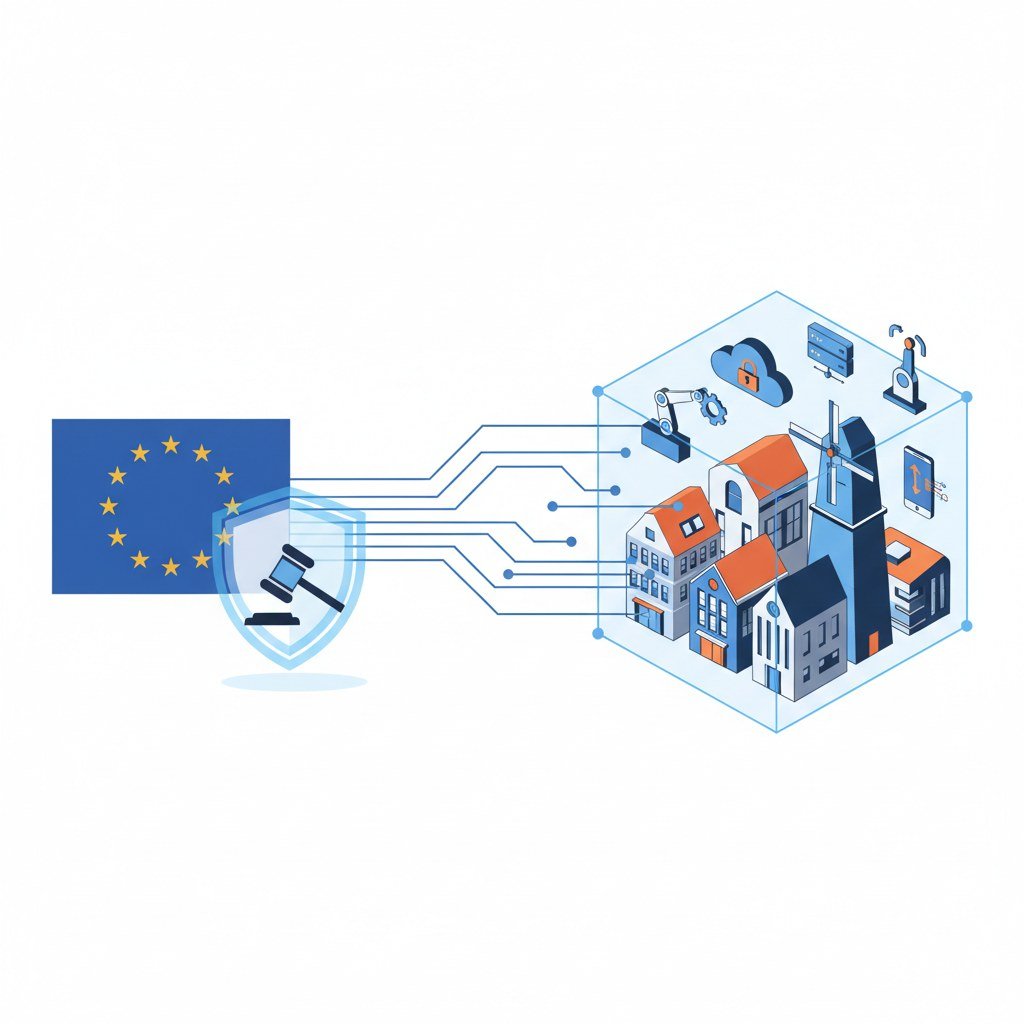
August 1, 2026 marks the date when the first major enforcement provisions of the EU AI Act come into force, and Dutch tech companies — from Amsterdam startups to Eindhoven semiconductor firms — are racing to prepare. The landmark regulation, passed in 2024 with a phased rollout, is now entering its most consequential phase for businesses operating in the European market.
The Act categorizes AI systems into four risk tiers, with “unacceptable risk” applications banned outright and “high-risk” systems — including those used in critical infrastructure, education, employment, and law enforcement — now facing mandatory compliance requirements. For the Netherlands, home to a dense ecosystem of AI startups and scale-ups, the impact is significant.
What Dutch Companies Need to Know
Under the new enforcement regime, companies deploying high-risk AI systems must maintain detailed technical documentation, implement human oversight mechanisms, and ensure their training data meets quality and bias-mitigation standards. Non-compliance can result in fines of up to €35 million or 7% of global annual turnover — whichever is higher.
“Dutch companies have been relatively well-prepared compared to other EU member states,” says Marieke de Vries, an AI governance specialist at the Hague Centre for Strategic Studies. “The Netherlands has had national AI guidelines since 2020, and many companies already have compliance frameworks in place. But the jump from voluntary guidelines to binding regulation with real penalties is still significant.”
The Startup Challenge
For smaller startups, the compliance burden is a particular concern. The Act includes some provisions for SMEs, including regulatory sandboxes where startups can test AI systems under supervision. The Dutch government has allocated €12 million to establish two such sandboxes in Amsterdam and Eindhoven, set to open in October 2026.
Industry group NLdigital has called for clearer guidance on what constitutes a “high-risk” system in practice, noting that the line between high-risk and limited-risk can be blurry for dual-use AI platforms. The European Commission has promised detailed implementation guidelines by September.
Opportunity in Regulation
Some Dutch companies are turning compliance into a business opportunity. A wave of “AI Act compliance-as-a-service” startups has emerged in the Netherlands, offering automated documentation tools, bias audits, and risk classification assessments. The market for AI governance software in Europe is projected to reach €4.2 billion by 2028, and Dutch firms are positioning themselves to capture a significant share.
For the broader Dutch tech ecosystem, the AI Act represents both a challenge and a differentiator. Companies that get compliance right early can use it as a competitive advantage when selling to risk-averse enterprise customers across the EU — and potentially set standards that influence AI regulation globally.
The Netherlands, for internationals
One email a week: the week's news for internationals in the Netherlands, new practical guides and what changed in the cities. No spam, unsubscribe any time.