Uber is launching a robotaxi service in Munich. Not testing. Launching, in partnership with Israeli AI startup Autobrains Technologies, running on Nvidia’s Drive Hyperion platform, with real-time driving decisions handled by multiple AI agents working in parallel. The company chose one of Europe’s most congested and regulation-heavy cities for the initiative. The ambition is not subtle.
The autonomous vehicle push goes global
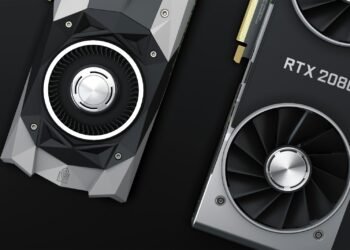
Uber is not moving alone. China has set December 2026 as a target for Level 4 autonomous vehicle deployment, meaning full self-driving without human supervision available to the public. Renesas has developed what it describes as the industry’s first multi-domain automotive system-on-chip built on a 3-nanometre process, delivering 400 TOPS of AI performance for vehicles that need to make hundreds of decisions per second. SpinQ, the quantum computing company, is working directly with self-driving firm DeepRoute.ai on quantum-accelerated image recognition algorithms designed for autonomous vehicles — one of the first concrete examples of quantum and autonomous vehicle technology converging before either is fully mature.
These projects are advancing on separate timelines and in separate geographies, but the underlying logic is consistent. Getting a vehicle to navigate urban traffic reliably at scale requires more computation than current silicon can deliver cheaply. The companies making the most progress are combining purpose-built hardware, AI agents, and computing approaches that were purely experimental two years ago.
Light, quantum, and the chip beneath it all
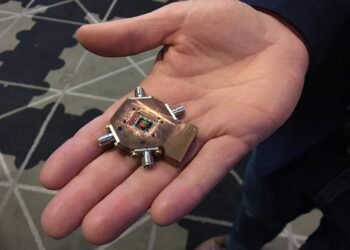
In early June 2026, researchers reported the creation of a chip that can generate, steer, and read light-based information within a single device, using atomically thin materials and nanoscale structures. The chip exploits what physicists call the “valley” degree of freedom, a quantum property of light that can carry information more efficiently than conventional electrical signals. Practical applications are still years away, but collapsing multiple separate components into one device is typically how chips become cheaper and faster over subsequent generations.
Around the same time, QuiX Quantum installed a Feed-Forward Control Unit in its photonic quantum computing stack, enabling real-time adaptive operations within the system. Ultra-fast feedback loops are a core requirement for scaling photonic quantum computers into configurations that can work alongside classical high-performance computing networks. The milestone is unglamorous, but these are the engineering steps that make later breakthroughs possible.
Where the capital is going
Gigascale Capital, a new fund founded by former Meta CTO Mike Schroepfer, launched in June with $250 million targeting startups rebuilding physical infrastructure. The fund’s thesis is that electrification, AI, reshoring, and climate adaptation are creating investment opportunities in the systems that connect computation to the physical world — power grids, manufacturing processes, logistics networks. Schroepfer spent a decade at Meta overseeing AI research before departing in 2022, and the fund reflects how seriously prominent technologists are now treating physical infrastructure as the next major frontier.
The broader capital picture reinforces the trend. Alphabet raised $80 billion in equity. SoftBank committed $52 billion to European data centres. Anthropic filed for an IPO at a near-$1 trillion valuation. Capital is moving toward AI infrastructure at a scale that is beginning to reshape national industrial strategies.
The common thread
Robotaxis in Munich, quantum chips built from atomically thin materials, climate capital targeting physical infrastructure, autonomous vehicles aiming for production-level deployment by year end — these are different expressions of the same underlying development: computation becoming capable and affordable enough to leave the data centre and operate in the physical world.
The next two years will show which of these systems work at scale and which fall short of their early promise. The experiments running now are the ones that will settle those questions. For more coverage of emerging and future technologies, visit Mylistingo.
The Netherlands, for internationals
One email a week: the week's news for internationals in the Netherlands, new practical guides and what changed in the cities. No spam, unsubscribe any time.