
The final frontier has become the next great geopolitical battlefield. In 2026, the militarization of space has accelerated dramatically, with the United States, China, Russia, and the European Union racing to establish orbital dominance. What was once the domain of scientific exploration and peaceful satellite communications has transformed into a contested domain where anti-satellite weapons, electronic warfare, and space-based interceptors are being developed and deployed at an unprecedented pace.
The Growing Threat to Satellite Infrastructure
Satellites have become the backbone of modern civilization, enabling everything from GPS navigation and financial transactions to internet connectivity and military communications. In 2026, the global economy depends on an estimated 8,000 active satellites orbiting Earth, with tens of thousands more planned for deployment by companies like SpaceX, Amazon, and China’s state-backed initiatives. This critical infrastructure is increasingly vulnerable to attack from multiple directions.
China tested a direct-ascent anti-satellite missile in early 2026, demonstrating its ability to destroy satellites in low Earth orbit. Russia has deployed a new generation of orbital inspection satellites that Western intelligence agencies believe are capable of disabling or destroying adversary spacecraft. The United States has responded with the expansion of its Space Force and the deployment of the Counter Communications System, a ground-based electronic warfare system that can jam satellite signals without creating hazardous orbital debris.
The European Union, while maintaining a more cautious posture, has accelerated its space situational awareness program and invested heavily in protective measures for its Galileo navigation satellites and Copernicus Earth observation constellation. The EU Space Strategy for Security and Defense, adopted in early 2026, explicitly identifies space as a strategic domain requiring coordinated defense measures across member states.
The Anti-Satellite Weapons Race
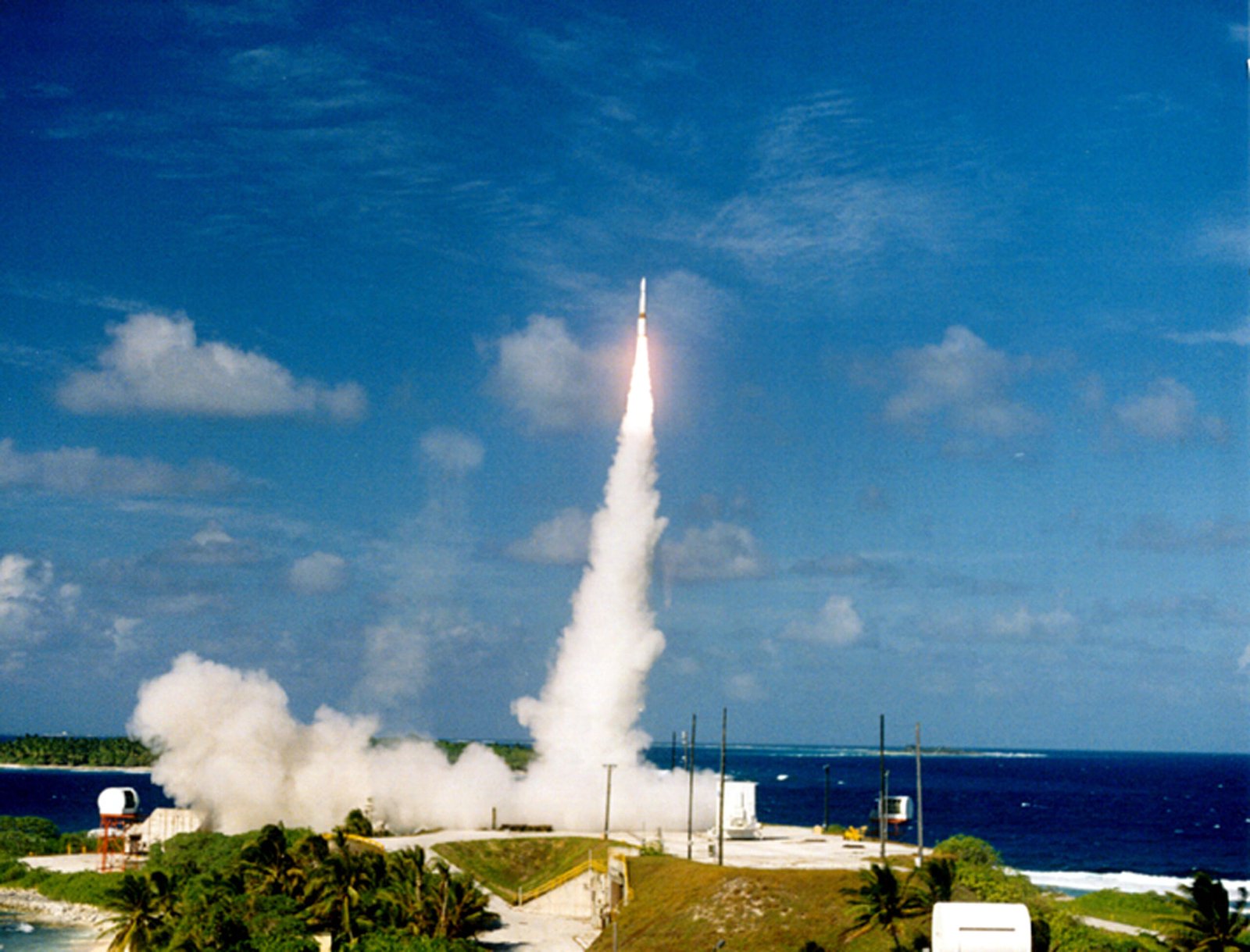
The development and testing of anti-satellite (ASAT) weapons has emerged as one of the most dangerous aspects of the new space race. In 2026, at least five nations possess confirmed ASAT capabilities, and several more are actively developing them. The spectrum of threats ranges from kinetic interceptors that physically destroy targets to directed energy weapons that can disable satellites with lasers or microwave pulses.
China’s 2026 ASAT test, conducted in January, involved a ground-launched missile that successfully intercepted a target satellite at an altitude of approximately 800 kilometers. The test generated international condemnation, with the United States, Japan, and Australia accusing Beijing of creating thousands of pieces of potentially hazardous orbital debris. China defended the test as a legitimate defensive measure and accused the United States of hypocrisy given its own extensive ASAT testing history.
Russia has pursued a different approach, focusing on what defense analysts call “nesting doll” satellites — spacecraft that can approach, inspect, and potentially disable other satellites without the overt aggression of a missile launch. In 2025 and 2026, Russian satellites have conducted suspicious close approaches to several Western government and commercial satellites, raising alarms about the potential for in-orbit attacks that blur the line between routine operations and hostile action.
The United States has invested heavily in both offensive and defensive space capabilities. The Space Force’s Rapid Capabilities Office has deployed new electronic warfare systems designed to protect critical satellites from jamming and cyber attacks. The Pentagon has also accelerated development of the Space-Based Infrared System and the Next-Generation Overhead Persistent Infrared program, designed to detect missile launches and track hypersonic weapons from space.
Space Debris: The Invisible Threat
Perhaps the most insidious consequence of the space arms race is the growing problem of orbital debris. Each ASAT test or satellite collision creates thousands of fragments that travel at speeds of up to 28,000 kilometers per hour, capable of destroying any spacecraft they encounter. The Kessler Syndrome scenario — a cascade of collisions that renders entire orbital bands unusable — is no longer a theoretical concern but an increasingly plausible risk.
The European Space Agency’s Space Debris Office estimates that there are now over 40,000 trackable debris objects larger than 10 centimeters, with millions of smaller fragments that are difficult or impossible to track. The 2026 ASAT tests by China and earlier tests by Russia, India, and the United States have contributed significantly to this growing hazard. International efforts to establish debris mitigation guidelines have struggled to keep pace with the accelerating deployment of new satellites and weapons systems.
The United Nations Committee on the Peaceful Uses of Outer Space has proposed new binding treaties on ASAT testing and debris mitigation, but negotiations have been hamstrung by geopolitical tensions and disagreements over verification mechanisms. The US has advocated for a ban on destructive ASAT tests, but China and Russia have linked such a ban to broader negotiations that would also limit US space-based missile defense systems.
Commercial Space at Risk
The growing militarization of space poses direct risks to the commercial space industry, which has experienced explosive growth in recent years. SpaceX’s Starlink constellation now numbers over 7,000 active satellites, providing internet connectivity to millions of users worldwide. Amazon’s Project Kuiper and China’s GuoWang constellation are rapidly expanding. These commercial systems have become dual-use infrastructure, serving both civilian customers and military clients.
The potential for commercial satellites to become collateral damage in a space conflict — or intentional targets — is a mounting concern for the industry. Insurance premiums for satellite operators have risen sharply in 2026, and several major operators have begun investing in defensive measures such as maneuverability systems, hardened electronics, and encrypted command links. The commercial space sector is also grappling with the challenge of designing satellites that can avoid debris and potential attacks without creating additional fragmentation risks.
The Future of Space Governance
The international legal framework governing space activities — primarily the 1967 Outer Space Treaty — was designed in a different era and is widely considered inadequate for addressing the realities of 2026. The treaty prohibits weapons of mass destruction in space but does not explicitly forbid conventional weapons, anti-satellite systems, or military activities in space. This legal ambiguity has enabled the current arms race while providing few mechanisms for dispute resolution or verification.
Several parallel diplomatic initiatives are attempting to address these gaps. The United Nations Disarmament Commission is pursuing a Prevention of an Arms Race in Outer Space (PAROS) treaty, while the European Union is promoting a voluntary International Code of Conduct for Outer Space Activities. The United States has proposed confidence-building measures including pre-launch notifications, data sharing on orbital objects, and bilateral hotlines for space-related incidents.
Critics argue that these measures are insufficient to prevent an actual conflict in space, which could have catastrophic consequences for the global economy and civilian infrastructure. A 2026 report from the Center for Strategic and International Studies warned that “a major space conflict could set back global communications, navigation, and Earth observation capabilities by decades, with cascading effects on food security, transportation, financial markets, and emergency response systems.”
As the space arms race intensifies, the window for meaningful international cooperation on space governance is narrowing. The decisions made — or not made — by world powers in the coming months and years will determine whether space remains a shared resource for all humanity or becomes the next theater of great power conflict.
Related: Digital Public Spaces in 2026: How Social Media Regulation Is Redefining Online Interaction
The Netherlands, for internationals
One email a week: the week's news for internationals in the Netherlands, new practical guides and what changed in the cities. No spam, unsubscribe any time.