The European Union in 2026 is undergoing its most profound transformation in defence and security policy since the end of the Cold War. Russia’s continued aggression in Eastern Europe, shifting American priorities, and a volatile Middle East have compelled the bloc to accelerate plans for a genuinely integrated European defence architecture — one that goes far beyond the modest cooperative frameworks of the past. This analysis examines the EU’s emerging security strategy, its implications for NATO, and what it means for global geopolitics.
The Strategic Imperative: Why Europe Is Building Its Own Defence
Three key drivers have pushed European defence integration to the top of the political agenda in 2026. First, the war in Ukraine has entered its fourth year, with no end in sight. European leaders recognise that the continent’s security can no longer depend entirely on a US security guarantee that has become increasingly conditional. The return of political volatility in Washington has reinforced the message that Europe must be able to defend itself.
Second, the EU’s Eastern flank — from Finland and the Baltic states down to Romania and Bulgaria — faces persistent hybrid threats including cyber attacks, disinformation campaigns, and energy blackmail. These threats require a coordinated response that individual member states cannot mount alone. The EU Cyber Rapid Response Teams, activated 12 times in 2025 alone, have demonstrated the value of pooled capabilities in defending critical infrastructure.
Third, the economic case for integration has become overwhelming. European defence spending across the 27 member states totalled over €380 billion in 2025, yet fragmentation — 178 different weapons systems, 27 separate procurement bureaucracies, and incompatible communications equipment — means that per euro spent, European forces deliver only 40 to 60 per cent of the capability of equivalent US spending. The European Defence Agency estimates that full integration could save €60 billion annually while significantly boosting military effectiveness.
The European Commission’s 2026 Defence White Paper, published in March, codified these imperatives into a concrete roadmap. It calls for a single European defence market by 2029, harmonised export controls, and a common framework for strategic capabilities including air defence, drones, and naval assets.
The European Defence Union: Structure and Capabilities
The centrepiece of the EU’s new defence architecture is the European Defence Union (EDU), a permanent framework established in January 2026 following unanimous approval by the European Council. The EDU operates alongside NATO rather than replacing it, but introduces several genuinely supranational elements unprecedented in European defence cooperation.
First, the Joint European Command Headquarters in Brussels now has operational authority over designated EU battlegroups and rapid reaction forces. A European General Staff of 1,200 officers drawn from all member states manages planning, intelligence co-ordination, and logistics. The first commander — a French four-star general appointed for a three-year term — took office in February 2026.
Second, the European Defence Fund has been expanded and transformed. Member states have committed to contributing a minimum of 2 per cent of GDP to defence by 2028, with at least 20 per cent of that going to joint procurement programmes administered by the EDU. Flagship projects include the European Main Battle Tank (EMBT), a joint Franco-German-Italian project scheduled for prototype testing in 2027, and the Eurodrone programme, which completed its first test flight in May 2026.
Third, the EU has established a European Defence Industrial Strategy (EDIS) that prioritises domestic production of critical capabilities. This includes a €15 billion investment in European semiconductor fabrication for defence applications, reducing dependence on Asian and American chip suppliers for guided weapons and surveillance systems.
The Baltic states, Poland, and Finland have been the strongest advocates of the EDU framework, pushing for the permanent stationing of EU rapid reaction forces on the Eastern flank. The so-called Eastern Shield programme has already prepositioned heavy equipment in Estonia, Latvia, Lithuania, and Poland, reducing response times to potential incursions from weeks to hours.
The Transatlantic Dimension: NATO, the US, and European Autonomy
The most consequential geopolitical question surrounding the EDU is its relationship with NATO and the United States. EU leaders have been at pains to emphasise that the European Defence Union complements rather than competes with the Atlantic Alliance. In practice, the relationship is more complex.
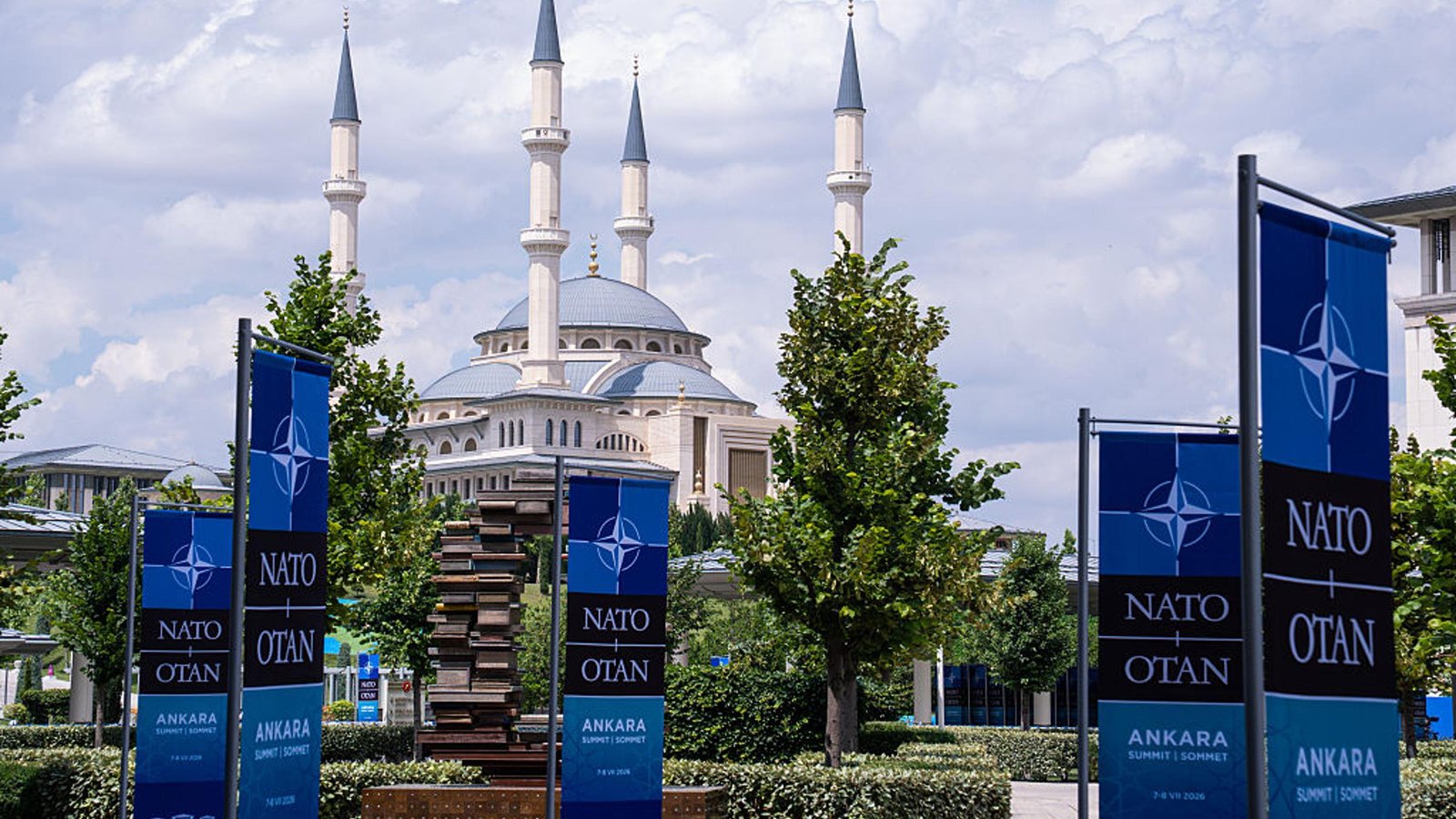
NATO’s 2026 Strategic Concept, adopted at the Madrid Summit, explicitly recognises the EU as a unique and essential partner and commits to strengthening the European pillar within the Alliance. For the first time, the document includes a dedicated section on EU-NATO operational co-ordination, covering everything from joint exercises to intelligence sharing protocols.
However, tensions persist. Non-EU NATO members — particularly Turkey, the United Kingdom, and Norway — have expressed concern about being excluded from EU defence decision-making while being expected to contribute to broader European security. The UK, which has pursued its own bilateral defence agreements with France, Germany, and Poland since Brexit, has sought associate status within the EDU framework, with negotiations ongoing as of July 2026.
The United States has adopted a cautiously supportive stance. The Biden administration’s final year in office saw Washington encourage European defence integration as a way to share the burden of continental security. However, US defence contractors have lobbied hard against EDIS provisions that would prioritise European suppliers, warning of reduced American market access. The 2026 US National Defense Authorization Act includes language urging the administration to seek fair and reciprocal access to European defence procurement markets.
Global Implications and the Future of European Security
The emergence of a more autonomous European defence capability has implications that extend far beyond the continent. In the Indo-Pacific, the EU has signalled its intention to play a more active security role, with the European Council approving in April 2026 a framework for naval deployments to the South China Sea in support of freedom of navigation. The first European Maritime Security Mission — comprising ships from France, the Netherlands, Germany, and Spain — is scheduled for deployment in early 2027.
In Africa, the EU has restructured its security and development programmes, creating a European Rapid Reaction Force for crisis management that can deploy up to 5,000 troops within 30 days. The force has already been activated for non-combat evacuation operations in Sudan and the Sahel region, demonstrating its utility in protecting European citizens and diplomatic personnel in volatile environments.
Critics argue that the EDU’s ambitions outstrip its capabilities. European armies remain underfunded compared to their stated goals, and the political will for integration varies dramatically between member states — with Hungary and Slovakia expressing scepticism about transferring sovereignty in defence matters. The unanimity requirement for EDU decisions on deployment remains a significant constraint, although the 2026 Defence White Paper proposes moving to qualified majority voting for operational matters by 2028.
The direction of European defence in 2026 represents a historic shift — the continent is slowly but steadily building the capacity to guarantee its own security while remaining anchored in the transatlantic partnership. Whether the EDU succeeds or falters will depend on sustained political commitment, adequate funding, and the evolution of the security environment in Europe’s neighbourhood. For now, the trajectory is clear: the era of purely American-guaranteed European security is ending, and a new, more complex European defence architecture is being built in its place.
Related: NATO Summit 2026: A New Era of Collective Defense and Global Power Shifts
Explore also: Wimbledon 2026: How AI and Technology Are Transforming Tennis
Related: The Global Shift Toward Digital Currencies: CBDCs Reshaping International Finance in 2026