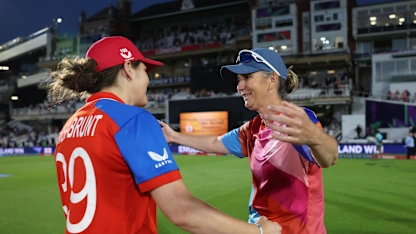
Women’s cricket has undergone a remarkable transformation in 2026, emerging from the shadows of the men’s game to stand firmly on its own as a major global sport. Record-breaking broadcast audiences, sold-out stadiums, unprecedented commercial investment, and deepening talent pools across traditional and emerging cricket nations have marked this as a watershed year for the women’s game. The sport that was once dismissed as a niche pursuit is now commanding headlines, sponsorship dollars, and respect on an entirely new scale.
The acceleration of women’s cricket’s growth trajectory can be traced to several pivotal developments. The International Cricket Council’s (ICC) strategic commitment to gender parity, the success of franchise leagues modeled on the Women’s Premier League (WPL) in India, and the rising profile of iconic players who have become household names beyond the cricket world have all contributed to a virtuous cycle of investment, visibility, and participation. As the game enters the second half of 2026, the momentum shows no signs of slowing.
Perhaps the most striking indicator of the sport’s ascent is the broadcast and attendance data. The 2026 Women’s Cricket World Cup, held in England, recorded cumulative global viewership exceeding 800 million, shattering the previous record of 580 million set in 2023. The final between Australia and India at Lord’s was watched by a peak audience of 120 million, making it the most-watched women’s sporting event in history outside of football. Ticket sales for the tournament sold out within hours of release, with an average stadium occupancy rate of 94% across all matches.
The Franchise Revolution and Its Economic Impact
The single most transformative force in women’s cricket over the past three years has been the proliferation and maturation of franchise T20 leagues. The Women’s Premier League (WPL) in India, now entering its fourth season, has established itself as the financial powerhouse of the women’s game. Player salaries in the WPL have more than tripled since the inaugural season, with top international stars commanding contracts exceeding $400,000 per tournament — a figure that was unthinkable for women’s cricket just five years ago.
The success of the WPL has inspired a wave of similar leagues around the world. The Women’s Big Bash League (WBBL) in Australia continues to thrive with increased broadcast revenue and attendance. The Hundred’s women’s competition in England has seen a surge in participation and viewership following the restructuring of the domestic calendar. New franchise tournaments have launched in the Caribbean (the Women’s Caribbean Premier League), South Africa (SA20 Women’s), and the United Arab Emirates, creating year-round playing opportunities and lucrative earning potential for professional female cricketers.
The economic ripple effects extend beyond player salaries. Sponsorship revenue for women’s cricket globally reached $350 million in 2025-26, a 220% increase from the 2022-23 cycle. Major global brands that previously invested exclusively in men’s sports have established dedicated women’s cricket partnerships, recognizing the sport’s growing audience demographics and its emphasis on athletic excellence, sportsmanship, and inclusivity. Broadcast rights for women’s international cricket have also seen dramatic increases, with the ICC securing a dedicated rights package for women’s events valued at over $500 million across the next eight-year cycle.
This financial transformation has had tangible effects on the quality of play. Full-time professional contracts for women cricketers now exist in 15 countries, up from just 6 in 2020. Access to world-class coaching, sports science, strength and conditioning programs, and mental health support has elevated the standard of cricket dramatically. Bowling speeds have increased, fielding standards have sharpened, and the tactical sophistication of the women’s game now rivals that of the men’s in many respects.
Deepening Talent Pools and Emerging Nations
One of the most encouraging developments in 2026 is the expansion of competitive women’s cricket beyond the traditional powerhouses of Australia, England, and India. Associate and emerging nations have invested heavily in women’s programs, and the results are increasingly visible on the international stage. Thailand, Nepal, and the United Arab Emirates have all qualified for ICC women’s events for the first time, while Scotland, the Netherlands, and Zimbabwe have become regular competitive forces in global tournaments.
The ICC’s development funding has played a crucial role in this expansion. The governing body’s Women’s Cricket Development Fund, established in 2023 with an initial allocation of $50 million, has supported grassroots programs, coaching education, infrastructure development, and pathway competitions in more than 40 nations. The fund has been particularly impactful in Africa and Southeast Asia, where cricket has traditionally been a male-dominated sport with limited female participation pathways.
The growth of university and school cricket programs has also expanded the talent pipeline. In India, the Board of Control for Cricket in India (BCCI) has mandated that all state associations establish women’s academy programs, resulting in a dramatic increase in registered female players at the youth level. Cricket Australia’s partnership with the Australian Institute of Sport has created a scholarship program that identifies and develops talented athletes from diverse sporting backgrounds, many of whom have successfully transitioned to cricket.
Technology and analytics have also accelerated player development. Motion-capture analysis, ball-tracking data, and AI-powered coaching tools that were once accessible only to elite men’s programs are now standard in leading women’s cricket academies. Players are using data-driven insights to refine their techniques, develop new shots, and optimize their tactical decision-making, narrowing the gap between the top teams and the chasing pack.
Breaking Barriers: Social and Cultural Impact
The rise of women’s cricket has had profound social and cultural implications, particularly in South Asia, where cricket occupies a uniquely central place in national identity. In India, Pakistan, Bangladesh, and Sri Lanka, the success of women’s cricketers has challenged deeply entrenched gender norms and inspired a new generation of girls to take up the sport. The sight of female cricketers being celebrated on magazine covers, billboards, and prime-time television has normalized women’s participation in what was historically considered a male preserve.
The players themselves have become influential public figures and advocates for gender equality. Stars like Smriti Mandhana, Ellyse Perry, Nat Sciver-Brunt, and Hayley Matthews have used their platforms to campaign for equal pay, improved facilities, and greater investment in women’s sports. Their advocacy has yielded concrete results: in 2024, New Zealand Cricket became the first national board to achieve equal match fees for male and female cricketers, and several other boards have followed suit or announced timelines to close the pay gap.
Media representation has also improved dramatically. Major broadcasters now give women’s international matches the same production values as men’s games, with full camera coverage, expert commentary panels, and dedicated pre-match and post-match analysis shows. Social media has been a powerful amplifier, with women cricketers building massive personal followings that rival those of their male counterparts. The ICC’s digital content strategy has deliberately centered women’s cricket, producing high-quality documentaries, player profiles, and behind-the-scenes content that has engaged new and younger audiences.
The cultural shift extends beyond the playing field. Women’s cricket has become a significant driver of tourism and local economic activity in host cities for major tournaments. The 2026 World Cup in England generated an estimated £180 million in economic impact across the tournament’s six-week duration, benefiting hotels, restaurants, transportation, and retail businesses. The tournament also catalyzed investment in grassroots cricket facilities, with legacy programs ensuring that new pitches, changing rooms, and training facilities built for the event remain accessible to women and girls long after the final ball was bowled.
The Road Ahead: Challenges and Opportunities
Despite the extraordinary progress, significant challenges remain for women’s cricket. Pay parity with the men’s game remains elusive in most countries, particularly in nations where men’s cricket generates substantially higher revenues. The scheduling calendar is congested, with players often forced to choose between national team commitments and lucrative franchise opportunities. Workload management and injury prevention will become increasingly important as the professionalization of the women’s game places greater physical demands on athletes.
Infrastructure gaps persist in developing cricket nations. While the WPL and other franchise leagues have generated substantial revenues, the benefits have not always flowed equitably to grassroots programs in less affluent regions. Ensuring that the sport’s economic growth translates into meaningful opportunities for girls from disadvantaged backgrounds remains a critical challenge for administrators and policymakers.
Yet the trajectory is unmistakably upward. The ICC has committed to achieving full gender parity in its events by 2030, including equal prize money for men’s and women’s tournaments. The 2028 Women’s T20 World Cup, scheduled for the United States, promises to open up the sport to a massive new market. With continued investment, thoughtful governance, and the unwavering passion of its players and fans, women’s cricket is not merely rising — it is establishing itself as one of the most exciting, dynamic, and culturally significant sports of the twenty-first century.
Related: How AI and Data Analytics Are Defining the 2026 FIFA World Cup
The Netherlands, for internationals
One email a week: the week's news for internationals in the Netherlands, new practical guides and what changed in the cities. No spam, unsubscribe any time.