AI Policing Expands While Regulations Struggle to Keep Pace
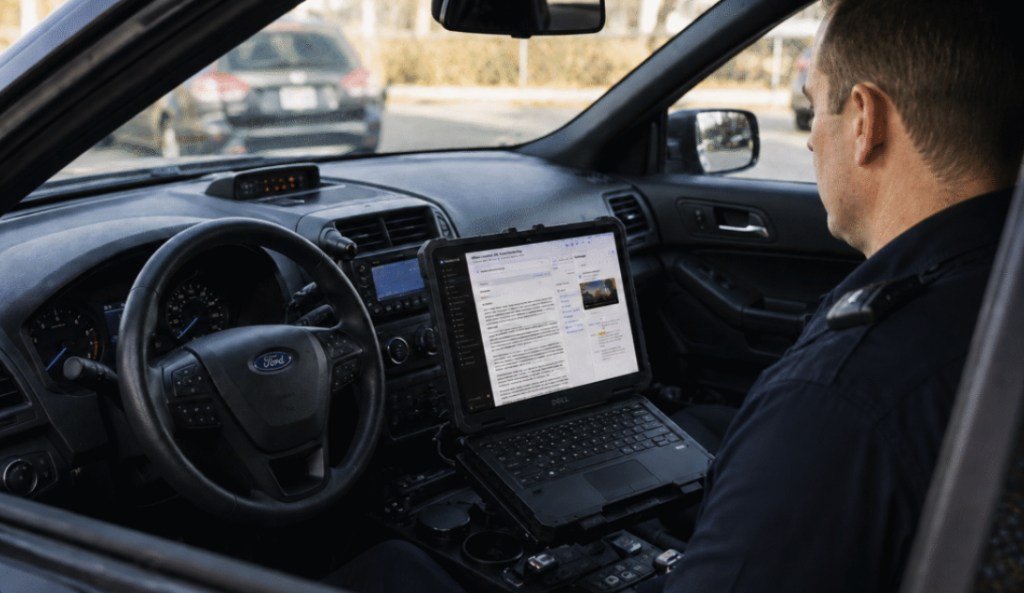
Law enforcement agencies across the United States and Europe are rapidly adopting artificial intelligence tools for everything from predictive policing to facial recognition and automated report generation — but the legal frameworks meant to govern these powerful technologies remain fragmented and inconsistent.
According to a new analysis published Monday, police departments in major cities including New York, London, and Amsterdam have deployed AI systems capable of analysing surveillance footage in real time, generating investigative leads from vast datasets, and even drafting incident reports using large language models. Yet in many jurisdictions, there are no specific laws governing how these tools can be used, what data they can access, or how their outputs can be challenged in court.
The Transparency Gap
Civil liberties advocates have raised alarms about what they describe as a “transparency gap” in police AI adoption. In several documented cases, defendants and their attorneys were not informed that AI-generated evidence played a role in their cases until well into trial proceedings. This raises serious questions about due process and the right to confront one’s accuser — especially when the “accuser” is a proprietary algorithm whose inner workings are shielded as trade secrets.
“We’re seeing a pattern where police departments acquire powerful surveillance tools first and ask for permission later,” said one digital rights researcher. “By the time lawmakers catch up, the technology is already embedded in daily operations.”
European Union Takes the Lead
The European Union’s AI Act, which came into force earlier this year, provides some of the world’s strongest guardrails on high-risk AI applications, including law enforcement uses. The Act requires transparency disclosures, human oversight mechanisms, and conformity assessments for AI systems used in policing. However, implementation varies significantly across member states, and enforcement mechanisms are still being established.
In the Netherlands, the government has taken a more proactive stance, establishing an algorithmic transparency registry and requiring public bodies to disclose their use of AI decision-making tools. Yet even there, police use of AI remains a contentious political issue, with parliamentary debates ongoing about the appropriate limits of automated surveillance.
What’s Next
Experts predict that 2026 will be a pivotal year for AI governance in law enforcement. Several U.S. states are considering legislation that would mandate algorithmic impact assessments before police can deploy new AI systems, while at the federal level, bipartisan efforts are underway to establish baseline standards for AI in criminal justice.
The fundamental challenge remains: how to harness AI’s potential to improve public safety — from faster crime-solving to more efficient resource allocation — without sacrificing the civil liberties and due process protections that form the bedrock of democratic societies. As one policy analyst put it: “The technology isn’t waiting for the law to catch up, and that’s precisely the problem.”
The Netherlands, for internationals
One email a week: the week's news for internationals in the Netherlands, new practical guides and what changed in the cities. No spam, unsubscribe any time.