Apple has started rolling out its most significant Siri upgrade to a wider audience with the release of the iOS 27 public beta. The update gives everyday users a chance to test the revamped AI assistant before its official launch later this year. Until now, only registered developers could access Siri’s new features, which include deeper integration with personal data and a standalone app.
The public beta opens the door to what could be the largest real world test of Apple’s AI assistant. With roughly 2.5 billion active Apple devices globally, even a modest adoption rate among beta users will provide substantial feedback. This move positions Siri as a direct competitor to ChatGPT, Gemini, and Claude, though Apple has taken a different approach by focusing on privacy and on-device processing.
Siri’s new capabilities and deeper system integration
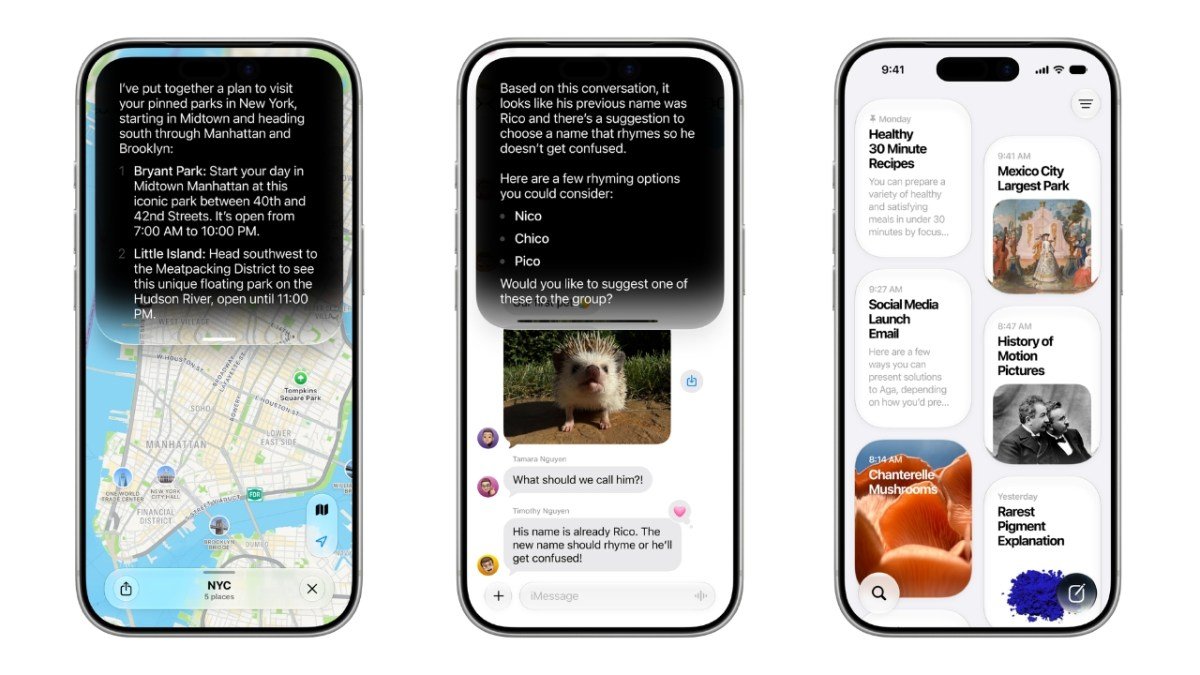
The overhaul, first previewed at Apple’s Worldwide Developers Conference in June, transforms Siri from a basic voice helper into a full featured AI tool. The assistant can now access information stored on the device, such as emails, photos, and messages. It can also analyze what is on the screen and combine that context with general world knowledge to deliver answers similar to modern chatbots.
Siri is now embedded more deeply across the operating system. Users can activate it with the usual “Hey Siri” command or the side button, but there is also a new gesture: swiping down from the Dynamic Island. The assistant has also been integrated into Spotlight, Apple’s built in search tool, making it possible to search for answers to almost any question directly from the home screen.
For the first time, Siri has its own standalone app. This addition caters to users who are comfortable with chatbot interfaces from ChatGPT or Gemini. However, because Siri is woven into so many parts of the iPhone, opening a separate app feels somewhat redundant. The upgraded Siri is available across all Apple platforms, including iPad, Mac, Apple Watch, CarPlay, AirPods, Apple TV, and Vision Pro.
How Siri AI works under the hood
Behind the scenes, Siri relies on Apple Intelligence, the company’s broader AI framework. This includes Apple’s new Foundation Models, which run locally on the device and also use Apple’s Private Cloud Compute for tasks that require more power. Apple built these models in collaboration with Google, specifically using Google’s Gemini model as a knowledge source. But this is not a simple rebrand. Apple trained its models on proprietary data tailored to Apple Silicon, and used a technique called distillation to create smaller, highly efficient models from Gemini. The Private Cloud Compute ensures that users’ personal data is never stored or accessible to Apple.
Early testing of the developer beta showed Siri handling routine tasks more reliably. It can find specific photos in the Photo Library, summarize group messages, add appointments from texts to the calendar, and identify nutritional information from objects in the camera view. It also performs better on open ended questions that previously required a web search, such as when a local event takes place or what the latest news headlines are.
The developer beta was not without hiccups. Some prompts triggered error messages or confused the assistant. In one instance, asking for the latest news about Iran caused Siri to search the user’s contacts for a person named Iran. Despite these glitches, the beta has been relatively stable compared to previous years, making the public beta easier to recommend this time.
It is easy to imagine Siri becoming a more regular part of daily life, especially since it does not require opening an app for many interactions. However, anyone installing a beta should proceed with caution. If a device must run without any errors, it is safer to wait for the official public release of iOS 27, expected in September. For those curious about how this rollout compares to other developments, check out the latest AI news on Mylistingo.