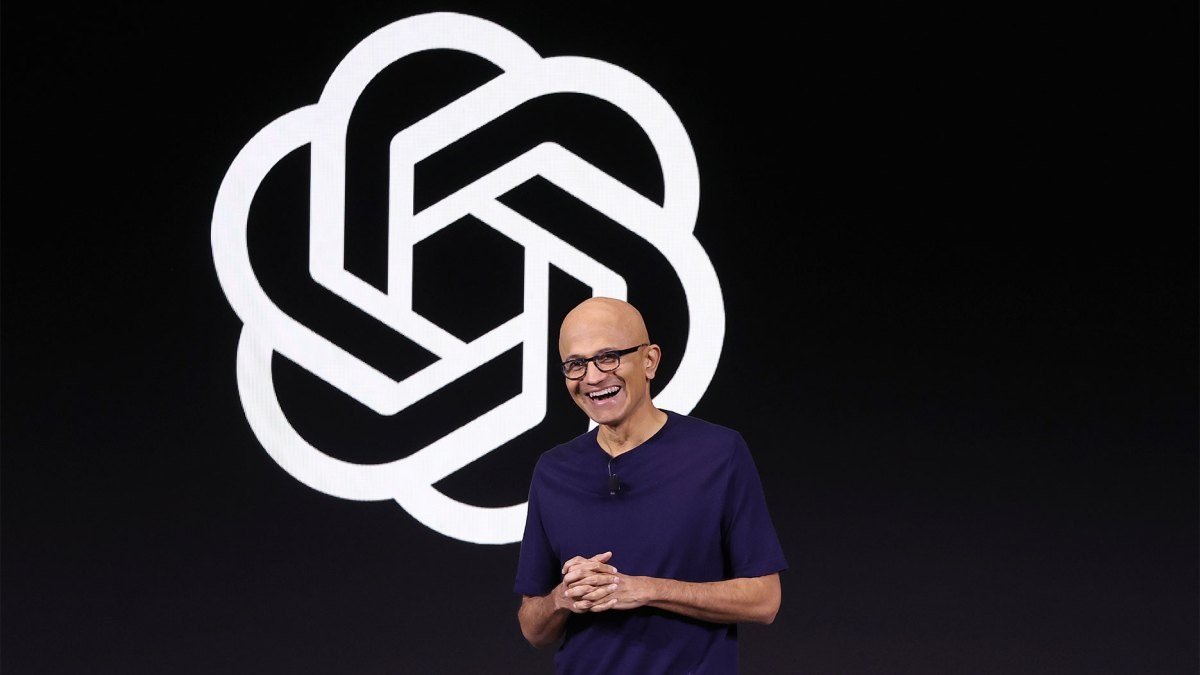
Satya Nadella has spent the better part of two years telling the world that AI will remake every business on the planet. Now he is adding a warning to the sales pitch. Companies that hand their entire future to a single AI model, Microsoft’s chief executive says, may not be around to see how the technology plays out.
The comment, reported by TechCrunch on July 27, cuts against the way most organizations have approached AI so far. Pick a frontier lab, wire its model into your products, and let it run. Nadella’s argument is that this setup looks convenient right up until the moment it becomes a liability, and that the companies treating one vendor as a permanent utility are building on ground that could shift underneath them.
The case against betting everything on one model
What worries Nadella is dependence. A business with no model of its own, and no way to move between the models it rents, has effectively outsourced a core capability to a supplier it does not control. Prices change. Terms change. A model that led the field last quarter can slip behind a rival’s release, and the customer stuck on it has no easy exit.
Nadella’s framing puts a sharp point on something buyers have been slow to admit. Choosing an AI provider is not like choosing a cloud region or a database. Models are improving and reordering themselves at a pace that makes any single choice feel provisional. Lock yourself to one and you inherit its ceiling, its outages, and its pricing power. The convenience of a default becomes the cost of a dependency.
There is a competitive angle here too, and it is worth being honest about who is saying this. Microsoft has poured enormous sums into OpenAI, yet it has also been building its own in-house models and hedging its bets across the field. Nadella advising the market to avoid single-model dependence is, in part, Nadella describing the strategy his own company already runs.
What an AI gateway actually does
The fix Nadella points to has a name that sounds more mundane than the idea behind it. An AI gateway is a layer of infrastructure that sits between a company’s applications and the models they call. Instead of a prompt traveling straight from your software into a specific vendor’s model, it passes through this middle layer first.
That separation is the whole point. When your prompts and your model are welded together, switching providers means rebuilding. When a gateway sits in between, the model becomes something closer to a component you can swap. You can route a request to one model today and a different one tomorrow, test a cheaper option against an expensive one, or fall back to an alternative when your first choice goes down. The prompt logic stays where it is. Only the destination changes.
Think of it as the difference between a soldered part and a plug. A company that has soldered its business to one model pays a steep price to change anything. A company that runs its requests through a gateway keeps its options open, which is exactly the flexibility Nadella says will separate the survivors from the casualties.
Why this changes how companies buy AI
Nadella’s two conditions for survival are blunt. Have your own models, or have a gateway that keeps you from being trapped by someone else’s. Most companies buying AI right now have neither. They hold a contract with a single lab and an architecture that assumes that contract will hold forever.
That assumption is the risk. The AI market is not settling into a comfortable hierarchy where one provider wins and everyone else lines up behind it. New models arrive constantly, the leaderboard reshuffles, and the gap between the best option and the second-best keeps narrowing and reopening. In a market that volatile, the ability to move is worth more than the comfort of a default.
For technology leaders, this reframes a familiar question. The job is no longer only picking the best model. It is building the plumbing so that picking the best model is a decision you can make again next quarter without tearing anything down. Optionality, in Nadella’s telling, is not a nice-to-have. It is the thing that decides who is still standing.
Whether the market listens is a separate matter. Gateways add engineering work and a layer of complexity that plenty of teams would rather skip while they race to ship features. The temptation to pick one model and move on is real, and it is exactly the behavior Nadella is warning against. The question worth watching is whether AI gateways become standard infrastructure the way load balancers and content delivery networks did, or whether they stay a specialist concern for the largest players. If he is right, the companies treating multi-model flexibility as optional today are the ones writing their own obituaries, and the bet each of them makes now is one it will not easily undo.
For more coverage of enterprise AI strategy, visit Mylistingo.
Source: Original Article