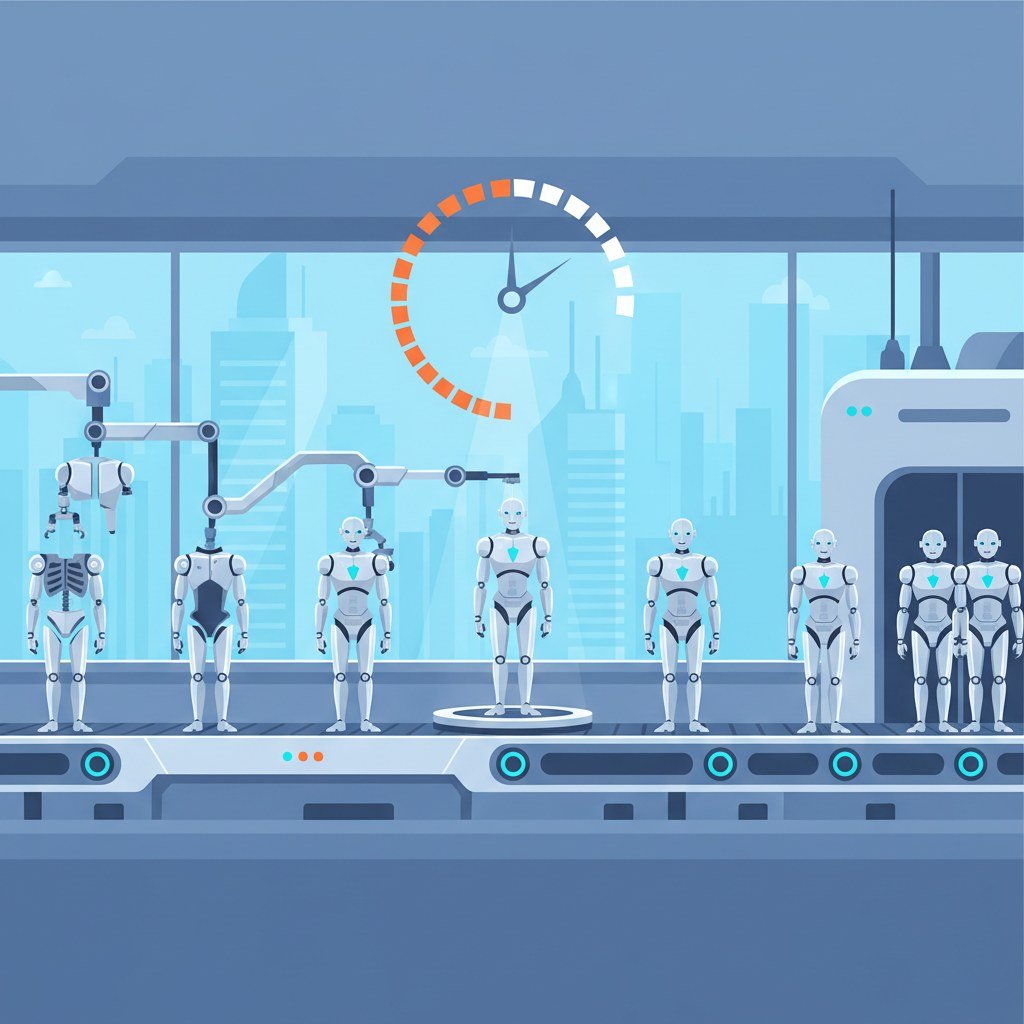
Figure AI is building one humanoid robot per hour. That is not a projection or a keynote boast. It is the current production rate at the company’s BotQ facility, where Figure 03 units are rolling off the line at a pace that would have seemed implausible eighteen months ago. Boston Dynamics has begun shipping its electric Atlas to its first customers, with Hyundai and DeepMind among those receiving initial 2026 units. Agility Robotics has seven or more of its Digit units active at Toyota Canada. The industrial robot moment, long anticipated, is arriving faster than most of the industry predicted.
One robot per hour
For years, humanoid robotics was a field defined by demos: carefully staged videos of machines walking across flat floors, picking up objects in controlled environments, occasionally falling over. The gap between lab performance and factory reliability was the industry’s central unsolved problem. That gap is narrowing at speed.
Figure AI’s BotQ production facility represents the clearest sign yet that the hardware side of the equation is being solved. At one unit per hour, the factory is not just a technical achievement. It is a commercial bet that demand for humanoid robots in industrial settings is real and imminent. The company is not waiting for the market to develop. It is building inventory.
Boston Dynamics, the company that spent a decade making viral videos of Atlas doing parkour, has shifted its focus toward practical deployment. The electric Atlas, a significant redesign of its earlier hydraulic system, is reaching the hands of engineers at Hyundai and AI researchers at DeepMind. Early results will shape how the platform evolves for real-world logistics and manufacturing tasks.
Language becomes the new interface
Hardware production is only part of the story. The deeper shift happening in 2026 is in how robots receive and understand instructions. NVIDIA CEO Jensen Huang declared recently that “the ChatGPT moment for robotics is here,” pointing to a wave of breakthroughs in what the industry calls physical AI. These are models trained to understand the real world, reason about objects and spaces, and plan sequences of physical actions.
NVIDIA’s Isaac GR00T open models sit near the center of this shift. They enable robots to interpret natural language instructions and execute complex, multistep tasks using vision language action reasoning. In practical terms, a warehouse operator can tell a robot what to do in plain English rather than writing hundreds of lines of low-level code. NVIDIA developers have gone further, integrating NemoClaw with Isaac Sim to allow machines to navigate environments through spoken or typed commands with no manual programming at all.
Bridging the simulation gap
One persistent problem in robotics has been the gap between how robots perform in training simulations and how they behave in the physical world. Machines trained in virtual environments often fail in unexpected ways once placed in real factories because actual surfaces, lighting, and object positions never perfectly match the simulation.
Cadence Design Systems and NVIDIA announced this month an expanded partnership targeting this problem directly. The collaboration combines Cadence’s simulation engines with NVIDIA’s Isaac robotics libraries, aiming to create training environments detailed enough that robots can transfer their skills to the real world with minimal additional calibration. Closing this gap would significantly accelerate how quickly new capabilities reach commercial deployment.
Doing more with less power
Researchers at Tufts University published results this year showing a neuro-symbolic AI system that achieved a 95 percent success rate in robotic task tests while consuming up to 100 times less energy than standard neural network models, which managed only a 34 percent success rate on the same tests. The Tufts approach blends symbolic reasoning with neural learning, allowing robots to complete structured tasks with greater reliability and far less computational overhead.
In surgical settings, a company called PeritasAI is developing multi-agent robotic intelligence designed to sense, coordinate, and act in real time alongside surgical teams. The system targets operating environments where precision is non-negotiable and where human-machine coordination matters most.
The robots arriving in factories and hospitals this year are better, cheaper to run, and easier to reprogram than anything available three years ago. The next twelve months will show whether the production capacity now being built can find buyers at the scale required to sustain it. For more coverage of robotics and physical AI, visit Mylistingo.
The Netherlands, for internationals
One email a week: the week's news for internationals in the Netherlands, new practical guides and what changed in the cities. No spam, unsubscribe any time.