Last May, a research team at Harvard Medical School and Beth Israel Deaconess Medical Center published a study in Science that stopped a lot of people mid-scroll. Their AI model provided the exact or a very close diagnosis in 67 percent of emergency room triage cases. Two experienced physicians working the same cases came in at 55 percent and 50 percent respectively. The headline spread fast — but the full picture is more complicated, and more interesting.
Where the accuracy gains are real
In specific, well-defined diagnostic tasks, AI systems are now genuinely outperforming human physicians in controlled conditions. Medical AI has reached 94 percent accuracy for breast cancer and heart failure detection in imaging studies. The systems analyse CT scans, MRIs, and ECGs faster than any radiologist, and they reduce false negatives — the missed diagnoses — by between 15 and 30 percent depending on the condition. For breast cancer in particular, where catching a tumour six months earlier can be the difference between straightforward treatment and a fight for survival, that reduction in false negatives is not an abstract statistic.
Catapulting this further is the sheer consistency AI brings. A radiologist working a twelve-hour shift on a Friday afternoon is not performing at the same level as they were on Monday morning. AI does not fatigue. It does not have a bad day. For pattern-recognition tasks applied to medical imaging, that consistency translates into measurably better outcomes at scale.
The failure modes nobody should ignore
A second study, published by researchers at Mass General Brigham in April 2026, arrived at a very different conclusion. Looking specifically at generative AI chatbots handling primary care differential diagnoses, the researchers found that AI failed to produce an appropriate differential diagnosis more than 80 percent of the time. The same tools that perform brilliantly on imaging analysis fall apart when asked to reason through ambiguous, multi-symptom presentations the way a GP does.
The distinction matters enormously. Medical AI in 2026 is exceptional at narrow, well-defined tasks: read this scan, flag this anomaly, match this ECG pattern. It struggles with the messy, contextual, social reasoning that forms the core of primary care medicine — a patient who downplays symptoms, a history that changes the risk profile entirely, a presentation that doesn’t fit any textbook category.
What hospitals are actually deploying
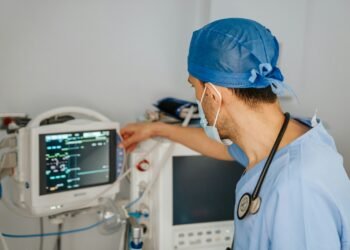
The AI tools getting serious clinical adoption in 2026 are almost all narrow-scope systems: AI-assisted radiology flagging, AI-powered ECG interpretation, automated pathology slide analysis, and early sepsis warning systems that monitor vital sign patterns in real time. These applications sit alongside human clinicians rather than replacing them. The AI raises a flag; the doctor decides what to do about it.
Aurora, developed by an international research team and trained on over a million hours of atmospheric and medical data, represents the frontier of what’s coming next. Early hospital pilots are showing promising results in ICU settings where identifying at-risk patients hours before a crisis is clinically decisive.
The oversight question
High predictive accuracy in isolation does not equal safe clinical use. Automation bias — the tendency of human operators to defer to algorithmic outputs even when those outputs are wrong — is a documented problem in clinical settings. Every credible deployment framework in medicine right now treats human oversight not as a regulatory checkbox but as an active, continuous part of the system.
The honest assessment of where medical AI stands in 2026: genuinely useful in imaging and pattern-recognition, unreliable in complex diagnostic reasoning, and most valuable when deployed as a second opinion rather than a first one. That gap will narrow considerably over the next three years. For more coverage of AI in health, visit Mylistingo.