Six and a half million dollars barely registers in humanoid robotics right now. AI² Robotics raised $735 million in July at a $3 billion valuation. Neura Robotics closed up to $1.4 billion in June. Against that, the seed round Avatar Robotics announced on August 7 looks like a rounding error. The number is not the interesting part.
What the San Francisco company is selling is a different answer to the question every robotics startup is stuck on, which is what to do while the autonomy is not ready yet. Avatar’s answer is to put a person behind the wheel and charge for the work anyway.
How the model works
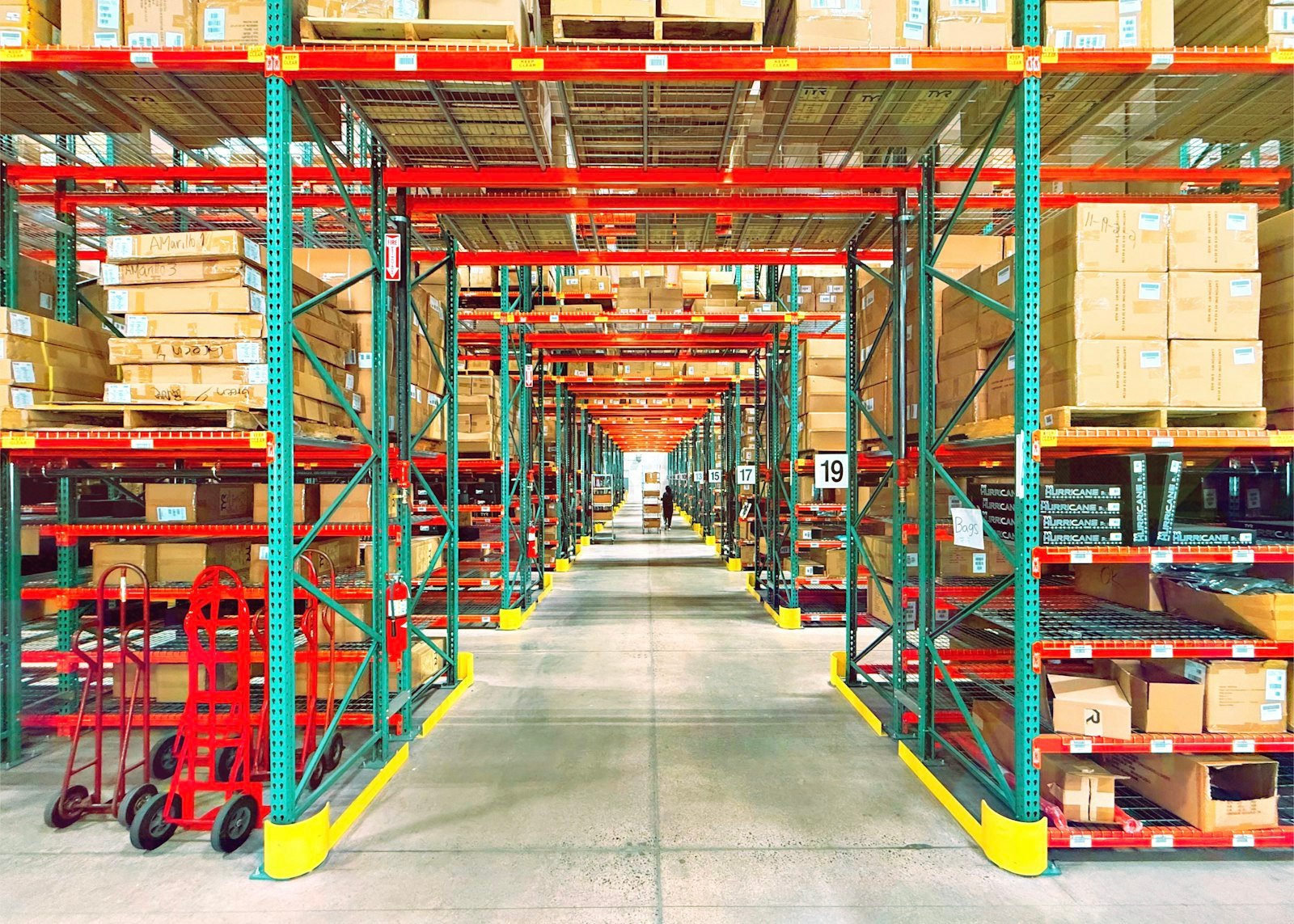
Avatar builds semi-humanoid mobile manipulators for warehouses, factories and logistics floors. Remote operators drive them through picking, packing, kitting, sorting, cycle counting and material handling. Crucially, the robots go into existing facilities without the racking changes and floor markings that most warehouse automation demands, which shortens the sales cycle from a capital-expenditure decision to something closer to hiring.
Every task an operator performs generates control data from a real environment rather than a simulation. That data feeds robotic foundation models, and routine tasks move to autonomy as the models improve. The endpoint the company is aiming at is one operator supervising a fleet instead of driving a single machine.
“The path to full robotic autonomy will require both better hardware and massive amounts of real-world data,” said Amy Yin, a partner at defy.vc, which led Avatar’s earlier pre-seed. “Avatar’s approach is incredibly clever: Use remote human operators to bridge the gap today while improving autonomy with every task completed.”
Who is backing it
AlleyCorp led the $6.5 million round. Headline joined, along with Henry Ford III, Refashiond, Paul Vogel, Jack Huffard and Samuel Udotong. Avatar was founded in 2024 by Colin Webb and Nenye Anagbogu, both MIT graduates who had built an AI startup together before this one. Webb, now CEO, previously engineered autonomous systems for self-driving cars and AI-powered drones.
The engineering bench is drawn from Cruise, Apple, Tesla, Intuitive Surgical, Unity and MIT, which is a recognizable profile for a company betting on teleoperation. Intuitive Surgical in particular has spent two decades proving that surgeons will accept operating a robot from across the room if the latency and the feedback are good enough.
Teleoperation stops being a secret
For years, remote human control was the thing humanoid companies did not talk about in demo videos. That has changed. 1X Technologies, Apptronik, NEURA Robotics, Sanctuary AI and Tutor Intelligence all now describe human operators as part of how their robot AI gets trained. Avatar has gone further by making the operator the product rather than the scaffolding.
It is a defensible position commercially. A warehouse operator does not care whether a box was moved by a neural network or by someone in a chair three time zones away, provided the box arrives and the rate holds. It is also an honest one, given how far current robot foundation models remain from handling the messy variety of a live distribution center.
What the traction actually shows
Avatar says its mobile manipulators have processed and assisted in shipping more than 900,000 products inside live customer facilities, including work for a global beauty retailer. It has also entered a post-pilot expansion with a multi-billion-dollar warehouse operator covering sorting and picking workflows.
“Avatar Robotics has built strong partnerships with their initial customers, and is already delivering meaningful value in real workflows, through their human-in-the-loop system, which is performing at a level competitive with skilled human operators,” said Brannon Jones, a principal at AlleyCorp.
Competitive with a skilled human is the phrase to sit with. It means the robots are not yet cheaper or faster than the people they replace, only comparable, and the economics have to come from somewhere else. In this model that somewhere is labor arbitrage on the operator side plus the compounding value of the data.
The number to watch is not the funding total but the operator-to-robot ratio. Today it is close to one to one, which makes the business a staffing company with expensive hardware attached. If Avatar can push that to one operator running five machines, the model works. If it cannot, the data it is collecting will be worth more to whoever buys the company than to Avatar itself. For more coverage of robotics and physical AI, visit Mylistingo.