Every few years the software industry falls in love with a metaphor, and right now the metaphor is the factory. Not a building full of machines, but a system that turns raw intent into working code with as little human friction as possible. On Tuesday, Warp made its bid to own that idea outright.
The company introduced Warp Factories, an infrastructure system built to make standing up an AI software factory about as painful as flipping a switch. The pitch is deceptively simple. Instead of asking teams to bolt together their own tangle of agents, runtimes, and orchestration logic, Warp wants to hand them the whole assembly line out of the box.
What Warp is actually selling
Start with the phrase itself. A “software factory” describes a setup where AI agents do the repetitive labor of building software, planning a change, writing the code, testing it, and handing back something a human can review. The concept has floated around developer circles for a while. What has been missing is the plumbing to make it real without a small platform team spending months on it.
Warp Factories is aimed squarely at that gap. Rather than treating agentic coding as a feature you sprinkle onto an existing workflow, Warp is framing it as infrastructure, the layer everything else sits on. Get the foundation right, the argument goes, and the agents stop being a novelty and start being a dependable part of how software gets shipped.
That framing matters because most teams experimenting with AI coding tools today are still doing it by hand. They wire an agent to a repository, script a few workflows, babysit the output, and hope the whole thing holds together. It rarely does at scale. Warp’s argument is that the missing piece was never a smarter model. It was the boring, unglamorous scaffolding around the model.
Why “out of the box” is the whole point
Read the announcement closely and the load-bearing phrase is “as easy as possible.” That is a positioning choice as much as a technical one. Plenty of companies can help you build an AI development pipeline if you bring engineers, patience, and a tolerance for glue code. Far fewer are promising that you can skip all of it.
There is a reason the industry keeps returning to the factory image, and it says something uncomfortable about where AI development still sits. The models are dazzling. The workflows around them are a mess. Ask ten teams how they run agents in production and you will get ten different Rube Goldberg machines, each fragile in its own special way. An out-of-the-box system is a wager that developers are tired of being systems integrators for their own tools.
Warp built its reputation on the terminal, the command-line environment developers live in all day. Moving from a better terminal to a full factory for AI development is a bigger leap than it sounds. It repositions the company from a tool you open to a platform you build on. That is a harder sell and a more valuable one, if it lands.
The bet underneath the launch
Warp is not alone in chasing this. Agentic coding has become one of the most crowded corners of the AI market, with established players and well-funded startups all racing to own the workflow where code gets written by machines and checked by people. The differentiator Warp is reaching for is not raw capability. It is convenience, the promise that the hard part is already done.
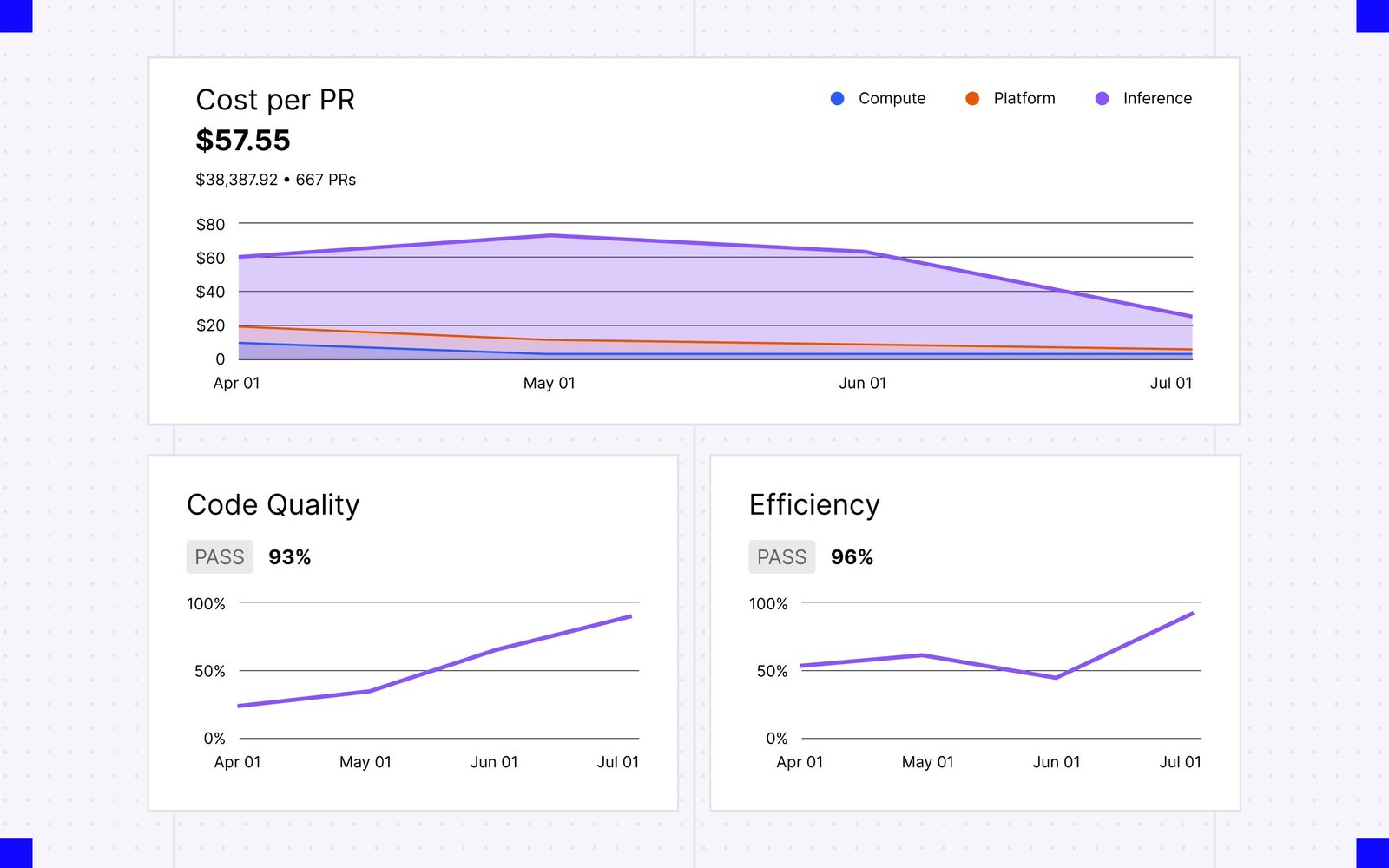
Whether that promise survives contact with real engineering teams is the open question. Convenience is easy to claim and hard to deliver, especially in production environments where security, review, and reliability are not optional. A factory that produces plausible-looking code quickly is a liability. A factory that produces trustworthy code quickly is a genuinely different kind of product. The gap between those two is where launches like this one are won or lost.
What makes the timing interesting is the mood of the market. Companies have spent two years proving that AI can write code. The next phase is proving they can operate it, safely and repeatedly, without a heroic effort behind every deployment. That is the terrain Warp is planting a flag on.
The teams to watch are the ones already drowning in half-built agent pipelines, because they are the clearest test of whether an out-of-the-box factory beats a homemade one. If Warp Factories saves them the months they would otherwise spend on scaffolding, the metaphor will have earned its keep. If it just adds one more layer to manage, the factory floor will get crowded fast.
For more coverage of AI development tools, visit Mylistingo.
Source: Original Article
The Netherlands, for internationals
One email a week: the week's news for internationals in the Netherlands, new practical guides and what changed in the cities. No spam, unsubscribe any time.