An assistant that watches for your next impulse buy
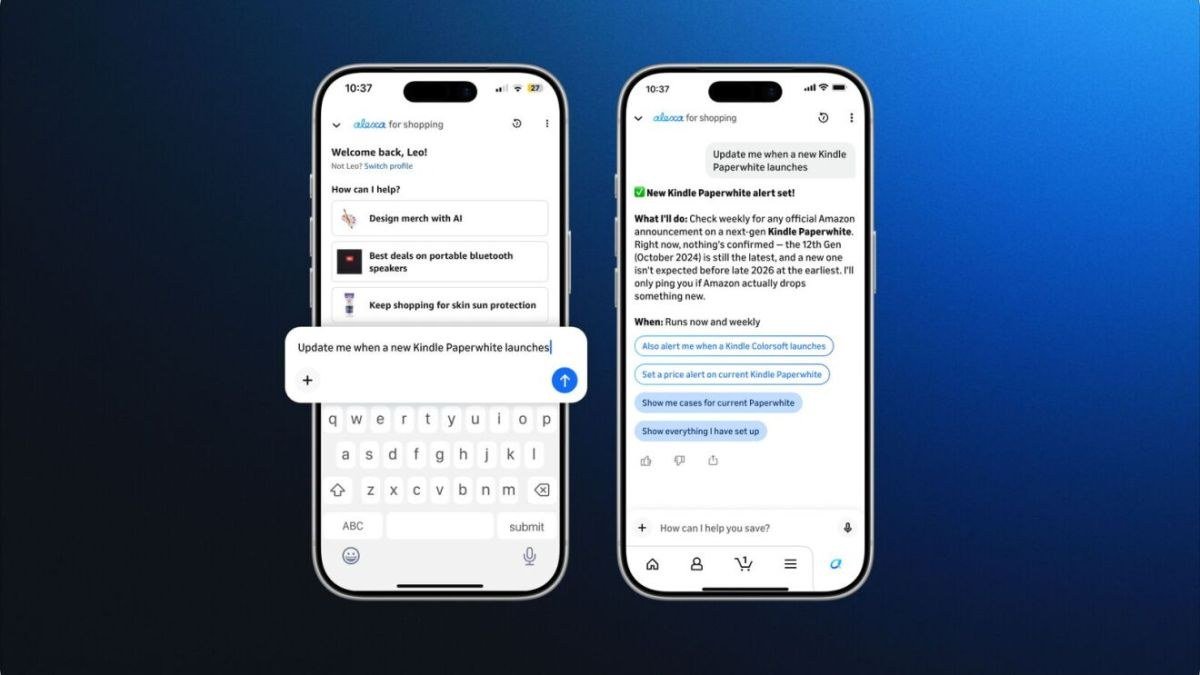
Amazon has spent a decade teaching Alexa to answer questions. Its newest trick is different. With a feature called “Update Me When,” the assistant will now speak up on its own, pinging you the moment something arrives in the world that might loosen your wallet.
The idea is simple and a little unnerving. You tell Alexa what you care about, and it keeps watch. A band you love announces a tour. A sequel to a book you finished lands a release date. A gadget you have been eyeing finally ships. When that trigger fires, Alexa delivers a personalized alert built around one quiet assumption: that the news might end with you buying something.
Voice assistants have always been reactive. You ask, they respond. “Update Me When” flips that posture. Alexa becomes the one starting the conversation, and the conversation is pointed squarely at the checkout button. That shift, from tool you summon to tool that summons you, is the part worth paying attention to.
Why Amazon wants Alexa to interrupt you
Think about how most purchases actually happen. You hear about a product launch, a concert, a new release, and there is a gap between learning it exists and deciding to buy. Amazon has long owned the second half of that journey, the search and the one-click order. What it has never controlled is the first spark, the moment of “oh, that’s out now.”
“Update Me When” is an attempt to own that spark too. By positioning Alexa as the messenger for launches, tours, books, and shows, Amazon inserts itself at the exact instant interest turns into intent. The company does not have to wait for you to open a browser. It gets to be the reason you thought about buying in the first place.
That is a meaningful place to stand. Retailers pour enormous effort into catching shoppers at the top of the funnel, and Amazon is trying to skip the line by living in your kitchen and your living room. An alert delivered by a voice you already trust carries a different weight than a banner ad you have trained yourself to ignore.
The line between helpful and pushy
Whether this lands as convenience or intrusion depends entirely on restraint. Alerts about things you genuinely asked to track are useful. Nobody minds hearing that their favorite author has a new book out. The trouble starts when the definition of “something new might tempt you” stretches beyond what you actually requested.
Personalization cuts both ways here. The same signals that let Alexa know you want a tour date also let Amazon model what else you are likely to buy. A feature framed around events you chose to follow can quietly become a channel for events Amazon decides you should follow. The framing in the name itself, tempting you to shop, is unusually honest about the commercial intent behind the helpfulness.
Trust is the whole game. If people feel the alerts respect their choices, “Update Me When” becomes a genuinely handy way to stay on top of the stuff they care about. If it drifts into a stream of nudges nobody signed up for, users will do what they always do with noisy notifications. They turn them off, and a feature meant to deepen the relationship ends up straining it.
A new job description for the voice assistant
For years the knock on smart speakers has been that people mostly use them for timers, weather, and music. Amazon has been searching for the thing that makes Alexa indispensable rather than incidental. Turning it into a proactive alerting service is one answer to that question, and turning those alerts toward shopping is a very Amazon answer.
The bet is that a voice you already keep in your home can become a low-friction front door to commerce, catching you at moments a screen never could. Whether that feels like a thoughtful concierge or a salesperson who never quite leaves is the tension Amazon now has to manage in public.
Watch how tightly the alerts stay tethered to what users actually ask for. That single design choice, restraint versus reach, will decide whether “Update Me When” becomes a habit people keep or a setting they hunt down and disable. Amazon has built the mechanism to reach you first. The open question is how often it decides to use it.
For more coverage of Amazon Alexa, visit Mylistingo.
Source: Original Article
The Netherlands, for internationals
One email a week: the week's news for internationals in the Netherlands, new practical guides and what changed in the cities. No spam, unsubscribe any time.