You cannot really see a Dutch doctor until you can log in as one of the country’s residents. DigiD, the national digital identity, is the key that opens almost every medical door in the Netherlands, and for an international who has just landed in Amsterdam or Eindhoven, that single login is often the first real hurdle. Everything after it, from booking a huisarts to reading a hospital letter, increasingly runs through an app.
DigiD is the login that runs the whole system
Almost every patient-facing service in the Netherlands sits behind DigiD. Your general practitioner’s online portal, the pharmacy’s refill page, the insurer’s claims dashboard, and the government’s own health records all expect it. Newcomers often set it up on a phone with the DigiD app, which handles the two-step verification that Dutch services now require. Without it, most digital health tools simply refuse to open, which is why sorting the login early tends to matter more than choosing any single app.
The apps that move you through GP, referral and pharmacy
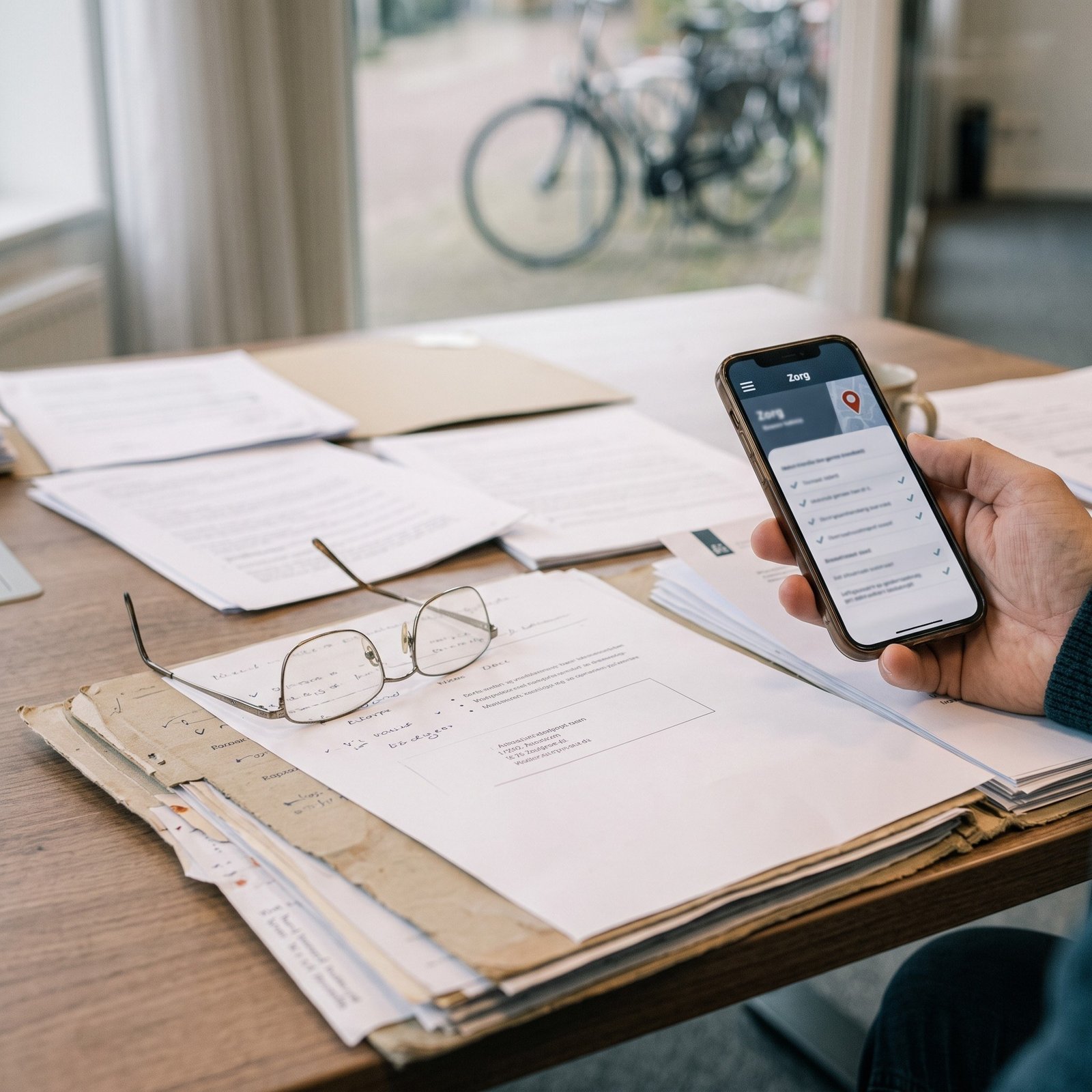
Dutch primary care revolves around the huisarts, and most practices now run patient portals where you request appointments, message the practice assistant, and view results. When a GP decides you need a specialist, the referral usually travels through Zorgdomein, the platform that routes patients to hospitals and clinics behind the scenes. Pharmacies have their own layer. Apotheek apps let you reorder repeat prescriptions and track when medication is ready for collection, which spares you the standing-in-line ritual that trips up a lot of arrivals.
What AI translation and symptom checkers actually do
Here is where the technology gets genuinely useful for someone who does not read Dutch. Medical letters, test summaries and pharmacy instructions arrive in Dutch by default, and AI translation tools now turn a photographed letter into readable English in seconds. They are convenient. They also make mistakes with clinical terms, so the translation is a bridge, not a verdict. The same caution applies to symptom-checker apps. They ask structured questions and point toward general categories of care, but they describe possibilities rather than diagnose, and Dutch health authorities treat them as triage aids, not substitutes for a clinician.
Cost sits underneath all of it. As of 2026, the mandatory eigen risico, the deductible every adult pays before basic insurance reimburses most care, is €385, and the insurer apps are where you watch that balance draw down.
The interesting shift to watch is whether these portals ever start speaking to newcomers in their own language by default, rather than leaving translation as an afterthought bolted on by a separate app.
For more coverage of Dutch healthcare apps for expats, visit Mylistingo.