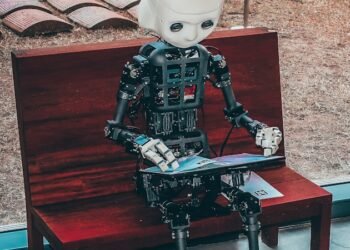



The manufacturing industry is undergoing a profound transformation in 2026, driven by the convergence of artificial intelligence and advanced robotics. What was once the domain of science fiction is now a practical reality on factory floors around the world. AI-powered robotics systems are no longer limited to repetitive, pre-programmed tasks; they now perceive, learn, adapt, and collaborate with human workers in ways that were unimaginable just a few years ago. This article explores how these intelligent systems are reshaping manufacturing, from collaborative robots working alongside humans to AI-driven computer vision systems that inspect products with superhuman precision.

The Rise of Collaborative Robots in Modern Factories
Collaborative robots, or cobots, represent one of the most significant shifts in manufacturing automation in 2026. Unlike traditional industrial robots that operate in isolated cages for safety, cobots are designed to work directly alongside human employees. These machines are equipped with advanced sensors, force-limiting technology, and AI-driven perception systems that allow them to detect human presence and adjust their behavior in real time.
Modern cobots in 2026 are far more capable than their predecessors. They leverage onboard AI processors that enable them to learn new tasks through demonstration rather than requiring complex programming. A worker can physically guide a cobot through a sequence of movements, and the robot internalizes the task, optimizes the motion path, and begins performing it autonomously within minutes. This capability dramatically reduces deployment time and makes automation accessible to small and medium-sized manufacturers who cannot afford weeks of programming for every new task.
The safety advancements in 2026 cobots are equally impressive. Computer vision cameras and LiDAR sensors create a 360-degree awareness bubble around the robot. If a human approaches too quickly or enters a dangerous zone, the cobot instantly reduces its speed or stops entirely. New ISO standards for human-robot collaboration have been updated to reflect these capabilities, giving manufacturers clear guidelines for safe deployment. As a result, factories that once operated with dozens of workers performing repetitive, ergonomically stressful tasks now deploy cobots to handle those jobs while workers focus on higher-value activities such as quality assurance, process optimization, and creative problem-solving.
Companies like Fanuc, ABB, Universal Robots, and newer AI-native startups have released cobot models in 2026 that are lighter, stronger, and more intelligent than ever. These robots can handle payloads from a few kilograms to over thirty kilograms, with reach capabilities that suit everything from benchtop assembly to large-part handling. The integration of natural language processing means workers can now instruct cobots using voice commands, asking them to adjust speed, change grips, or report production statistics without touching a control panel.
AI-Powered Computer Vision for Quality Control
Quality control has always been a critical bottleneck in manufacturing. Human inspectors are skilled but tire quickly, miss subtle defects, and cannot inspect every item at high production speeds. Traditional machine vision systems are rigid, requiring extensive configuration for each product variant. In 2026, AI-powered computer vision has solved these limitations and transformed quality assurance into a continuous, real-time process.
Modern AI vision systems use deep learning models trained on millions of images to detect defects with accuracy exceeding 99.9 percent. These systems can identify microscopic cracks, surface blemishes, dimensional deviations, color inconsistencies, and assembly errors that would be invisible to the human eye. Unlike earlier systems that needed to be manually programmed with defect rules, AI vision models are trained through example. Manufacturers show the system thousands of good parts and hundreds of defective parts, and the neural network learns the distinguishing features autonomously.
In 2026, these systems have become faster and cheaper thanks to advances in edge computing. Dedicated AI inference chips installed directly on the production line process video feeds at hundreds of frames per second, making real-time inspection possible at the fastest production speeds. Defective parts are identified and rejected within milliseconds, preventing bad products from progressing downstream and reducing waste. The same camera systems double as process monitoring tools, detecting when a welding torch is drifting out of alignment or when a pick-and-place robot is developing positional drift, allowing maintenance teams to intervene before defective parts are produced.
The integration of AI vision with other factory systems has created a powerful feedback loop. When the vision system detects a defect trend, it automatically alerts the production system to adjust parameters. For example, if injection molding parts begin showing sink marks, the vision system can signal the molding machine to increase hold pressure or adjust cooling time, correcting the problem without human intervention. This closed-loop quality control represents a quantum leap over traditional inspection methods.

Predictive Maintenance and Operational Efficiency
Unplanned downtime remains one of the most expensive challenges in manufacturing, costing industrial producers an estimated $50 billion annually across the global economy. In 2026, AI-powered predictive maintenance has emerged as a cornerstone technology that dramatically reduces these losses. By continuously monitoring equipment through vibration sensors, thermal imaging, acoustic analysis, and operational data, AI systems can predict failures days or even weeks before they occur.
The core of modern predictive maintenance is a digital twin—a virtual replica of every machine on the factory floor. Sensors stream real-time data into this digital model, where AI algorithms compare current performance against the expected behavior. When anomalies emerge, such as unusual vibration patterns in a spindle bearing or temperature spikes in a motor winding, the system flags the issue and recommends specific maintenance actions. This approach has reduced unplanned downtime by up to 70 percent in early-adopter factories, with some facilities reporting 90 percent reductions after three years of continuous improvement.
Equally important is the role of autonomous mobile robots in 2026 factories. These AMRs navigate factory floors without fixed guidance paths, using AI to plan optimal routes, avoid obstacles, and coordinate with other robots. They transport raw materials to production lines, deliver tools to workstations, and move finished goods to warehouses. Unlike the automated guided vehicles of the past, AMRs require no floor markings or magnetic strips. They build maps of their environment using simultaneous localization and mapping technology and adapt dynamically to changing floor layouts, temporary barriers, and human traffic.
The combination of predictive maintenance and autonomous material handling has created a new operational paradigm. Factories in 2026 operate with fewer human workers on the floor, but those workers are more productive because they are supported by intelligent systems that handle logistics, monitoring, and basic decision-making. The data collected from thousands of sensors feeds into enterprise AI systems that optimize entire production schedules, balancing orders, inventory, machine availability, and energy costs in real time.
The Economic Impact of AI Robotics on Manufacturing
The economic implications of AI-powered robotics in 2026 are substantial and far-reaching. According to industry analysts, manufacturers that have fully integrated AI robotics into their operations report an average of 30 to 40 percent improvement in overall equipment effectiveness, 25 percent reduction in production costs, and 50 percent reduction in quality defects. These gains translate directly to improved competitiveness, particularly for manufacturers in high-wage economies who must offset labor costs through superior automation.
The initial investment in AI robotics remains significant, but the return on investment timeline has compressed dramatically. In 2026, typical payback periods range from twelve to eighteen months for well-planned deployments, compared to three to five years for traditional automation projects. The key drivers of this accelerated ROI are the flexibility of AI systems, which can be repurposed for different products without expensive reconfiguration, and the compounding benefits of predictive maintenance and quality improvement that reduce operational costs over time.
Job displacement remains a legitimate concern, but the reality in 2026 is more nuanced than simple replacement. While AI robots perform many tasks that humans used to do, they also create new roles for robot supervisors, AI system trainers, data analysts, and automation engineers. Manufacturers report that retraining existing workers for these new roles is often more cost-effective than hiring externally. Government programs in several countries now subsidize workforce retraining for advanced manufacturing, recognizing that the competitive future depends on a skilled human workforce working alongside intelligent machines.
Small and medium manufacturers, historically priced out of advanced automation, are gaining access to AI robotics through Robotics-as-a-Service models. RaaS providers install, maintain, and upgrade robotic systems for a monthly fee, removing the capital barrier to entry. This model has exploded in popularity in 2026, with RaaS deployments growing by over 60 percent year over year. A small machine shop can now deploy a cobot for material handling or a vision inspection system for quality control with no upfront investment, paying only for the production value the robot delivers.
For a deeper look at how decentralized technologies are complementing these AI systems on the factory floor, read our article on the rise of edge computing and how it is reshaping the internet in 2026. Edge AI processors, running inference locally rather than in the cloud, are a critical enabler of the real-time decision-making that powers modern manufacturing robotics.
Looking Ahead: The Future of AI in Manufacturing
As we progress through 2026, the trajectory of AI-powered robotics in manufacturing points toward fully autonomous factories, sometimes called lights-out manufacturing, where production continues around the clock with minimal human supervision. While fully lights-out factories remain rare today, the building blocks are firmly in place. Collaborative robots handle assembly and material handling, AI vision systems ensure quality, predictive maintenance keeps equipment running, and autonomous mobile robots manage logistics. The integration layer that ties these systems together is maturing rapidly, with open standards and APIs enabling robots and software from different vendors to communicate seamlessly.
The next frontier is generative AI applied to manufacturing design and operations. In 2026, early adopters are using large language models to generate robot programming code from natural language descriptions, create optimized factory layouts, and even design new product features based on manufacturing constraints. A factory manager can describe a new production cell in plain English, and the AI generates the robot paths, safety zones, and workflow logic automatically. These capabilities promise to further reduce the barriers to automation and accelerate the pace of manufacturing innovation.
The manufacturing industry in 2026 stands at an inflection point. The technologies that were experimental just a few years ago have matured into reliable, cost-effective solutions that deliver measurable business results. Manufacturers that embrace AI-powered robotics are gaining competitive advantages in quality, speed, flexibility, and cost that are difficult for competitors to match. As these technologies continue to evolve, the gap between AI-enabled manufacturers and those that delay adoption will only widen, making the decision to invest in intelligent automation one of the most strategic choices a manufacturing leader can make today.