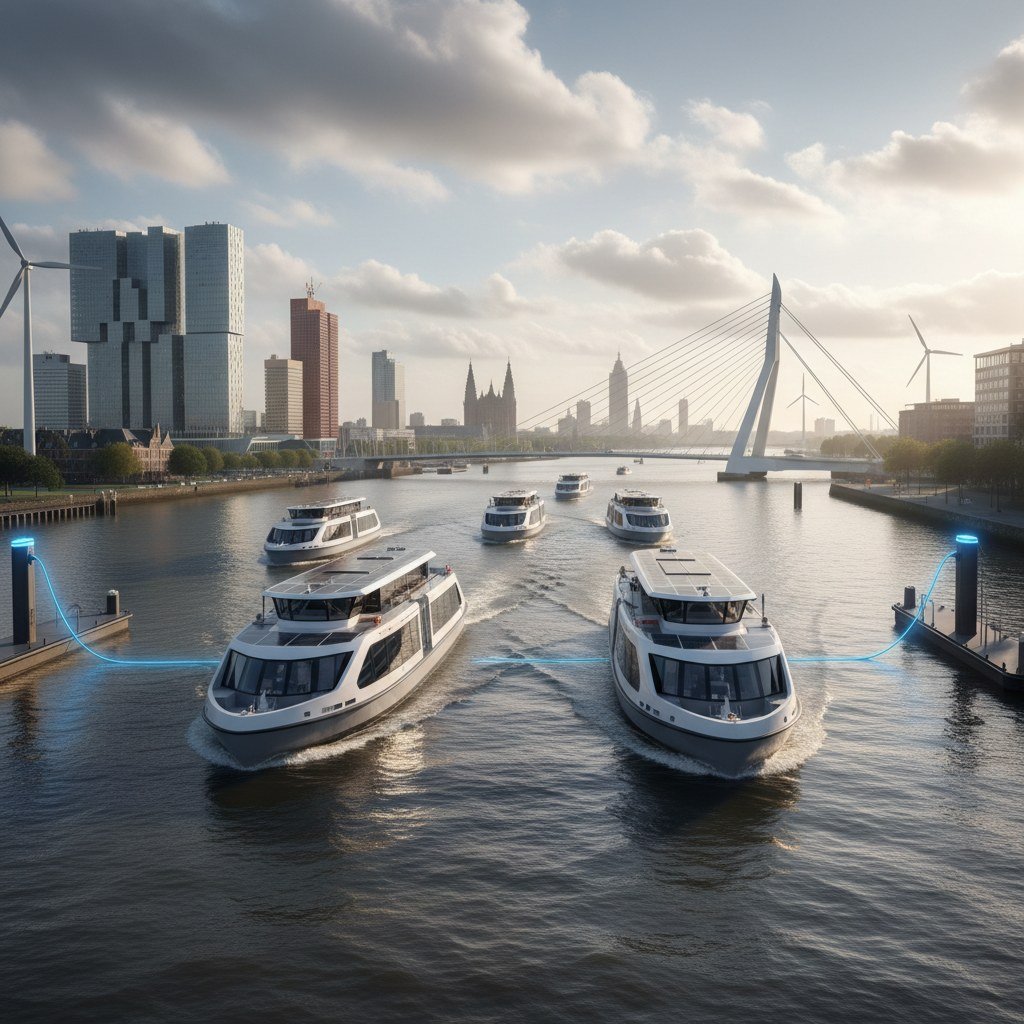
Electric Ferry Fleet Expands on Rotterdam-The Hague Routes in 2026
The Netherlands’ commitment to sustainable transport reached a new milestone this month with the launch of five fully electric ferries connecting Rotterdam and The Hague via the historic Vliet canal. The zero-emission vessels, built by Damen Shipyards, can carry up to 150 passengers each and are powered entirely by batteries charged with renewable energy from North Sea wind farms.
The new electric ferries replace aging diesel-powered vessels that had served the route since the early 2000s. The switch is expected to eliminate approximately 2,800 tonnes of CO₂ emissions annually, equivalent to taking 600 cars off Dutch roads.
“This is one of those projects where everything aligns — environmental benefit, passenger comfort, and long-term cost savings,” said Rotterdam’s alderman for mobility, Vincent Karremans, at the launch ceremony. “The ferries are quieter, cleaner, and actually faster than the old diesel boats.”
Each vessel can complete the 25-kilometre Rotterdam-The Hague route in approximately 75 minutes, with charging stations at both terminals capable of replenishing the batteries in under 30 minutes. The ferries run 18 round trips daily, with increased frequency during peak commuter hours.
The project, costing €47 million, was funded through a combination of EU Green Deal grants, national infrastructure funds, and contributions from both municipalities. Early ridership data shows strong adoption, with passenger numbers up 22% in the first month of electric operations compared to the same period last year.
Beyond commuting, the electric ferries are also attracting tourists interested in a scenic journey between the two cities. Onboard amenities include free Wi-Fi, bicycle storage for 40 bikes per vessel, and a small café serving locally sourced refreshments. The route passes through several historic Dutch towns, including Delft, offering passengers views of traditional windmills and polder landscapes.
The success of the Rotterdam-The Hague electric ferry corridor is already generating interest from other Dutch cities. Amsterdam has announced plans to electrify its IJ ferry fleet by 2028, and Utrecht is exploring electric passenger boats for its canal network.
The Netherlands, for internationals
One email a week: the week's news for internationals in the Netherlands, new practical guides and what changed in the cities. No spam, unsubscribe any time.