


In 2026, global food security has emerged as one of the most consequential geopolitical challenges of our time. Far from being merely an agricultural or humanitarian issue, the availability and distribution of food have become central to international relations, national security strategies, and economic stability. Climate change, supply chain disruptions, and armed conflicts have converged to create a complex crisis that is reshaping alliances, triggering policy realignments, and forcing nations to rethink their approach to food sovereignty.
The convergence of multiple stressors has created what food security experts describe as a perfect storm. Extreme weather events linked to climate change have disrupted agricultural production across every continent, while the ongoing war in Ukraine continues to affect global grain supplies. Simultaneously, export restrictions imposed by major food-producing nations have sent shockwaves through international markets, driving up prices and triggering social unrest in vulnerable regions.

Climate Shocks and Agricultural Disruption
The year 2026 has witnessed some of the most severe weather events in recorded history, with direct consequences for global food production. Record-breaking droughts across the American Midwest, Southern Europe, and parts of China have significantly reduced crop yields for staple grains. In the Horn of Africa, consecutive failed rainy seasons have pushed millions toward famine, while devastating floods in Pakistan and Bangladesh have destroyed rice paddies and submerged millions of hectares of fertile farmland.
Climate scientists warn that these events are not anomalies but rather the new normal under a warming planet. The Intergovernmental Panel on Climate Change (IPCC) has projected that global agricultural productivity could decline by up to 30 percent by mid-century under current emissions trajectories, with developing nations in tropical regions bearing the brunt of the impact. This grim outlook has transformed food security from a humanitarian concern into a pressing national security issue for nations across the globe.
The agricultural sector itself is both a victim and a contributor to climate change. Agriculture accounts for roughly one-third of global greenhouse gas emissions when including land use change and deforestation. However, innovative farming practices and technological solutions are emerging that promise to reduce agriculture’s environmental footprint while increasing resilience to climate shocks. Precision agriculture, drought-resistant crop varieties, and regenerative farming techniques are being deployed at scale, offering a pathway toward more sustainable food production.
The economic costs of climate-related agricultural disruption are staggering. The World Bank estimates that climate-related food price volatility has cost the global economy over $500 billion in 2026 alone, with developing nations spending a disproportionate share of their national budgets on food imports. This economic strain has become a flashpoint for social unrest, with food price protests erupting in more than a dozen countries this year.
Food as a Weapon: The Geopolitics of Supply Chains
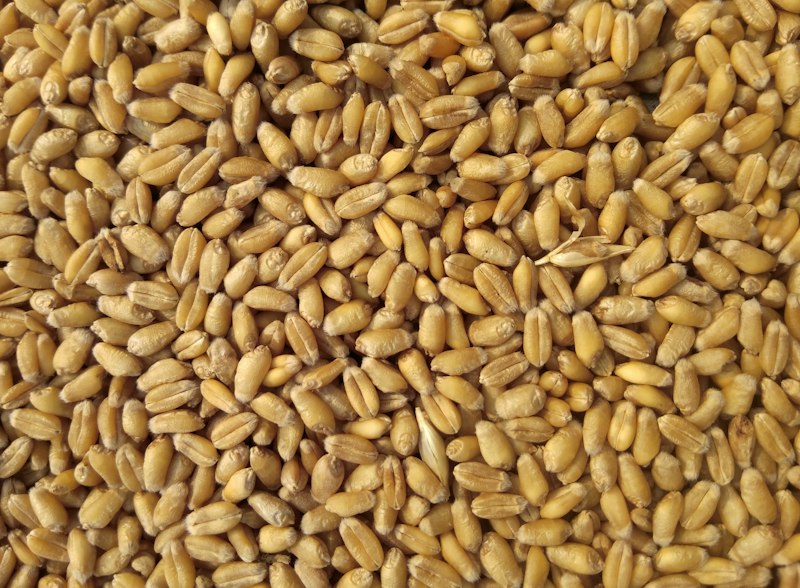
Perhaps the most alarming development in 2026 has been the weaponization of food supplies as an instrument of geopolitical leverage. The Black Sea Grain Initiative, which had helped stabilize global food markets after Russia’s invasion of Ukraine, collapsed in early 2025, and efforts to revive it have repeatedly failed. This has left Ukraine’s agricultural exports—critical for global wheat and sunflower oil supplies—severely constrained, driving up prices for importing nations in the Middle East, North Africa, and South Asia.
Russia has leveraged its position as a major grain and fertilizer exporter with increasing sophistication, using export restrictions and supply manipulation to exert pressure on nations it seeks to influence. Similarly, India’s decision to extend its ban on non-basmati rice exports into 2026 has further tightened global rice supplies, affecting billions of people across Asia and Africa for whom rice is a dietary staple. These moves have prompted a wave of food nationalism, with countries scrambling to secure domestic supplies at the expense of global trade.
The concentration of global food production in a small number of countries has been revealed as a critical vulnerability. Just three countries—the United States, Brazil, and Argentina—account for over 70 percent of global soybean exports, while Russia and Ukraine together supply nearly 30 percent of global wheat exports. This concentration creates single points of failure in the global food system, where disruptions in one region can cascade through international markets with devastating speed.
Supply chain vulnerabilities extend beyond production to processing and logistics. The fertilizer industry, dominated by a handful of countries including Russia, China, and Morocco (for phosphates), has seen prices surge as energy costs rise and trade restrictions multiply. Higher fertilizer prices directly translate to higher food prices and reduced agricultural productivity, particularly in developing nations where farmers have limited capacity to absorb cost increases.
International Cooperation and the Search for Solutions
Despite the grim picture, 2026 has also seen unprecedented international cooperation on food security. The United Nations Food Systems Summit+2 process has galvanized commitments from over 100 nations to transform their food systems toward greater sustainability and resilience. The African Union has launched an ambitious initiative to reduce the continent’s reliance on food imports by investing in regional agricultural infrastructure, irrigation systems, and cold chain logistics.
The role of technology in addressing food security challenges cannot be overstated. Innovations in agricultural biotechnology, including gene-edited crops that are more resistant to drought, pests, and extreme temperatures, are being deployed at scale for the first time. Vertical farming and controlled-environment agriculture are expanding rapidly, particularly in urban areas and regions with limited arable land, reducing the distance food travels from farm to table and insulating production from weather-related disruptions.
Digital technologies are also transforming food systems. Satellite-based monitoring of crop health, AI-powered pest detection systems, and blockchain-enabled supply chain tracking are improving efficiency and reducing waste. The World Food Programme has dramatically scaled up its use of predictive analytics to anticipate food crises before they escalate, enabling earlier and more cost-effective interventions.
The geopolitical dimensions of food security are also being addressed through new diplomatic frameworks. The G20 has established a standing working group on global food security that meets at the ministerial level, while regional organizations like ASEAN and the African Union have developed food security protocols that include mutual assistance commitments and strategic food reserve arrangements. These institutional innovations represent important steps toward building a more resilient global food system.
The Road Ahead: Building Resilient Food Systems
As we look toward the remainder of 2026 and beyond, the imperative to build more resilient and equitable food systems has never been clearer. The convergence of climate change, geopolitical tensions, and supply chain vulnerabilities has revealed the fragility of the current global food order, but it has also created the political will for transformative change.
Investment in agricultural research and development is essential, particularly in developing nations where climate impacts are most severe and adaptive capacity is lowest. International funding mechanisms, including the Green Climate Fund and new dedicated food security facilities, must be scaled up to support this transition. The private sector also has a critical role to play, with impact investors and agri-food tech startups driving innovation in sustainable production, alternative proteins, and supply chain efficiency.
Ultimately, food security is inseparable from broader geopolitical challenges. Conflict resolution, climate action, and economic development are all prerequisites for a stable global food system. The choices made in 2026 will shape food security outcomes for decades to come, and the stakes could not be higher. For a deeper dive into related developments, read our analysis on The New Space Race: How Geopolitical Rivalries Are Driving Public-Private Space Exploration in 2026.