

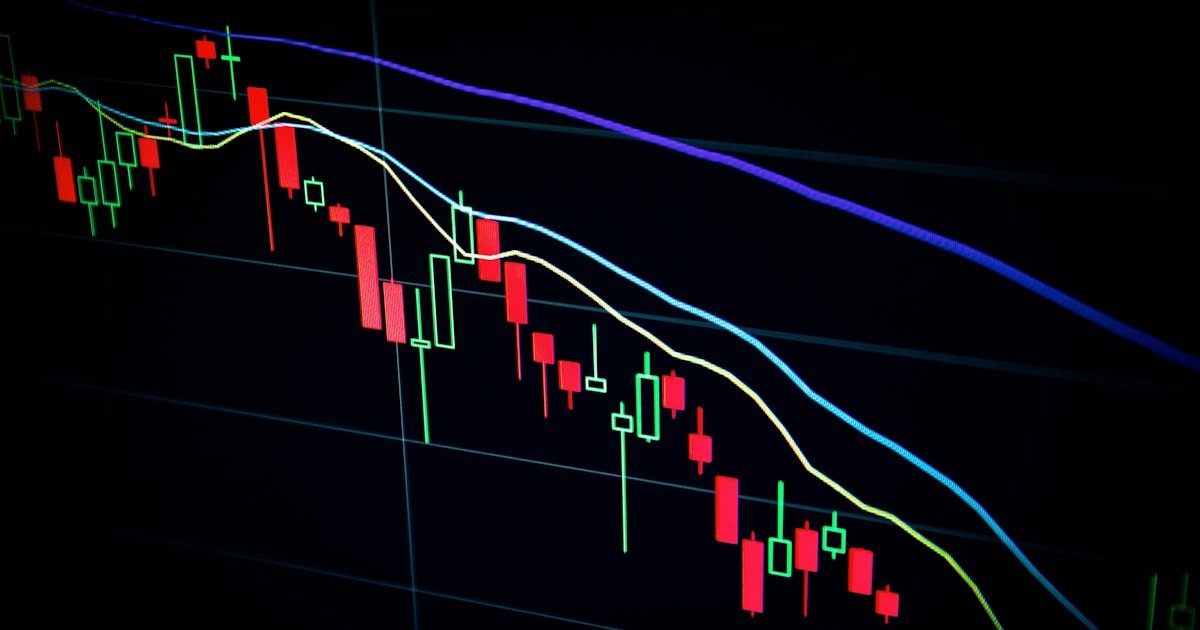
As we move deeper into 2026, the global stock market presents a complex tapestry of opportunities and risks that demand careful navigation. Following a turbulent first half marked by shifting central bank policies and geopolitical uncertainties, investors are now recalibrating their portfolios for what promises to be a decisive second half of the year. The convergence of artificial intelligence reshaping trading dynamics, persistent inflationary pressures, and diverging monetary policy paths among major economies creates an environment where traditional investment playbooks may no longer suffice. Understanding these interconnected forces has never been more critical for both institutional and retail investors seeking to protect capital while capturing growth in a rapidly evolving financial landscape.
The AI Revolution Reshaping Stock Market Trading
Artificial intelligence has moved beyond being merely a sector theme to become a fundamental driver of market mechanics themselves. In late 2026, algorithmic trading systems powered by advanced machine learning models now account for an estimated 70% of daily trading volume on major exchanges worldwide. These systems can process vast amounts of data—from earnings reports and economic indicators to social media sentiment and satellite imagery—in milliseconds, executing trades based on patterns invisible to human traders.
The implications for retail investors are profound. While AI-driven trading has increased market efficiency and liquidity, it has also introduced new forms of volatility. Flash crashes, triggered by algorithmic feedback loops, have become more frequent, albeit shorter in duration. Investors are increasingly turning to AI-powered portfolio management tools themselves, democratizing access to sophisticated strategies that were once the exclusive domain of Wall Street hedge funds. The key to thriving in this environment lies in understanding that speed alone is no longer a competitive advantage—rather, the quality of data inputs and the robustness of algorithmic decision frameworks determine success.
Regulators across the globe are scrambling to keep pace. The Securities and Exchange Commission in the United States, the Financial Conduct Authority in the UK, and the European Securities and Markets Authority have all proposed new frameworks for algorithmic transparency and risk management. These regulatory developments will likely shape the next phase of AI integration in financial markets, potentially slowing the arms race while creating a more stable trading environment for all participants.
Central Bank Policy Divergence and Interest Rate Trajectories
Perhaps the single most influential factor driving stock market direction in late 2026 is the growing divergence in monetary policy among the world’s major central banks. The Federal Reserve, after an aggressive tightening cycle that brought rates to their highest level in over two decades, has begun signaling a more accommodative stance. Markets are pricing in at least two rate cuts before year-end, fueling optimism in rate-sensitive sectors such as real estate, financials, and consumer discretionary.
Meanwhile, the European Central Bank faces a more challenging calculus. Eurozone inflation remains stubbornly above the 2% target, driven by energy costs and wage pressures, leaving the ECB with limited room to ease. The Bank of Japan stands alone in maintaining its ultra-loose monetary policy, creating a persistent carry trade that has weakened the yen and boosted Japanese equities to multi-decade highs. This divergence creates both opportunities and risks for global investors, particularly those with cross-border exposures.

The relationship between interest rates and equity valuations has also evolved. Historically, falling rates have been uniformly positive for stocks, but today’s environment is more nuanced. With inflation lingering above pre-pandemic levels, central banks must calibrate their easing carefully to avoid reigniting price pressures. The so-called “soft landing” scenario—where inflation cools without triggering a recession—remains the base case for most analysts, but the margin for error is razor-thin. For a deeper exploration of how inflation dynamics are shaping central bank strategies, see our comprehensive analysis on global inflation outlook and central bank policies.
Sector Performance and Thematic Investment Strategies
As the macroeconomic landscape shifts, sector rotation has accelerated, with capital flowing away from traditional safe havens and toward sectors poised to benefit from the AI and technology revolution. The technology sector, particularly companies involved in semiconductor manufacturing, cloud computing, and AI infrastructure, has continued to outperform, though valuations in this space have become stretched. Investors are increasingly discriminating between companies with genuine AI moats and those merely riding the wave of enthusiasm.
Healthcare and biotechnology have emerged as compelling contrarian plays. After underperforming for much of 2025, the sector is benefiting from AI-driven drug discovery breakthroughs and an aging global population. Renewable energy and clean technology stocks have also regained momentum as government subsidies and corporate sustainability commitments drive capital expenditure in this space. Meanwhile, traditional energy sectors face headwinds from both regulatory pressure and the accelerating energy transition, though near-term supply constraints continue to support prices.
Emerging markets present a bifurcated picture. Indian equities continue to attract significant foreign investment on the back of strong demographic tailwinds and economic reforms, while Chinese markets remain volatile amid regulatory uncertainty and property sector weakness. Latin American markets, particularly Brazil and Mexico, offer attractive valuations and exposure to commodity demand, but currency risk remains a significant consideration for international investors.
Practical Strategies for Navigating Late 2026 Markets
Given the complex interplay of AI-driven market dynamics, interest rate uncertainty, and sector rotation, a disciplined approach to portfolio construction is essential. Diversification across asset classes, geographies, and investment styles remains the bedrock of risk management. However, the nature of diversification has evolved—simply holding a mix of stocks and bonds may no longer provide the protection it once did, given the increasing correlation between these asset classes in periods of market stress.
Alternative investments, including private equity, infrastructure, and commodities, have gained prominence as portfolio stabilizers. Additionally, factor-based investing—targeting specific drivers of returns such as value, momentum, quality, and low volatility—offers a more sophisticated framework for constructing resilient portfolios in an environment where traditional benchmarks may not adequately capture risk-adjusted returns.
Ultimately, the stock market outlook for late 2026 rewards those who combine a clear understanding of macroeconomic forces with the flexibility to adapt to rapidly changing conditions. By staying informed about AI’s evolving role in markets, monitoring central bank communications for policy signals, and maintaining a long-term perspective through short-term volatility, investors can navigate the current landscape with confidence and position themselves for sustained success in the years ahead.