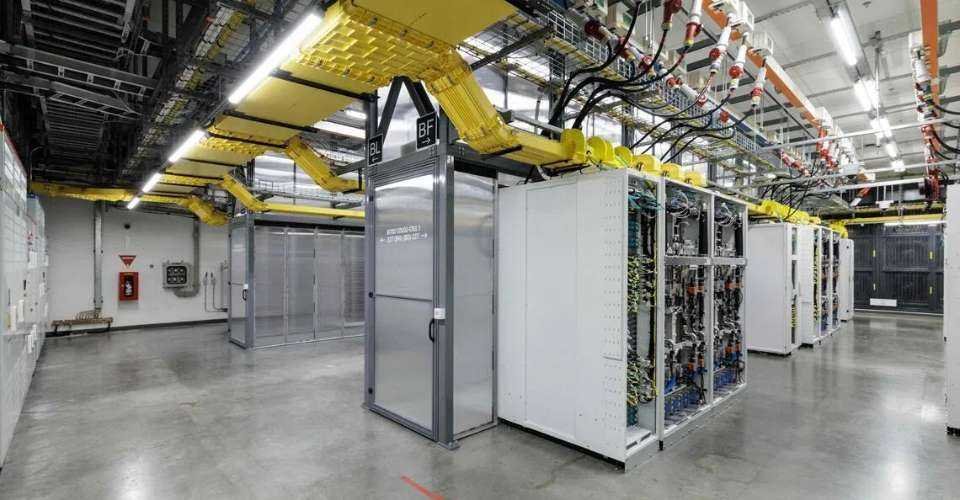
There is a paradox at the heart of the AI revolution, and the United Nations wants you to know about it. As artificial intelligence quietly transforms how we work, communicate, and build things, the infrastructure powering that transformation is consuming the planet’s resources at a rate that few people have stopped to fully reckon with.
A new report published in June 2026 by UN University (UNU) lays out the scope of the problem in stark terms. Global data centers, the sprawling facilities that run AI systems around the clock, could consume 945 terawatt-hours of electricity annually by 2030. To put that in perspective, that is nearly triple the combined annual electricity use of Pakistan, Bangladesh, and Nigeria, three countries that together are home to more than 650 million people.
But electricity is only part of the story. The UNU researchers argue that the public conversation about AI’s environmental impact has been too narrowly focused on carbon emissions, overlooking two other critical costs: water and land.
Water the World Can’t Spare
Data centers need enormous amounts of water to cool their servers. The energy they consume also carries its own water footprint depending on how that electricity is generated. When you add it all up, AI-related water consumption could equal the basic annual domestic needs of 1.3 billion people by the end of this decade, according to the UNU study.
That number does not exist in a vacuum. In parts of the American Southwest, data center operators are already negotiating water rights in regions experiencing multi-year droughts. In Ireland, where a large portion of European cloud infrastructure is based, data centers now account for a significant share of the country’s total electricity draw, putting pressure on a grid already struggling to keep pace.
The land footprint is similarly overlooked. The UNU report projects AI infrastructure could consume more than 14,500 square kilometers of land by 2030, roughly twice the size of the Jakarta metropolitan area, once you account for power generation facilities, supply chains, and the physical footprints of the facilities themselves.
It’s Not Training, It’s You
One of the more counterintuitive findings in the report is where most of the energy actually goes. Public debate has tended to focus on the energy required to train large AI models, which can be genuinely enormous. But the study finds that day-to-day usage, meaning every time someone generates an image, asks a question, or prompts a model to write something, accounts for roughly 80 to 90 percent of total energy demand.
One widely used AI service is estimated to process around 2.5 billion prompts per day. The cumulative energy demand from that volume of requests, multiplied across dozens of major AI platforms, adds up fast. The type of task matters too. Generating a single AI image can require more than a thousand times the energy of a simple text classification query. Video generation is even more demanding.
The researchers also flag the rebound effect, a well-documented pattern in energy economics where efficiency improvements lead to more usage, not less. As AI models become cheaper and faster to run, they get deployed more widely and more often, potentially wiping out any gains made from better hardware or greener energy sources.
The Geographic Injustice Problem
Where things get genuinely troubling is in the distribution of costs and benefits. AI infrastructure is concentrated in a handful of countries. More than 90 percent of AI-specialized computing capacity sits in just two: the United States and China. Meanwhile, more than 150 nations have no significant domestic AI infrastructure at all.
The communities living near data centers bear the environmental burden. Local aquifers get tapped. Local grids get strained. And the e-waste generated by constant hardware upgrades, projected to reach 2.5 million tonnes annually by 2030, flows disproportionately toward lower-income countries with limited capacity for safe disposal.
The critical minerals needed for AI chips present a related problem. Mining operations in extraction regions, often in the Global South, carry their own environmental and social costs that rarely appear in any accounting of what it takes to run a large language model.
What the Report Actually Calls For
The UNU researchers are clear that this is not an argument for abandoning AI. The technology has real environmental applications. The UN Environment Programme already uses AI to detect methane venting from oil and gas installations, a significant source of near-term climate warming. AI tools are helping optimize energy grids, predict extreme weather, and monitor deforestation in real time.
The report’s call is for what it terms a “responsible AI ecosystem,” built on transparency, efficiency by design, and lifecycle accountability. Governments are urged to integrate AI infrastructure planning into water, energy, and land-use policy. Companies are pushed to design systems that minimize resource consumption rather than defaulting to maximum performance. And users, the report suggests, have a role too, choosing lower-impact applications where the stakes do not require the most energy-intensive option.
The choices made in the next few years about how AI infrastructure is built, powered, and regulated will shape not just the technology’s environmental footprint but its long-term social license to operate. The UN’s message is simple: the cost of waiting to have this conversation is already being paid somewhere, just not always by the people benefiting from it.
For more coverage of AI’s real-world impact, visit Mylistingo.
The Netherlands, for internationals
One email a week: the week's news for internationals in the Netherlands, new practical guides and what changed in the cities. No spam, unsubscribe any time.