


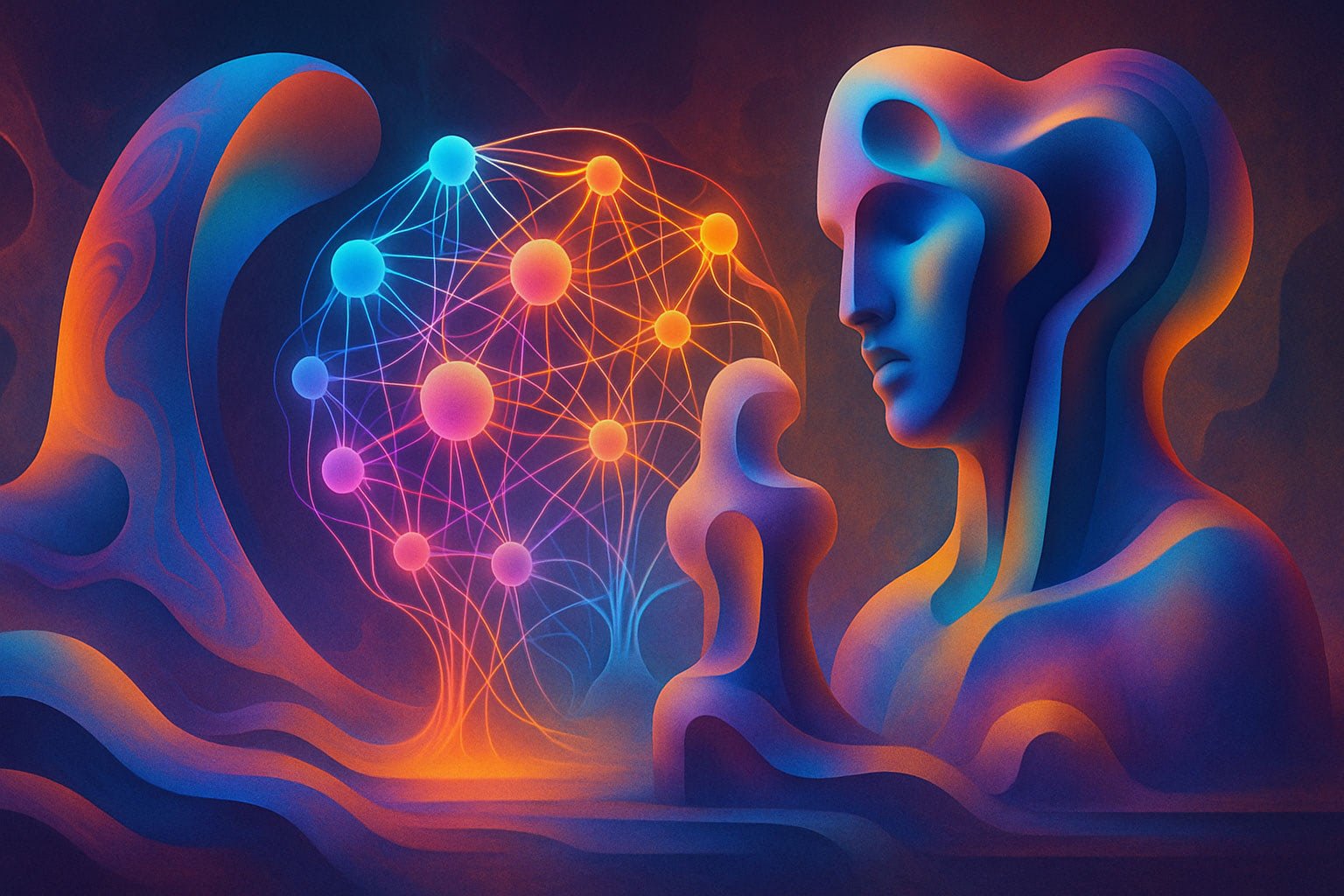
The landscape of creative work has undergone a seismic shift since the early 2020s. What began as experimental text generators and crude image synthesizers has matured into a sophisticated ecosystem of foundation models that are fundamentally reshaping how we create, design, and produce content across every creative industry. As we move through 2026, the capabilities of generative AI have expanded far beyond what most observers predicted just a few years ago, raising profound questions about the nature of creativity, the future of creative professions, and the very definition of artistic expression.
Today’s generative AI systems are no longer limited to producing passable text or recognisable images. They compose symphonies, generate photorealistic video footage, design functional software architectures, and collaborate with human creators in real time. The technology has moved from novelty to necessity, and understanding this evolution is essential for anyone working in or adjacent to creative fields.
The Rise of Foundation Models
The term “foundation model” entered the mainstream lexicon following the release of GPT-3 in 2020, but the concept has evolved dramatically since then. These massive neural networks, trained on internet-scale datasets comprising text, images, audio, video, and code, serve as general-purpose reasoning engines that can be fine-tuned or prompted to perform thousands of specialised tasks. By 2026, the landscape of foundation models has diversified into several distinct categories.
Large language models remain the most visible category, with models like GPT-5, Claude 4, Gemini Ultra 2, and open-source alternatives such as Llama 4 and Mistral Large pushing the boundaries of what text-based AI can achieve. These models now demonstrate genuine reasoning capabilities, multi-step problem solving, and increasingly reliable factual accuracy. The cost of training such models has become astronomical u2014 estimates suggest that the largest models now require training clusters costing upwards of $500 million, a figure that has concentrated development among a handful of well-funded organisations.
Diffusion models have undergone their own revolution. Where DALL-E 3 and Midjourney 6 dominated the image generation space in 2024, today’s models like Stable Diffusion 4 and Imagen 3 offer unprecedented control over composition, style, and consistency. More importantly, they have evolved into multimodal systems that can generate coherent video from text descriptions, create 3D assets for virtual environments, and even produce interactive experiences. The line between different media types has all but dissolved in the latest generation of models.

Perhaps the most significant development has been the emergence of unified multimodal architectures. Rather than maintaining separate models for different media types, companies like Google DeepMind, OpenAI, and Meta have deployed single models that can seamlessly reason across text, images, audio, and video simultaneously. This architectural breakthrough has enabled applications that were science fiction just three years ago u2014 from AI film editors who understand narrative context to music production assistants who can read lyrics, understand emotional tone, and generate appropriate compositions.
Transforming Creative Workflows
The impact of generative AI on creative industries is no longer theoretical. Across every sector, professionals are integrating AI tools into their daily workflows, and the results are transformative. In the film and television industry, generative AI has become an indispensable part of the pre-production and post-production pipeline. Scriptwriters use LLMs to brainstorm plot developments and generate dialogue variations. Storyboard artists employ image generation models to visualise scenes before a single frame is shot. Post-production teams leverage AI video tools for rotoscoping, colour grading, and even generating background elements that would have required expensive location shoots.
In music production, AI composition tools have progressed from generating generic background tracks to producing professional-grade arrangements across any genre. Artists like Holly Herndon and Grimes have pioneered human-AI collaborative models that treat the AI as a creative partner rather than a replacement. The result is a new genre of music that could not exist without the symbiosis of human intention and machine generation.
The graphic design industry has perhaps been most visibly disrupted. Tools like Adobe Firefly 3 and Canva Magic Studio have put professional-grade generative capabilities in the hands of millions of users. Designers report that AI handles the mechanical aspects of their work u2014 generating multiple layout variations, creating asset libraries, and producing mockups u2014 freeing them to focus on higher-level creative strategy and client relationships. The role of the designer is shifting from producer to curator and director.
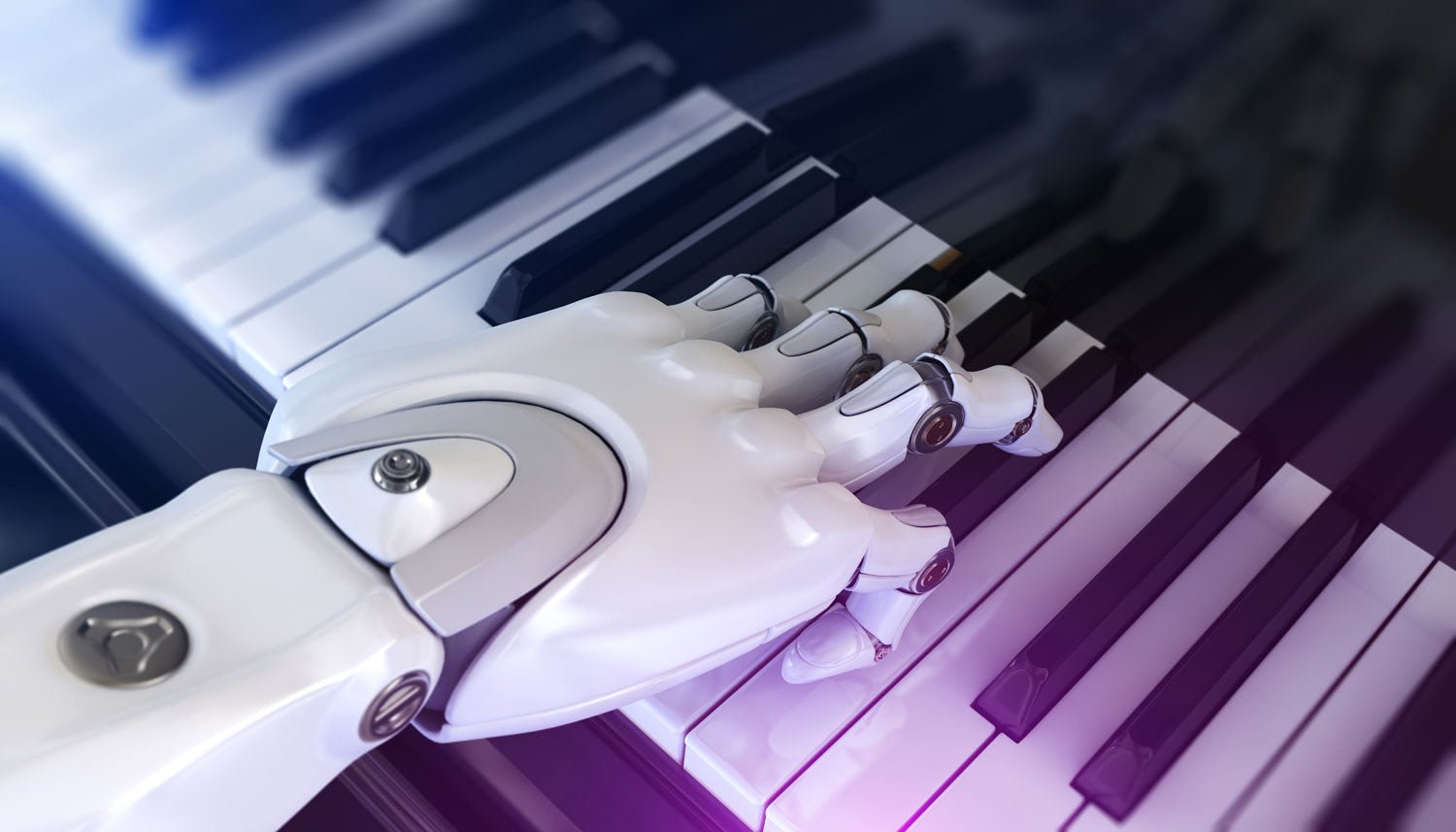
Software development has experienced perhaps the most profound transformation. Tools like GitHub Copilot X, Cursor, and Replit Agent have become standard equipment for developers at every skill level. AI agents are already automating enterprise workflows that once required entire teams of engineers, from database schema design to deployment pipeline configuration. The role of the software developer is evolving from writing every line of code by hand to architecting systems and guiding AI agents through complex implementation tasks.
Challenges and Ethical Considerations
The rapid advancement of generative AI has not been without significant controversy and genuine challenges that remain unresolved in 2026. Copyright and intellectual property disputes continue to dominate legal discussions. Multiple high-profile lawsuits from artists, authors, and music publishers against AI companies are working their way through courts in the United States, Europe, and Asia. The core question remains: when a model is trained on copyrighted works, does the output constitute fair use or infringement?
The deepfake problem has escalated dramatically. With video generation models now capable of producing convincing footage of real people saying and doing things they never did, the potential for misinformation and fraud has reached unprecedented levels. Governments around the world have responded with a patchwork of regulations. The European Union’s AI Act, fully implemented in 2025, requires watermarking of AI-generated content. Similar legislation in the United States, Japan, and Australia has created a complex compliance landscape for AI companies and users alike.
Bias in training data remains a persistent challenge. Despite significant improvements in dataset curation and model alignment, foundation models continue to reflect and sometimes amplify societal biases present in their training data. Researchers have made progress on techniques like constitutional AI and reinforcement learning from human feedback, but complete debiasing remains an unsolved problem. Energy consumption is another pressing concern. Training a single large foundation model can consume as much electricity as a small city in a year, raising questions about the environmental sustainability of the current arms race in model scale.
The Road Ahead for Creative AI
Looking forward, several trends are shaping the next phase of generative AI’s evolution. Real-time generation is becoming a reality u2014 models that can produce high-quality output in milliseconds rather than seconds, enabling live interactive experiences that were impossible until recently. Imagine a video game where the environment, dialogue, and music are generated on the fly in response to player actions, creating an infinitely unique experience every time.
Personalised content represents another frontier. Rather than consuming the same media as everyone else, audiences are increasingly expecting AI-generated content tailored to their individual tastes, preferences, and contexts. Streaming platforms already use AI to recommend content; the next step is using AI to generate content specifically for you, in real time, based on your mood and interests.
The most promising direction may be human-AI collaboration models that genuinely augment human creativity rather than attempting to replace it. The best results in 2026 are consistently produced by teams where humans and AI work together, each contributing their unique strengths. Humans provide intent, emotional intelligence, cultural context, and ethical judgment. AI provides speed, scale, pattern recognition, and the ability to explore vast possibility spaces that no human could navigate alone.
The economic impact of these shifts will be substantial. The World Economic Forum estimates that generative AI will contribute $4.4 trillion to the global economy by 2028, but the distribution of these gains remains uncertain. Some creative professions will contract while new ones emerge. Prompt engineering, AI model fine-tuning, and AI ethics consulting have already become established career paths that did not exist five years ago.
As we continue through 2026, one thing is clear: generative AI is not a passing trend or a niche technology. It is a fundamental transformation of the creative process itself. The foundation models of today are the substrate upon which the next generation of creative tools, platforms, and industries will be built. For creators, the choice is not whether to engage with these technologies but how to engage thoughtfully, ethically, and productively. Those who learn to collaborate with AI will find their creative horizons expanded beyond anything previously imaginable.