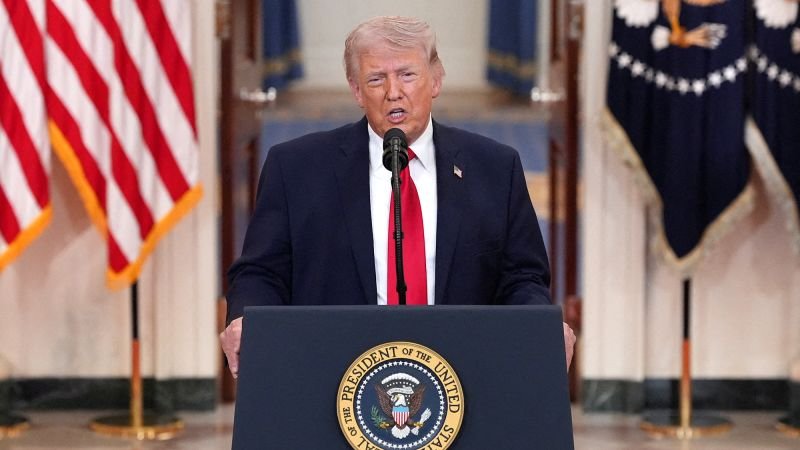
The Stargate AI infrastructure plan backed by former President Donald Trump is turning heads as an ambitious bid to keep the United States at the center of the artificial intelligence race. But the road to global AI dominance is not a straight line. While the proposal promises massive compute clusters and energy resources to fuel next generation models, experts warn that regulatory friction, energy constraints, and talent shortages in Europe and Asia could slow its momentum.
Why Stargate is drawing scrutiny abroad
The plan, which envisions sprawling data centers powered by dedicated energy plants, is designed to give US based AI companies a structural advantage. But overseas markets are not standing still. The European Union is moving forward with its AI Act, a comprehensive regulatory framework that imposes strict requirements on high risk systems. Any US infrastructure that touches European data or users will have to comply with those rules, potentially driving up costs and delaying deployments.
Asian markets present a different set of challenges. Japan and South Korea have their own national AI strategies that prioritize domestic champions and local data sovereignty. Chinas tech ecosystem is already heavily walled off from foreign influence. Even friendly allies like India are tightening rules on cross border data flows, which could make it harder for Stargate linked services to operate smoothly across the region.
Energy and hardware bottlenecks
Stargates promise of dedicated energy infrastructure is appealing, but it also invites local opposition. In the EU, permitting new power plants and data centers can take years due to environmental review processes and community pushback. Germany, for example, has seen multiple large scale data center projects delayed by local protests over water usage and grid capacity.
Hardware availability is another pressure point. Advanced AI chips from companies like Nvidia remain in short supply globally, and export controls on cutting edge semiconductors have created a fragmented market. Even if Stargate secures priority access to chips inside the US, its ability to serve international partners will depend on navigating a patchwork of export restrictions and trade policies.
Talent is the third bottleneck. Europe and Asia both face shortages of AI researchers and engineers. While the US has long been a magnet for global talent, recent visa policy changes and geopolitical tensions have made cross border hiring more complex. Local companies in the EU and Asia are offering competitive salaries and equity packages to retain top people, making it harder for US backed initiatives to staff up in those regions.
Despite these obstacles, Stargates backers remain bullish. They argue that the sheer scale of the investment, combined with muscular government support, will eventually pull the rest of the world into its orbit. But regulatory experts caution that the plan must adapt to local realities or risk becoming an expensive symbol of American ambition rather than a functional global platform.
For now, the most likely outcome is a slower, more negotiated rollout. US companies may need to strike bilateral deals with individual countries on data governance, energy usage, and workforce development. The vision of a unified AI infrastructure spanning continents may give way to a more fragmented reality where Stargate coexists with regional competitors.
What happens next will depend on how well the plan balances its grand ambitions with the gritty details of international law, local politics, and hardware logistics. The AI race is global, but winning it will require more than just powerful chips and cheap electricity. For those following these developments closely, Mylistingo offers deeper analysis on how infrastructure politics are reshaping the industry.