Jensen Huang had a line he kept returning to during his GTC keynote in May: the ChatGPT moment for robotics is here. It sounded like keynote rhetoric. Then NVIDIA released GR00T N1.7 with commercial licensing, and companies started paying attention in a different way.
What GR00T N1.7 actually does
GR00T N1.7 is NVIDIA’s latest humanoid robot foundation model, available this month in early access with full commercial licensing for the first time. That distinction matters. Earlier versions were strong research tools. This one is designed for production environments, which means manufacturers and logistics operators can deploy it in real facilities without a separate licensing negotiation for each use case.
The model handles generalized robot skills including advanced dexterous control — the kind of fine motor capability that lets a robot manage fragile or irregular objects without a separate specialist system for each task type. That breadth is what makes it commercially interesting. A single foundation model that handles varied manipulation tasks is far easier to integrate than a collection of narrow tools that each require their own training pipeline.
The architecture behind GR00T is worth understanding. These are vision language action (VLA) models. They process visual input, understand natural language instructions, and generate physical movement in response. The earlier GR00T N1.6 introduced full-body control and incorporated NVIDIA’s Cosmos Reason module to improve contextual understanding. The robot does not just execute commands; it reasons about what it sees before it moves.
The reference robot and what it signals
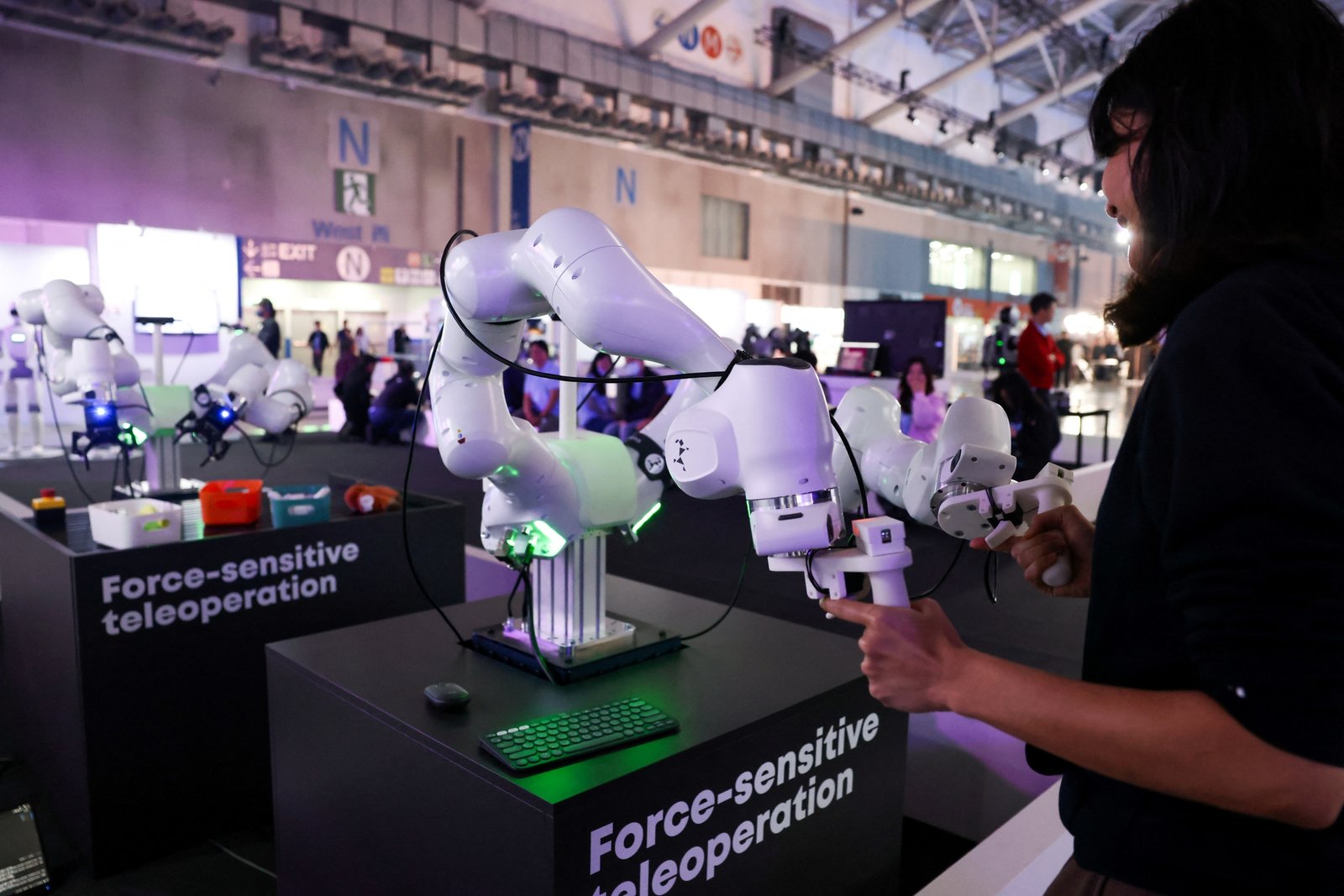
On May 31, at GTC Taipei, NVIDIA unveiled the Isaac GR00T Reference Humanoid Robot: the first fully integrated open humanoid robot reference design the company has published. Built on the Unitree H2 Plus chassis with Sharpa Wave tactile five-finger hands and powered by the NVIDIA Jetson AGX Thor T5000 processor, it is aimed squarely at university research labs that want a working starting point rather than a full engineering project from scratch.
Huang also previewed GR00T N2 during the keynote — a next-generation model based on DreamZero research, built on what NVIDIA calls a world action model architecture. The company says robots running N2 succeed at new tasks in new environments more than twice as often as leading VLA models. That is a significant performance claim. How it holds in uncontrolled real-world conditions will be tested over the next year as more labs get access.
The platform ambition
Toyota Research Institute is already customizing NVIDIA’s Cosmos world foundation models for its own work in dynamic view synthesis, teleoperation data augmentation, and navigation world models. That kind of adoption from a major manufacturer signals where serious applied research is heading: away from proprietary silos and toward shared foundation models that individual organizations fine-tune for their specific needs.
NVIDIA has been open about its long-term goal. The company wants Isaac GR00T to function the way Android did for smartphones — a common open platform that different hardware makers build on top of, rather than each one developing a full proprietary stack. The open-source release of the full Isaac GR00T platform, covering data collection, model training, simulation, and hardware deployment, is a direct attempt to accelerate that ecosystem.
Funding trends support the momentum. The twelve most recently disclosed robotics investment rounds total more than $1.75 billion, with defense robotics appearing in four of those deals. Counter-drone systems, unmanned vehicles, and hazardous-mission platforms are attracting serious capital alongside the warehouse automation and healthcare robotics applications that have been funded steadily for longer.
Where the real difficulties sit
None of this eliminates the hard problems. Dexterous manipulation in genuinely unstructured environments remains harder than controlled lab demonstrations suggest. Safety certification, supply chain integration at scale, and the cost of physical hardware all create friction between a working prototype and a profitable deployed fleet. The gap between a well-funded demonstration and a reliable commercial product has ended more than a few promising robotics ventures over the past decade.
What has changed is the pace. GR00T N1.6 to N1.7 to the preview of N2, all within a single product cycle, is not the usual rhythm for foundation model releases in robotics. If the world action model architecture delivers on the performance benchmarks Huang described, the commercial window for humanoid deployment in controlled environments like warehouses and electronics manufacturing could open earlier than most analysts predicted twelve months ago.
For more coverage of robotics and physical AI, visit Mylistingo.
The Netherlands, for internationals
One email a week: the week's news for internationals in the Netherlands, new practical guides and what changed in the cities. No spam, unsubscribe any time.