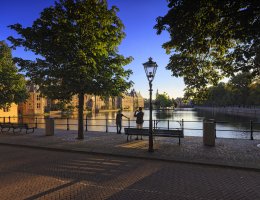
So you’re moving to The Hague — congratulations! As the political heart of the Netherlands and home to over 130 international organizations, The Hague (or Den Haag, as the Dutch call it) is one of Europe’s most international cities. But beyond the Peace Palace and the International Criminal Court lies a vibrant, livable city with its own unique rhythm. Here are 10 things every expat should know before making The Hague their new home.
1. It’s Not Just “Little Amsterdam”
Too many people think of The Hague as Amsterdam’s quieter sibling. In reality, The Hague has its own distinct identity — and many locals prefer it that way. With 11 kilometers of coastline, the famous Scheveningen beach, and more green space per capita than almost any Dutch city, The Hague offers a quality of life that’s truly special. It’s more laid-back, more spacious, and arguably more authentically Dutch than the tourist-heavy capital.
2. Neighborhoods Matter — Choose Wisely
The Hague is a city of distinct neighborhoods, each with its own character. The Statenkwartier is popular with families and diplomats, featuring beautiful art nouveau architecture and proximity to international schools. Zeeheldenkwartier is the trendy, slightly edgy neighborhood filled with independent shops, cafes, and a younger crowd. The Archipelbuurt offers elegant 19th-century townhouses and quiet, leafy streets near the city center. For beach lovers, Scheveningen and the nearby Belgisch Park put the North Sea on your doorstep.
3. You Need a Bicycle — Seriously
This is the Netherlands, and cycling isn’t just a hobby — it’s how life works. The Hague has an excellent network of dedicated bike lanes that make cycling the fastest and most enjoyable way to get around. You’ll need a sturdy Dutch bike (a “fiets”), a good lock (bike theft is common), and lights for nighttime riding. Don’t bother with a fancy racing bike — a reliable second-hand omafiets will serve you perfectly.
4. The Bureaucracy Is Real (But Manageable)
Registering at City Hall (the “gemeente”) is step one when you arrive. You’ll need your BSN (citizen service number) for everything from opening a bank account to getting health insurance. The good news? The Hague’s municipality is experienced with international residents and most civil servants speak excellent English. Make an appointment online at denhaag.nl before you go.
5. Healthcare Is Excellent — Get Insured Immediately
Dutch health insurance is mandatory and comprehensive. You’ll need to register with a local GP (“huisarts”) and get basic health insurance (“basisverzekering”) within four months of arrival. The system works efficiently, but the Dutch approach to healthcare can surprise newcomers — GPs act as gatekeepers and rarely prescribe antibiotics unless absolutely necessary.
6. The Weather: Embrace the Layers
The Hague has a maritime climate — mild but unpredictable. Rain can appear at any moment, even on sunny days. The key to survival: always carry a rain jacket, dress in layers, and don’t let the weather stop you from going out. Summers are glorious (long daylight until 10 PM!), and the beach at Scheveningen becomes the city’s social hub.
7. International Community Is Thriving
With embassies, international tribunals, and organizations like Europol and OPCW, The Hague has a massive expat community. You’ll find international schools, English-language theater, expat sports clubs, and countless networking groups. The feel is cosmopolitan but not overwhelming — you can build a social life in English while learning Dutch at your own pace.
8. Dining Out: Beyond Stamppot
The Hague’s food scene punches well above its weight. Alongside traditional Dutch cuisine, you’ll find outstanding Indonesian rijsttafel (a legacy of colonial history), authentic Middle Eastern food, and innovative modern European restaurants. The Haagse Markt — one of Europe’s largest outdoor markets — is a paradise for fresh produce and international ingredients.
9. You Can Get By in English (But Learn Some Dutch)
The Dutch speak the best English in the world among non-native countries, so daily life in English is completely feasible. However, learning even basic Dutch goes a long way — it shows respect, helps with official correspondence, and makes integration smoother. Start with “Dank je wel” (thank you) and “Tot ziens” (see you later).
10. Scheveningen Is Your Backyard
Having a proper beach within cycling distance is one of The Hague’s greatest assets. Scheveningen offers everything from summer beach clubs and water sports to winter walks along the pier. The annual fireworks festival in August draws crowds from across Europe. Make the beach a regular part of your routine — it’s what sets The Hague apart from every other major Dutch city.
Welcome to The Hague — you’re going to love it here.