AI News
  • Home
  • AI & Tech
  • Machine Learning
  • Startups
  • Tools & Apps
  • Robotics
  • Future Tech
  • AI in Industry
    • AI in Sport ⚽
    • AI in Health
    • AI in Education
    • AI in Finance
    • AI in Business
    • AI in Law
    • AI in Climate
No Result
View All Result
SAVED POSTS
AI News
  • Home
  • AI & Tech
  • Machine Learning
  • Startups
  • Tools & Apps
  • Robotics
  • Future Tech
  • AI in Industry
    • AI in Sport ⚽
    • AI in Health
    • AI in Education
    • AI in Finance
    • AI in Business
    • AI in Law
    • AI in Climate
No Result
View All Result
AI News
No Result
View All Result

Quantum Computing Hits 2,000 Logical Qubits: What the Milestone Means

Ramo by Ramo
8 July 2026
in AI & Tech
418 5
0
ml feat guardian 14261
585
SHARES
3.3k
VIEWS
Summarize with ChatGPTShare to Facebook

Quantum Computing Hits 2,000 Logical Qubits: What the Milestone Means

The quantum computing industry has crossed a long-anticipated threshold: the first system with over 2,000 logical qubits has been demonstrated in a research lab, marking a decisive step toward fault-tolerant quantum computation that could revolutionize cryptography, drug discovery, and materials science.

Logical qubits are the holy grail of quantum computing because, unlike physical qubits that are prone to errors, logical qubits use quantum error correction codes to encode information redundantly across multiple physical qubits. The result is exponentially lower error rates and the ability to run algorithms that would be impossible on error-prone systems.

The Road to Fault Tolerance

For years, the quantum computing field has been in what researchers call the “noisy intermediate-scale quantum” (NISQ) era — systems with dozens to hundreds of physical qubits that could perform interesting experiments but were too unreliable for practical applications. The 2,000 logical qubit milestone represents the beginning of the fault-tolerant era.

📖
RECOMMENDED READ
The Coming Wave: AI, Power, and the Greatest Dilemma of Our Age
Mustafa Suleyman
The definitive book on where AI is heading - written by one of the field founders.
View on Amazon →affiliate link

“Crossing 2,000 logical qubits is not just a bigger number,” explained Dr. Erik Jansen, a quantum information theorist at TU Delft. “It’s the point where certain cryptographically relevant algorithms become theoretically feasible. The next challenge is gate fidelity — how accurately we can perform operations on those qubits.”

Dutch Leadership in Quantum

The Netherlands has established itself as a global leader in quantum technologies through QuTech, the quantum institute at TU Delft, and the Quantum Delta NL ecosystem. Dutch researchers have been instrumental in developing the superconducting and spin qubit technologies that underpin many of the recent breakthroughs.

The Dutch government has invested over €615 million in quantum technology through the National Growth Fund, with the goal of creating a self-sustaining quantum economy by 2030. Companies like QuantWare, which produces quantum processors, and Qblox, which builds control electronics for quantum computers, are at the forefront of commercializing the technology.

What Comes Next

The quantum industry is now focused on demonstrating “quantum advantage” on commercially relevant problems — not just abstract mathematical proofs. Financial services firms are exploring quantum algorithms for portfolio optimization, pharmaceutical companies are investigating quantum chemistry simulations, and logistics companies are looking at quantum route optimization.

While a general-purpose fault-tolerant quantum computer remains years away, the 2,000 logical qubit milestone signals that the era of practical quantum computing is approaching faster than many predicted.

SummarizeShare234
Ramo

Ramo

Ramo is the editorial voice of Mylistingo — an AI and technology news platform based in The Hague, Netherlands. Covering artificial intelligence, machine learning, robotics, and the future of technology, Ramo delivers accurate, accessible reporting for both general audiences and industry professionals. Every article is fact-checked and written to meet Mylistingo's strict no-fabrication editorial standards.

Related Stories

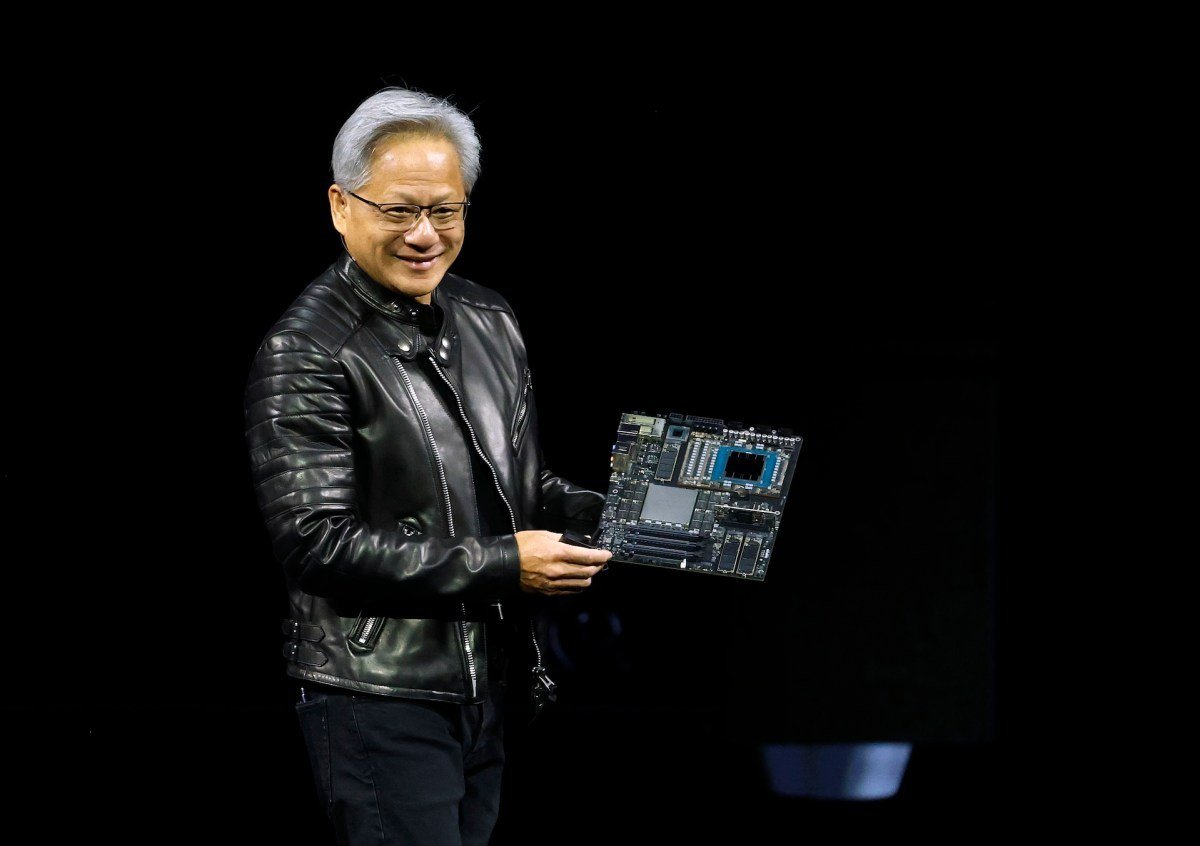
Nvidia investing $1.5B in SoftBank data center developer behind OpenAI project

Nvidia Bets $1.5B on SoftBank’s OpenAI Data Center

by Ramo
17 August 2026
0

Nvidia is putting $1.5 billion into a SoftBank-backed data center developer, and the money comes with a condition that tells you exactly how the AI infrastructure race works...

Amazon’s New Terms Push Customer Disputes Into Arbitration

by Ramo
17 August 2026
0

Amazon's updated terms require customers to resolve disputes through arbitration and waive class action rights, a move critics say shields the company from court.

Anthropic Explains How Claude’s Invisible Text Watermarks Will Work

by Ramo
17 August 2026
0

Anthropic details how Claude's invisible text watermarks use low-stakes word choices to leave detectable patterns, meeting EU AI Act rules.

OpenAI Reportedly Disbands Its Preparedness Team

by Ramo
17 August 2026
0

OpenAI has shut down the team that assessed serious model risks, the latest safety shakeup ahead of its IPO.

Recommended

Editorial photo for: WEF Names 100 Pioneers Building Infrastructure for the AI Era

WEF Names 100 Pioneers Building Infrastructure for the AI Era

10 July 2026
Editorial photo for: 10 Types of AI Tools That Will Transform Your Workflow in 2026

10 Types of AI Tools That Will Transform Your Workflow in 2026

10 July 2026

Popular Story

  • ml_feat_56193023

    ASML’s Next-Gen High-NA EUV Machines Drive Eindhoven Expansion, Creating 20,000 New Jobs

    590 shares
    Share 236 Tweet 148
  • Best Cafes and Coffee Shops in The Hague 2026: A Digital Nomad’s Guide

    589 shares
    Share 236 Tweet 147
  • PixVerse closes $439m series C extension at $2b valuation

    589 shares
    Share 236 Tweet 147
  • The Rise of Neuromorphic Computing: How Brain-Inspired Chips Are Transforming AI in 2026

    588 shares
    Share 235 Tweet 147
  • Inside The Hague’s AI-Powered International Criminal Court: How Machine Learning Is Accelerating Justice

    588 shares
    Share 235 Tweet 147
Advertise Here
Your Ad Could Be Here

This premium 300×250 spot is available. Reach our AI & tech audience with your product or service.

Book This Space →
logo ainews

We bring you the best Premium WordPress Themes that perfect for news, magazine, personal blog, etc. Check our landing page for details.

Recent Posts

  • Nvidia Bets $1.5B on SoftBank’s OpenAI Data Center
  • Amazon’s New Terms Push Customer Disputes Into Arbitration
  • Anthropic Explains How Claude’s Invisible Text Watermarks Will Work

Categories

  • AI & Tech
  • AI in Business
  • AI in Climate
  • AI in Education
  • AI in Finance
  • AI in Health
  • AI in Law
  • AI in Sport
  • Economy & Finance
  • Future Tech
  • Machine Learning
  • Politics & Geopolitics
  • Robotics
  • Social Topics
  • Sport
  • Startups
  • The Hague
  • Tools & Apps
  • Uncategorized

Weekly Newsletter

  • Home
  • Advertise
  • Latest News
  • Contact Us
  • Data Deletion Instructions
  • Editorial Policy

Welcome Back!

Login to your account below

Forgotten Password?

Retrieve your password

Please enter your username or email address to reset your password.

Log In
No Result
View All Result
  • Home
  • AI & Tech
  • Machine Learning
  • Startups
  • Tools & Apps
  • Robotics
  • Future Tech
  • AI in Industry
    • AI in Sport ⚽
    • AI in Health
    • AI in Education
    • AI in Finance
    • AI in Business
    • AI in Law
    • AI in Climate