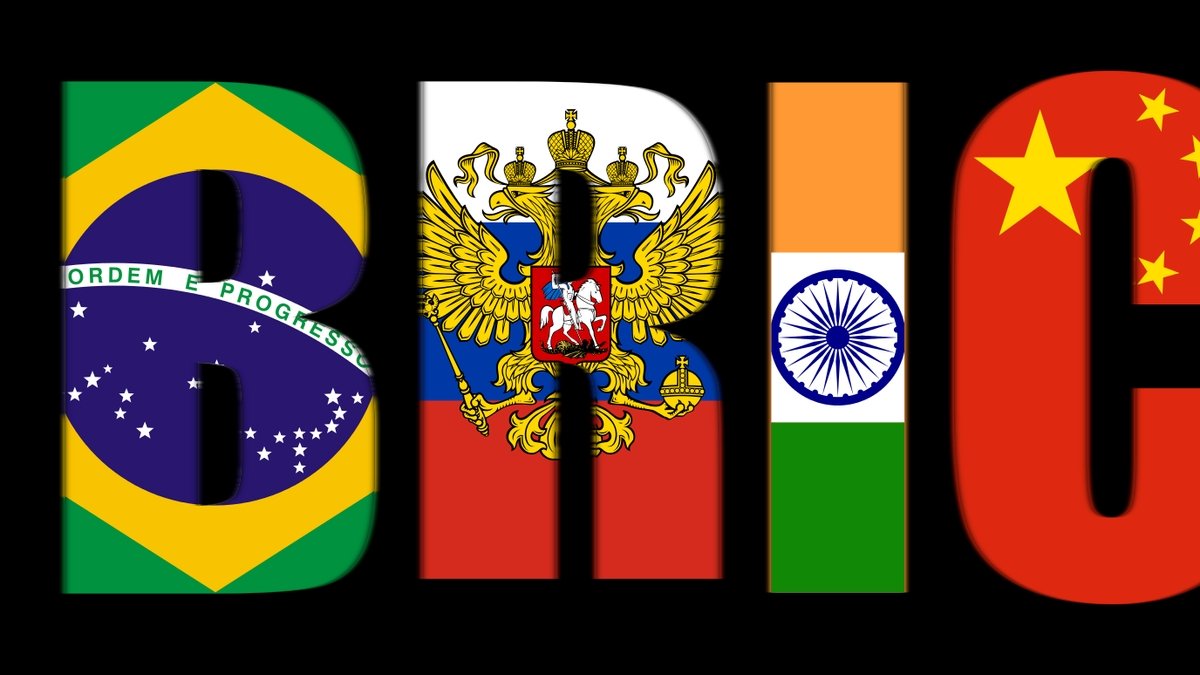
The BRICS alliance has undergone its most dramatic transformation since its founding, with the expanded bloc now accounting for over 40% of global GDP (purchasing power parity) and representing nearly half the world’s population. As of mid-2026, the group that began as Brazil, Russia, India, China, and South Africa has more than doubled in size, bringing in major energy producers, emerging manufacturing hubs, and strategically positioned economies that are collectively reshaping the global economic order.
The New BRICS Membership: Who Joined and Why
The expansion wave that began in 2023 with invitations to Saudi Arabia, Iran, the United Arab Emirates, Egypt, Ethiopia, and Argentina has now consolidated into full membership for most of these nations, with additional countries including Malaysia, Nigeria, and Bangladesh joining the fold in late 2025 and early 2026. Each new member brings distinct strategic assets to the table. Saudi Arabia and the UAE contribute massive sovereign wealth funds and energy leverage, while Ethiopia and Nigeria offer demographic dividends and gateway access to African markets that BRICS infrastructure financing is already beginning to tap.
Egypt’s membership gives the bloc control over the Suez Canal corridor, a critical chokepoint for global maritime trade. Malaysia adds strategic positioning in the South China Sea and strong ties with both China and the broader ASEAN economic community. The expansion represents a deliberate strategy to create a multipolar economic architecture that can operate independently of Western-dominated institutions like the IMF and World Bank. For candidate nations, the appeal lies in access to the New Development Bank’s alternative financing, trade settlement in local currencies, and a platform for collective bargaining on global economic governance.
De-Dollarization and the Push for Alternative Payment Systems
Perhaps the most consequential development within the expanded BRICS is the accelerating push toward de-dollarization. The bloc has been developing a cross-border payment system that would allow member nations to settle trade in their own currencies, bypassing the SWIFT system and reducing dependence on the US dollar. China’s Cross-Border Interbank Payment System (CIPS) has seen transaction volumes surge as BRICS members increasingly route trade payments through Beijing’s alternative network.
India has been pushing for rupee-denominated trade mechanisms, particularly for energy imports from Russia and the Gulf states. Russia, facing the most severe Western sanctions regime of any BRICS member, has been the most aggressive advocate for alternative financial infrastructure. The BRICS Bridge multilateral payment platform, announced at the 2025 summit, aims to connect the digital payment systems of member nations into a unified network capable of handling hundreds of billions of dollars in annual trade flows. While the dollar remains dominant in global reserves and trade settlement, the BRICS initiatives are creating genuine alternatives that give member states leverage in negotiations with Western financial institutions.
Geopolitical Fault Lines: Unity vs. National Interests
The expanded BRICS is not without its internal tensions. The most visible fault line runs between China and India, whose border disputes in the Himalayan region continue to simmer despite both nations’ commitment to the BRICS framework. India has also been wary of China’s increasingly dominant role within the bloc, pushing back against what New Delhi sees as Beijing’s attempt to turn BRICS into a vehicle for Chinese geopolitical interests. The inclusion of Iran has further complicated dynamics, as several BRICS members maintain close security ties with the United States and Israel.
Saudi Arabia and the UAE, while enthusiastic participants in BRICS economic initiatives, continue to maintain their security partnerships with Washington, creating a delicate balancing act. Brazil under its current leadership has been promoting environmental governance as a core BRICS agenda item, occasionally clashing with members who prioritize rapid industrialization over climate commitments. South Africa has been advocating for stronger African representation within the bloc’s institutional structure, arguing that the continent’s five current members deserve greater weight in decision-making. These internal disagreements have prevented BRICS from speaking with one voice on major geopolitical crises, including the wars in Ukraine and Gaza, where member states have adopted widely divergent positions.
The New Development Bank and Alternative Finance
The New Development Bank (NDB), BRICS’ signature financial institution, has been expanding its lending portfolio aggressively, with cumulative approvals exceeding $35 billion by mid-2026. The bank has shifted its focus toward sustainable infrastructure, renewable energy, and digital connectivity projects across member states. Unlike the World Bank and IMF, the NDB operates on a more flexible lending model that does not impose the kind of structural adjustment conditions that have long been controversial in Western-led development finance. The NDB has also been exploring the issuance of bonds denominated in member-state currencies, a move that would further reduce dependence on dollar-denominated debt markets.
The bank’s membership is no longer limited to BRICS founding nations, with Bangladesh, Egypt, and Uruguay joining as new shareholders. The expansion of the NDB’s capital base and lending capacity positions it as an increasingly credible alternative to traditional multilateral development banks. For borrowing countries, the NDB offers faster project approval timelines and a more collaborative approach to project design, though critics note that the bank’s governance transparency and environmental safeguards still lag behind those of Western institutions.
Implications for Global Governance and Western Economies
The expanded BRICS presents both challenges and opportunities for the existing global order. Western policymakers are grappling with how to respond to a bloc that represents a genuine alternative center of economic gravity. The G7’s share of global GDP has been declining steadily relative to BRICS, and this trend is expected to accelerate with the expanded membership. However, BRICS is not a monolithic anti-Western alliance. Many member states maintain deep economic ties with the United States and Europe, and the bloc’s internal diversity prevents it from adopting the kind of coordinated geopolitical strategy that some observers initially feared.
For global businesses and investors, the BRICS expansion creates both opportunities and complexities. Companies operating across multiple BRICS markets now face a patchwork of competing standards, payment systems, and regulatory frameworks. The emergence of alternative financial infrastructure creates hedging opportunities but also increases transaction costs for firms that must maintain compatibility with both Western and BRICS systems. The long-term trajectory will likely be one of competitive coexistence rather than outright confrontation, with BRICS and Western-led institutions developing parallel but interconnected systems for trade and finance.
The ultimate test of BRICS relevance will be whether it can translate its growing economic weight into meaningful reforms of global governance institutions. The bloc’s push for a larger voice in IMF quota reforms, World Bank governance, and UN Security Council representation has yielded only incremental progress. As BRICS matures as an institution, its ability to deliver tangible benefits to member states and address internal divisions will determine whether it becomes a genuine pillar of the new global order or remains a forum for discussion without decisive action.
The Netherlands, for internationals
One email a week: the week's news for internationals in the Netherlands, new practical guides and what changed in the cities. No spam, unsubscribe any time.