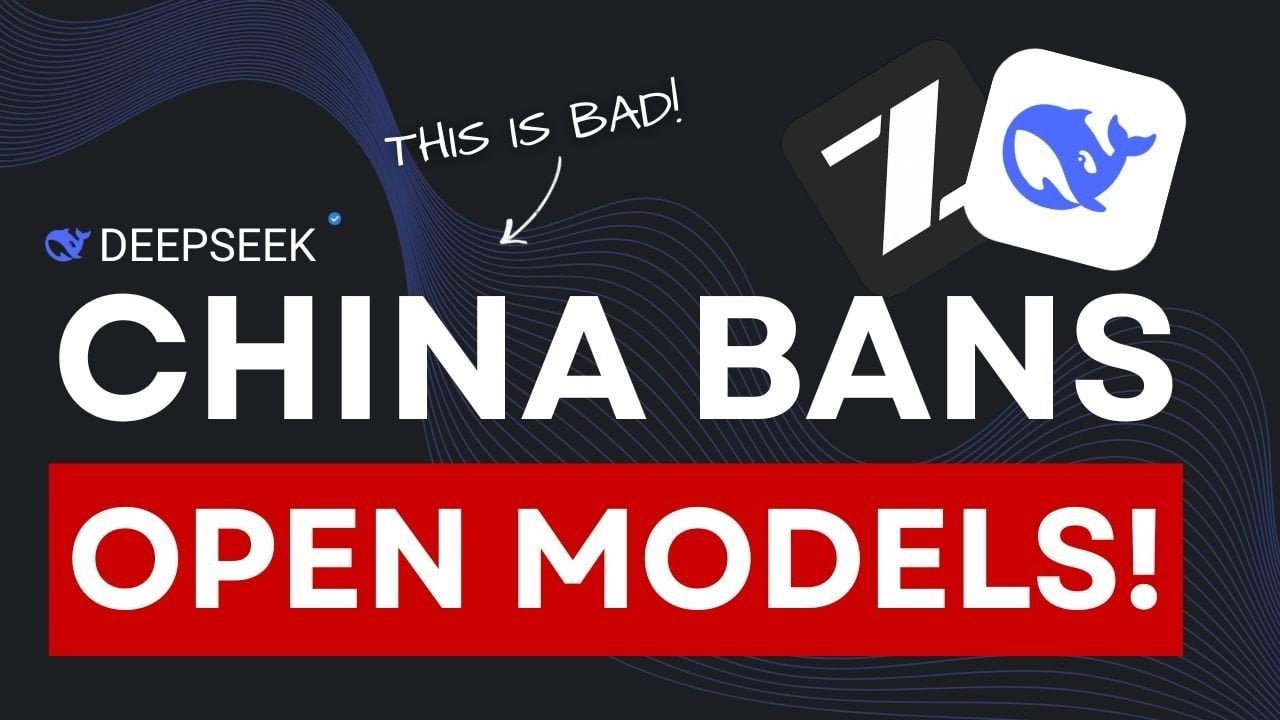
The global AI landscape shifted dramatically in July 2026 as China imposed new export controls on advanced AI models, directly affecting DeepSeek — the open-source AI company that shook up the industry with its surprisingly capable and cost-efficient models. The move has far-reaching implications for AI development worldwide.
What the Export Controls Cover
China’s Ministry of Commerce announced that AI models exceeding certain capability thresholds — including models trained on more than 10^25 FLOPs of compute — now require an export license. DeepSeek’s latest models comfortably exceed this threshold, meaning international distribution now faces formal regulatory hurdles.
The regulations specifically target “frontier AI models” that could be used for military applications, economic analysis of critical infrastructure, or mass surveillance. However, the broad language has left tech companies uncertain about where exactly the line is drawn.
DeepSeek’s Unique Position
DeepSeek occupies an unusual position in the AI ecosystem. Unlike OpenAI or Anthropic, which keep their most powerful models proprietary, DeepSeek has released its models as open-source — freely available for anyone to download, modify, and deploy. This openness has made DeepSeek’s models popular among researchers, startups, and developers who cannot afford API fees from Western providers.
The new export controls create a paradox: the models are already publicly available on Hugging Face and GitHub, having been downloaded millions of times. Attempting to retroactively restrict them may be practically impossible, but the regulations could block future releases and updates from reaching the international community.
Impact on the Open-Source AI Community
The open-source AI movement, which has relied heavily on models from Chinese labs (DeepSeek, Qwen, and others), faces an uncertain future. If future versions of these models cannot be legally exported, the community loses access to some of the most competitive alternatives to proprietary Western AI.
European researchers are particularly affected. The EU has invested heavily in open-source AI as a strategic alternative to dependence on American tech giants. Losing access to Chinese open-weight models narrows the field and could slow innovation in European AI labs, including several based in the Netherlands.
What Comes Next
Industry observers expect a period of legal ambiguity while companies and regulators figure out enforcement mechanisms. Some suggest that model weights already in circulation are effectively beyond control, but new releases may indeed be restricted. DeepSeek itself has not yet commented publicly on how the regulations will affect its release schedule.
For now, the episode serves as a reminder that AI is not just a technology story — it is increasingly a geopolitical one. The tools that power chatbots, coding assistants, and research are becoming strategic assets, and governments on both sides of the Pacific are treating them accordingly.
The Netherlands, for internationals
One email a week: the week's news for internationals in the Netherlands, new practical guides and what changed in the cities. No spam, unsubscribe any time.