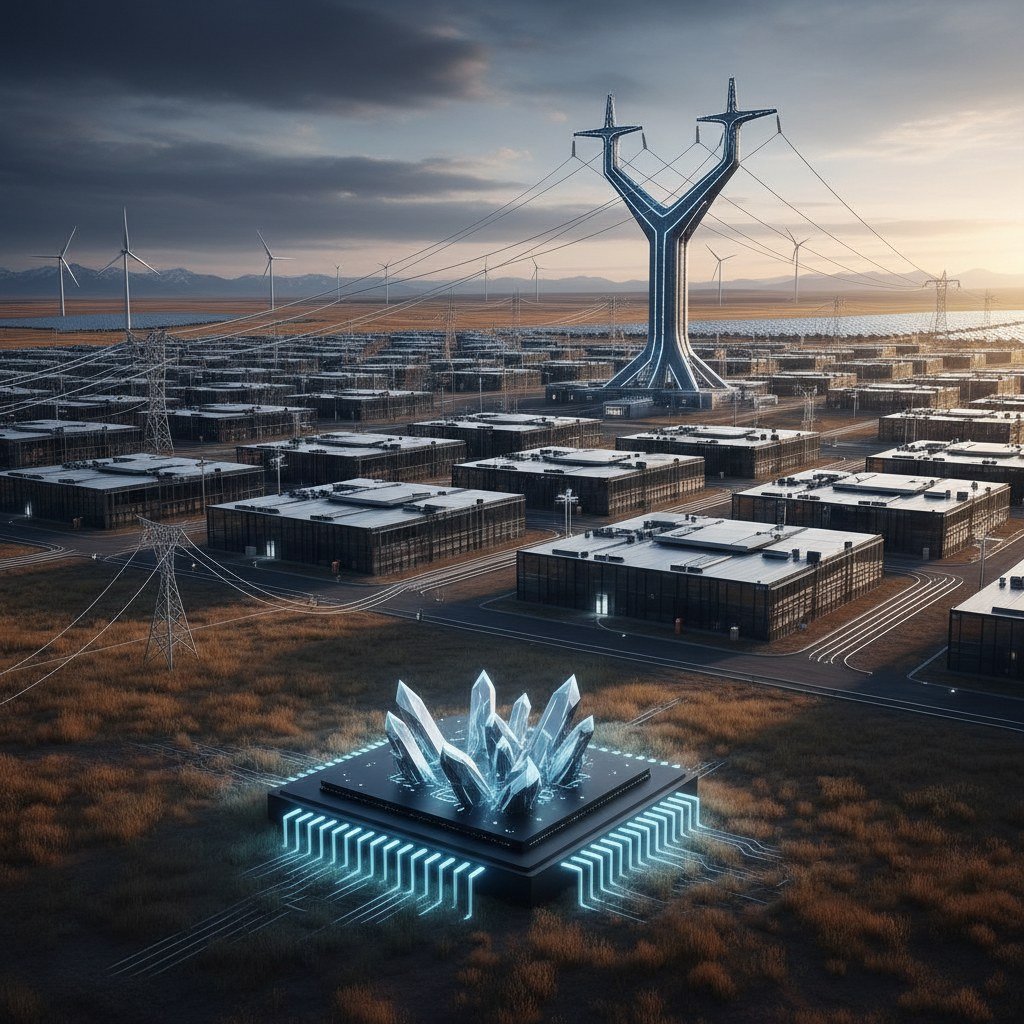
Seven gigawatts. That is how much computing infrastructure Meta plans to deploy this year, according to an internal memo reported by CNBC, and the company intends to double the figure in 2027. A single gigawatt is roughly the output of a large nuclear reactor. Meta is talking about fourteen of them, dedicated to AI, within eighteen months.
Two developments last week showed how the company plans to get there: a custom chip of its own entering production in September, and a first-ever Canadian data center rising on the prairie northeast of Edmonton.
A chip of its own
Reuters reported on July 9 that Meta will put its in-house AI chip into production in September as it works to double its computing capacity. The company has spent years designing custom silicon under its MTIA program, but moving a chip into volume production is a different order of commitment. Training and serving AI models at Meta’s scale currently means buying enormous quantities of GPUs on the open market, where supply is tight and prices are set by someone else. Producing its own accelerator gives Meta a lever over both. The chip will not replace off-the-shelf hardware overnight, but it changes the company’s negotiating position the day it ships.
The scale of spending explains the urgency. Meta expects to spend as much as $145 billion on AI infrastructure this year, according to the internal memo CNBC described. Numbers like that turn chip procurement from a line item into a strategic vulnerability, and every major cloud company has reached the same conclusion. Google has its TPUs, Amazon has Trainium, Microsoft has Maia. Meta is simply the latest to decide that renting destiny is worse than building it.
First stop: Alberta
The other half of the story sits in Sturgeon County, Alberta, where Meta is building its first Canadian data center. The facility is planned at one gigawatt, will cost roughly $9 billion US, and will take two to three years to construct, CNBC reported. CBC News puts the site at twice the size of New York’s Central Park. Meta says construction will employ about 3,000 people, with around 300 permanent jobs once the center is running.
The location was not an accident. The Sturgeon County site has long been zoned for industrial use and sits in an area with capacity for additional energy infrastructure, which matters more than any other factor when a single facility of this class can consume more electricity than a mid-size city. Securing a grid connection has quietly become the slowest step in any hyperscale project.
Powering the center is its own undertaking. Capital Power announced a long-term energy supply agreement for the site, with the first 250 megawatts of electricity available in the second half of 2028. CBC reported the data center may begin operating before the neighbouring power plant does, and that Meta has laid out plans to cut the facility’s water consumption, a sensitive subject in a province familiar with drought.
The compute race has no finish line
Meta’s buildout is part of a spending race in which every major AI player is committing sums that would have seemed absurd three years ago. The competition is no longer only about who has the best model. It is about who can secure the chips, the land, the electricity and the water to train the next one, and the one after that. Training runs get the headlines, but the day-to-day serving of models to billions of users is what forces the infrastructure to keep growing long after a training run ends.
Alberta is a revealing choice. The province offers industrial land, energy capacity and a government eager for the investment, advantages that are getting harder to find in the crowded data center corridors of Virginia or Texas. If the Sturgeon County project goes smoothly, it is unlikely to be the last hyperscale facility to head north.
The September production date is the milestone to watch. If Meta’s silicon performs, the company will control more of its own stack at exactly the moment compute has become the industry’s scarcest resource. If it disappoints, $145 billion buys a lot of someone else’s hardware. For more coverage of AI infrastructure and the companies building it, visit Mylistingo.
The Custom Silicon Strategy
Meta’s decision to develop its own AI chip, known as the Meta Training and Inference Accelerator (MTIA), represents a strategic shift away from dependence on NVIDIA’s dominant GPU ecosystem. By designing custom silicon tailored to its specific workload patterns, Meta aims to reduce costs, improve performance, and gain greater control over its hardware roadmap. The MTI@ chip is designed to handle both training and inference workloads for Meta’s recommendation systems, natural language processing, and computer vision models that power Facebook, Instagram, and WhatsApp. Early benchmarks suggest that Meta’s custom chip delivers comparable performance to NVIDIA’s H100 at a significantly lower cost, particularly for inference workloads that make up the majority of Meta’s AI compute demand.
The Alberta Data Center Megaproject
The gigawatt-scale data center Meta is building in Alberta, Canada, represents one of the largest single investments in AI infrastructure ever undertaken. The facility, located near Edmonton, will consume enough electricity to power approximately 750,000 homes when fully operational. Alberta was chosen for its abundant natural gas resources, cold climate that reduces cooling costs, and business-friendly regulatory environment. However, the project has faced criticism from environmental groups who argue that the natural gas-powered facility will significantly increase carbon emissions. Meta has announced plans to offset the carbon footprint through renewable energy credits and has committed to achieving net-zero emissions for the facility by 2035, but critics argue that building an entirely renewable-powered facility would be more consistent with climate goals.
Industry Implications
Meta’s vertical integration strategy mirrors similar moves by other tech giants. Google has been designing its own Tensor Processing Units (TPUs) for years, Amazon has its Trainyum and Inferentia chips for AWS, and Microsoft has partnered with AMD to develop custom AI accelerators. This trend toward custom silicon has significant implications for NVIDIA, which currently controls an estimated 80% of the AI chip market. While NVIDIA’s GPus remain the gold standard for training large models, the shift toward custom inference chips could erode NVIDIA’s market dominance over time. For the broader AI industry, increased competition in the chip market is likely to drive down costs and accelerate innovation, making AI capabilities more accessible to smaller companies and researchers.
Related: Edge AI Revolution: How On-Device Intelligence Is Reshaping the Tech Industry in 2026
The Netherlands, for internationals
One email a week: the week's news for internationals in the Netherlands, new practical guides and what changed in the cities. No spam, unsubscribe any time.