Silicon Valley spent the past three years operating on a comfortable assumption: get artificial intelligence in front of enough people, make it useful enough, and affection would follow. Adoption would breed trust. Familiarity would soften the skeptics. By 2026, the thinking went, AI would simply be part of the furniture, as unremarkable as spellcheck or a map on your phone.
That bet is looking shaky. As TechCrunch reported this week, the technology has become almost impossible to avoid, showing up in search results, email drafts, customer service chats, and the operating systems of the phones in our pockets. And yet the more unavoidable it becomes, the warier people seem to get. The industry is running into an uncomfortable lesson. Being everywhere is not the same as being welcome.
Ubiquity was supposed to be the whole plan
The playbook made a certain kind of sense. Most consumer technology wins people over through sheer exposure. Nobody loved touchscreens the first time they fumbled with an on-screen keyboard, and plenty of people swore they would never bank on a phone. Resistance faded as the tools proved themselves and quietly wove into daily habits. The assumption baked into AI’s rollout was that it would follow the same arc, that skepticism was just a phase to be outlasted.
What’s happening instead is closer to the opposite. Exposure is not producing comfort. It’s producing scrutiny. When a chatbot writes a clumsy reply, when an AI summary gets a fact wrong, when a feature nobody asked for lands in an app people already used happily, each encounter becomes a small argument against the technology rather than for it. The volume of interactions that was meant to build goodwill is instead handing people more reasons to keep their guard up.
Adoption is not the same as acceptance
Here is the distinction the industry keeps blurring. A person can use a product every day and still resent it. Usage numbers look spectacular when AI is bolted onto tools people already depend on, because the choice to engage was never really theirs. If your search engine, your inbox, and your work software all come with AI switched on by default, high adoption tells you very little about how anyone actually feels.
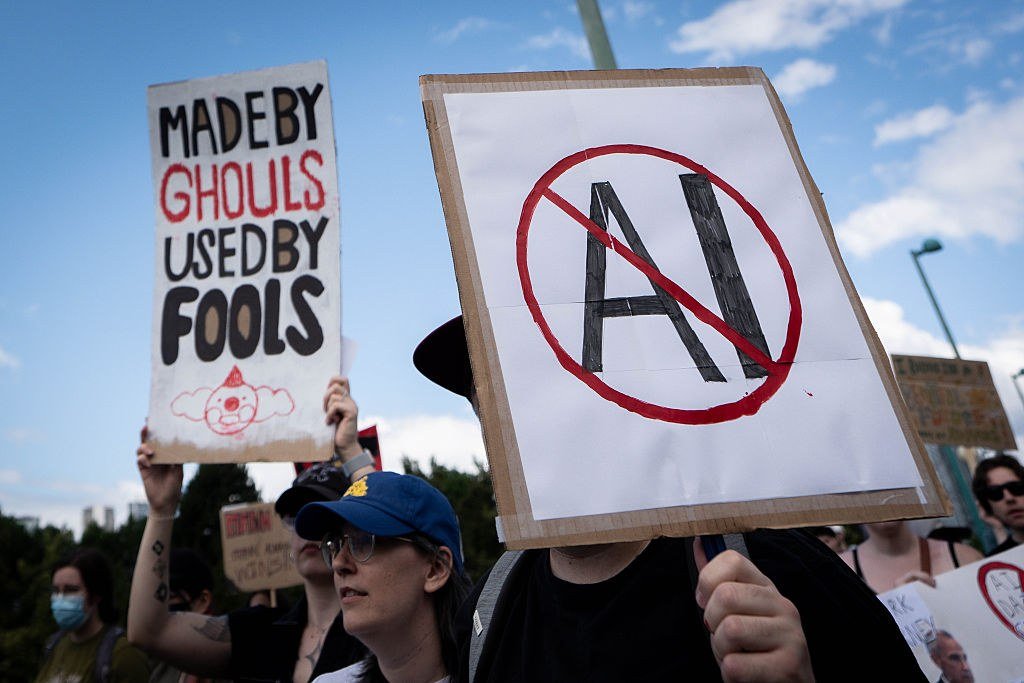
Wariness, according to TechCrunch’s reporting, is growing rather than fading as AI becomes harder to escape. That’s the detail that should worry executives more than any quarterly metric. Growth in use alongside growth in distrust is not a contradiction. It’s a description of a captive audience. People are along for the ride, but a captive customer is not a loyal one, and resentment has a way of surfacing the moment a real alternative appears.
The reasons for the skepticism aren’t mysterious. People have watched AI systems confidently invent facts. They’ve read about jobs being restructured around automation. They’ve noticed features arriving faster than the trust needed to support them. When a company insists a tool is helpful while the person using it feels talked down to or worse, surveilled, no amount of adoption data closes that gap.
What Silicon Valley got wrong about trust
Trust in technology has never been won by ubiquity alone. It’s earned when a tool consistently does what it promises, respects the user’s attention, and stays out of the way when it isn’t needed. Much of the current AI wave has done the reverse. It’s loud, it inserts itself into workflows uninvited, and it asks for confidence it hasn’t yet demonstrated. The strategy of shipping first and reassuring later assumed people would extend the benefit of the doubt. Increasingly, they aren’t.
There’s a deeper miscalculation underneath all of this. The companies building these systems tend to be staffed by people who find AI genuinely thrilling, and it’s easy to mistake your own enthusiasm for the market’s. For a working professional worried about their role, or a newcomer who just wants their email to send without a suggested rewrite, the pitch reads very differently. The gap between how builders feel about AI and how ordinary users experience it is exactly where the wariness lives.
None of this means the technology is doomed or that the skepticism is permanent. It means the easy path, the assumption that adoption automatically converts to affection, has closed. Winning people over now requires the slower work the industry hoped to skip: tools that are accurate, restraint about where AI actually belongs, and a willingness to let people opt out without penalty. Acceptance, it turns out, has to be earned rather than defaulted into existence.
The companies that treat 2026 as a trust problem rather than a distribution problem are the ones worth watching. Everyone else is busy measuring how many people use their AI, and missing the quieter number that matters more: how many of them actually wanted to.
For more coverage of AI adoption and consumer trust, visit Mylistingo.
Source: Original Article
The Netherlands, for internationals
One email a week: the week's news for internationals in the Netherlands, new practical guides and what changed in the cities. No spam, unsubscribe any time.