Most companies talking about AI deployment in 2026 have been at it for a few years. Caterpillar has been at the underlying problem for decades, just not with chatbots. The heavy-equipment maker figured out how to run machines that nobody is standing next to, in places nobody wants to be, long before “autonomous” became a boardroom buzzword. Now it’s taking what it learned hauling rock out of remote pits and applying it to how enterprises put artificial intelligence to work.
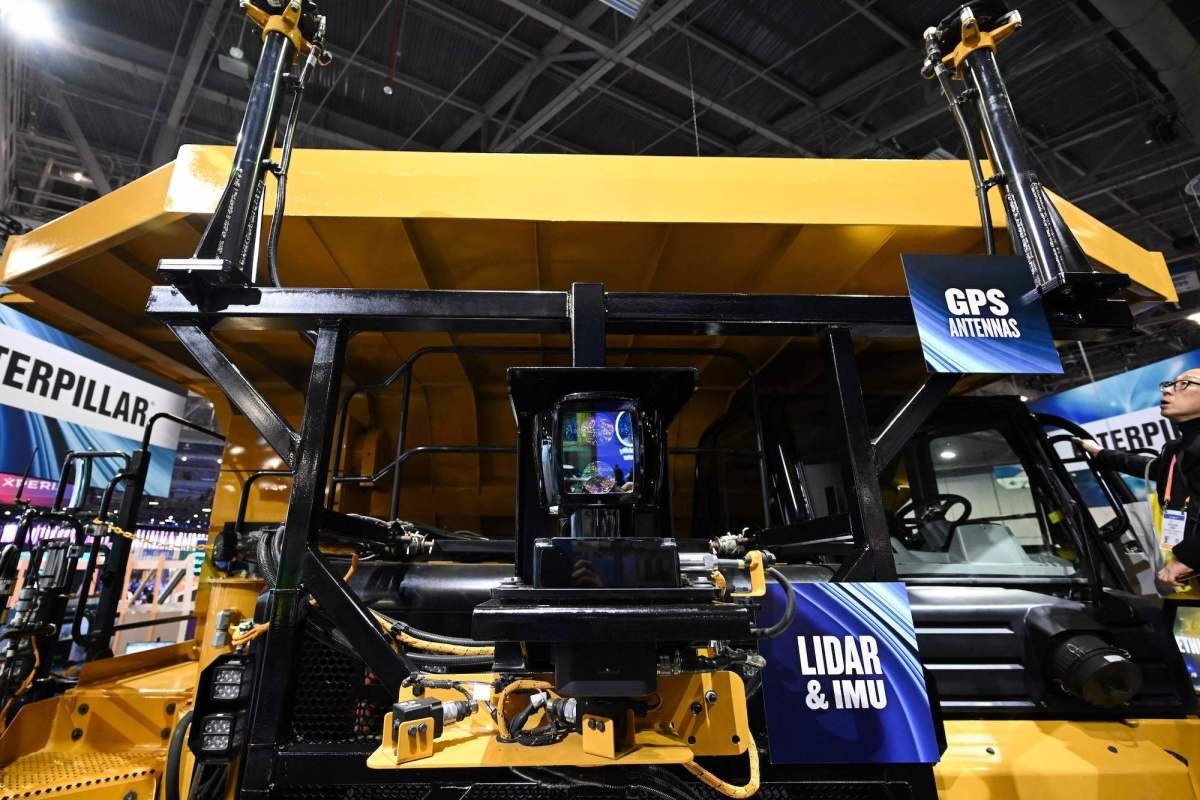
That connection sounds like a stretch until you look at what automating a mine actually requires. A giant autonomous truck moving ore across a site in the middle of nowhere is not a software demo. It has to work in heat and dust, keep working when the network flickers, and fail in ways that don’t hurt anyone or wreck a machine worth more than a house. Caterpillar spent years solving those problems on real sites with real consequences. The company’s argument, as TechCrunch frames it, is that the discipline learned there maps neatly onto the messy business of deploying AI.
Why a mining truck teaches you something about AI
Consider what the two jobs have in common. Both involve handing decisions to a system and trusting it to behave when conditions get ugly. Both punish teams that skip testing and reward teams that stage their rollouts carefully. And both live or die on a boring word that rarely makes headlines: reliability.
Automating a remote mine forces a kind of humility that a lot of AI projects lack. You cannot ship a half-finished autonomous hauler to a working pit and patch it later over the weekend. The environment is unforgiving, the feedback loops are slow, and the cost of a bad decision is measured in equipment and human safety rather than a dip in engagement metrics. Companies that grew up in that world tend to build guardrails first and features second. That instinct is exactly what a lot of AI deployments are missing right now, as organizations race to plug large language models into workflows before they’ve thought through what happens when the model is confidently wrong.
There’s also the question of where the intelligence actually runs. Remote mining sites can’t assume a fat, reliable pipe back to a data center, which means Caterpillar had to get comfortable with systems that make decisions locally and keep functioning when the connection drops. That problem is coming for AI too, as more workloads push toward the edge and away from the assumption that everything can round-trip to the cloud. A company that already solved autonomy under bad connectivity has a head start most software firms don’t.
Operational muscle beats a good demo
The gap between a working prototype and a deployed system is where most AI ambitions quietly die. Anyone can get a model to do something impressive once. Getting it to do that thing ten thousand times a day, safely, across sites with different conditions and different people relying on it, is a completely different discipline. Caterpillar’s pitch is that this discipline is the hard part, and it happens to be the part the company has been practicing for a very long time.
That framing carries a quiet challenge to the software industry. So much of the AI conversation has been about model capability, the benchmark scores, the new frontier features, the demos that go viral. Far less of it has been about deployment as an engineering craft: monitoring, fallback behavior, staged rollout, the unglamorous work of making sure the thing keeps running when you stop watching it. An industrial company built on machines that must not fail is well positioned to remind everyone that capability without operational rigor is just a demo.
The industrial playbook comes for software
What makes this notable is the direction the knowledge is flowing. Usually the story goes the other way, with Silicon Valley teaching old-line industrials how to think about software. Here an equipment manufacturer is telling technology companies that they’ve been underrating the operational side of AI, and that the lessons from automating physical machines in hostile environments transfer better than anyone expected.
The real test will be whether that translation holds. Running an autonomous truck and running a language model are not the same task, and confidence built in one domain can curdle into overconfidence in another. But the core insight is hard to argue with. Deployment is not the last step after the interesting work is done. It is the work. Companies that internalize that will get more out of AI than the ones still polishing demos, and it’s telling that some of the clearest thinking on the subject is coming from a firm better known for yellow machinery than for neural networks.
Watch whether other industrial players start making the same case, and whether the software world listens. If the next wave of durable AI systems borrows its rigor from mining, manufacturing, and heavy industry rather than from the consumer web, that would say a lot about where this technology is actually maturing.
For more coverage of AI deployment and enterprise automation, visit Mylistingo.
Source: Original Article
The Netherlands, for internationals
One email a week: the week's news for internationals in the Netherlands, new practical guides and what changed in the cities. No spam, unsubscribe any time.