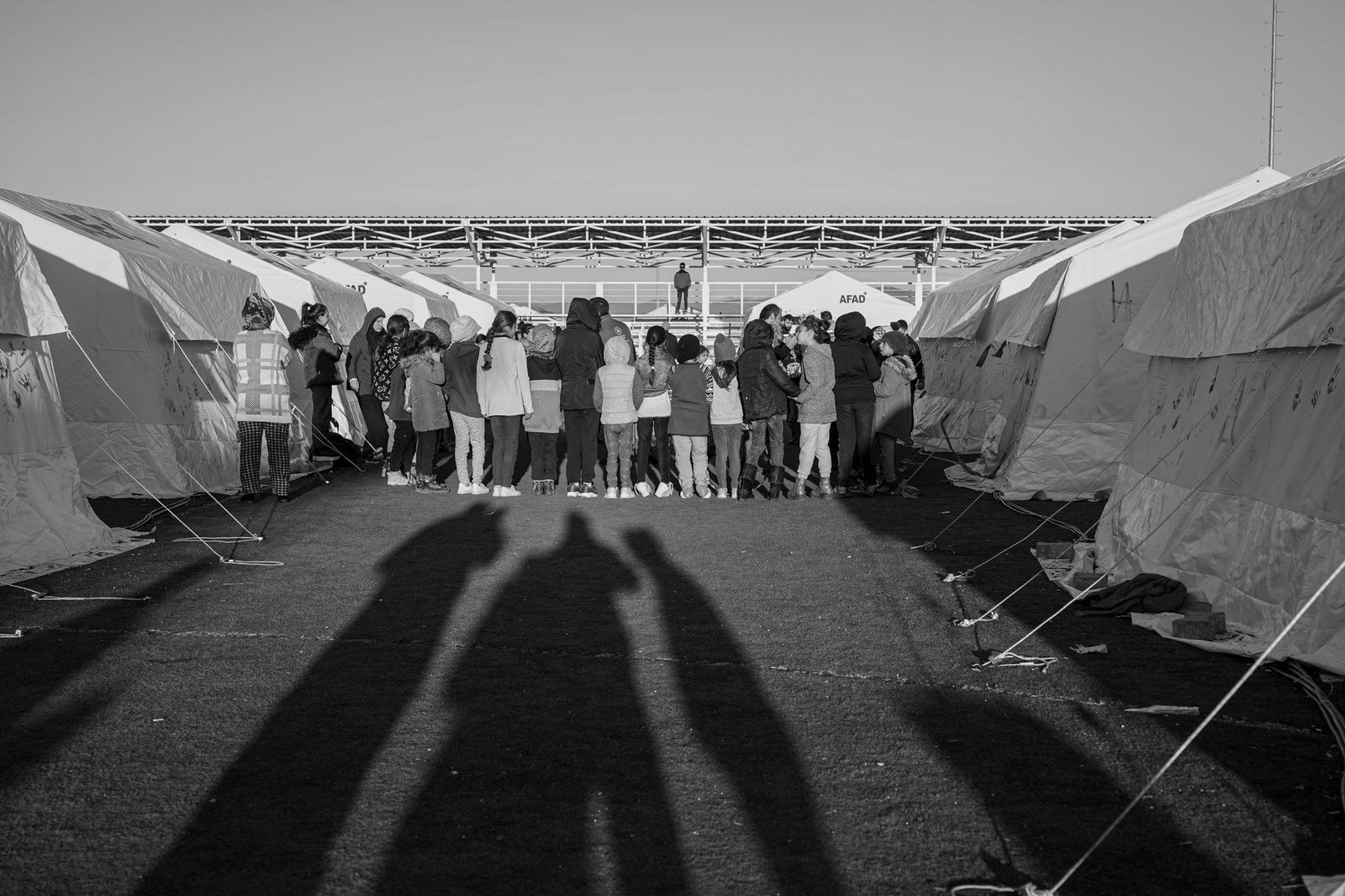
The Home Office is accused of giving false hope to people in Gaza after it emerged that a new safe route for Palestinian refugees is open only to those who have already escaped to Lebanon or Jordan. According to The Guardian, the organisation running the scheme has confirmed it will refer only “a very small number of extremely urgent cases”, all of them processed outside Gaza.
What happened
Shabana Mahmood, the home secretary, announced at Labour’s annual conference last month that a resettlement scheme for refugees would reopen. A statement from her department said: “Around one in four referrals will be for Afghan women and girls and Palestinian refugees, fleeing war and persecution.”
The limits on eligibility came out later. The Guardian reports that they emerged in an exchange of emails between Communities for Palestinians (CFP), an umbrella alliance, and the International Refugee Assistance Project (Irap), the non-profit tasked with making referrals to the UK government. Irap’s website says it will refer “a very small number of extremely urgent humanitarian cases to the UK for consideration for resettlement”. Humanitarian organisations in Jordan and Lebanon will pass those cases to Irap, which will then interview people to decide whether they can be referred on.
The scheme focuses on “extremely vulnerable refugees whose lives have become unsustainable in Jordan or Lebanon”. Irap also says it does not know how many people the UK will accept, adding that this “is ultimately a decision for the UK government and depends on funding as well as local authorities’ capacity.”
CFP says this detail was missing from Mahmood’s speech and from later Home Office statements, which led people in Gaza and their supporters to believe they could apply too. Vicky Moller, a co-founder of CFP, said: “The applause at Shabana’s announcement at conference was at the prospect of a resettlement scheme for Palestinians fleeing war and persecution. People understood that would mean rescuing people from Gaza.”
The Home Office rejects the claims. It says the resettlement scheme Mahmood reopened has always been for people who are outside their country of origin. A spokesperson said: “To qualify for refugee status under international frameworks, individuals must be outside their country of origin. Palestinians who remain in Gaza would not initially be in scope for these routes. However, Palestinians who have fled Gaza could be referred to the UK through the International Refugee Assistance Project.”
Palestinians are in an unusual legal position, and that sits at the centre of the dispute. The Guardian notes that Palestinian refugees fall outside the remit of the refugee convention and of UNHCR. A separate agency, Unrwa, was set up to serve them. It defines a Palestinian refugee as any person whose “normal place of residence was Palestine during the period 1 June 1946 to 15 May 1948 and who lost both home and means of livelihood as a result of the 1948 conflict”. As a result, Palestinian refugees live in the West Bank and the Gaza Strip as well as in countries such as Syria, Lebanon and Jordan. The Guardian also points out that other UK safe and legal routes, including earlier schemes for Afghan refugees, have let small numbers of people come straight from their country of origin.
Why it matters if you live in United Kingdom
If you have relatives or friends who are still inside Gaza, the Home Office has made clear that they “would not initially be in scope” for this route. The scheme does not offer a way to bring people directly out of the territory.
Relatives who have already reached Jordan or Lebanon face a narrow process. According to Irap, they cannot simply apply. Humanitarian organisations in those two countries must refer their cases, Irap then interviews them, and only a very small number of extremely urgent cases will go forward. Nobody has said how many places there will be.
The scheme also touches local communities across the UK. Irap says the number of people accepted will depend partly on how much capacity local authorities have, so councils will help decide how many refugees the programme can take in.
For voters following the government’s immigration policy, the row shows how far political messages can drift from the detail of a policy. Jon Featonby, chief policy analyst at the Refugee Council, backed the principle. “The government is right to commit to safe and legal routes. They provide a vital way for refugees to reach safety without having to put their lives in the hands of smuggling gangs,” he said. He added that “the warm words have to be accompanied by ambition, and that means supporting people in the thousands, not the hundreds”, and that routes must “be accessible to them no matter where they are in the world.”
What to watch next
The main open question is scale. Neither Irap nor the Home Office has said how many Palestinians the UK will resettle, and Irap says that depends on government funding and council capacity. Any figures the Home Office publishes will show whether the scheme reaches the hundreds or the thousands that the Refugee Council is calling for.
Pressure to widen the route is also likely to continue. Dr Peter Walsh, a senior researcher at the Migration Observatory at the University of Oxford, said resettlement schemes usually take people from neighbouring states such as Egypt, Jordan or Lebanon. “The Syrian scheme worked the same way: the roughly 20,000 people resettled to the UK between 2014 and 2021 all came from countries around Syria, with nobody to my knowledge being flown directly from Syria,” he said.
Walsh said that taking people directly out of Gaza would be “closer to an emergency evacuation”, and that it “would depend on Israel and Egypt letting people leave and on the Home Office finding a way to do security and biometric checks with no visa centre in Gaza.” Whether ministers will consider a programme of that kind, as campaigners want, is the next test for the policy.
Source: The Guardian
Sources
- The Guardian: UK accused of giving people of Gaza false hope over new refugee safe route, accessed 10 October 2026
The UK, for internationals
One email a week: the week's news for internationals in the UK, new practical guides and what changed in the cities. No spam, unsubscribe any time.