This guide is for people who have moved to Munich from abroad and want to use the Englischer Garten the way residents do, whether you come alone, with friends or with children. It explains how the park is laid out, where to watch the Eisbach surfers, which beer gardens and meadows suit which mood, and where to find some calm when the southern end is full.
- How the park is laid out
- The Eisbach wave and the southern sights
- Beer gardens and places to eat
- What works with children
- Quiet corners through the year
- FAQ
How the park is laid out
The Englischer Garten (English Garden) is Munich’s largest park. It covers 376 hectares, or 411 hectares if you include the Maximiliansanlagen, Hofgarten and Finanzgarten. The city’s official guide on muenchen.de says the park is open all year and admission is free. It runs from the Altstadt and Lehel through Schwabing into northern Munich.
It is easiest to think of it as two parks. The south has the well-known sights: the Eisbach wave, the Monopteros (a small round temple on a hill), the Chinesischer Turm (Chinese Tower) and the Japanese Tea House. North of Kleinhesseloher See, the paths get quieter and the meadows wider. Residents choose their end depending on whether they want company or space.
Which public transport you take depends on where you are heading. The U3 and U6 underground lines, the bus to the Chinesischer Turm stop and the tram to Tivolistraße all serve the park. Many paths are flat and paved, which helps with buggies and wheelchairs, but the path up to the Monopteros is not accessible.
The Eisbach wave and the southern sights
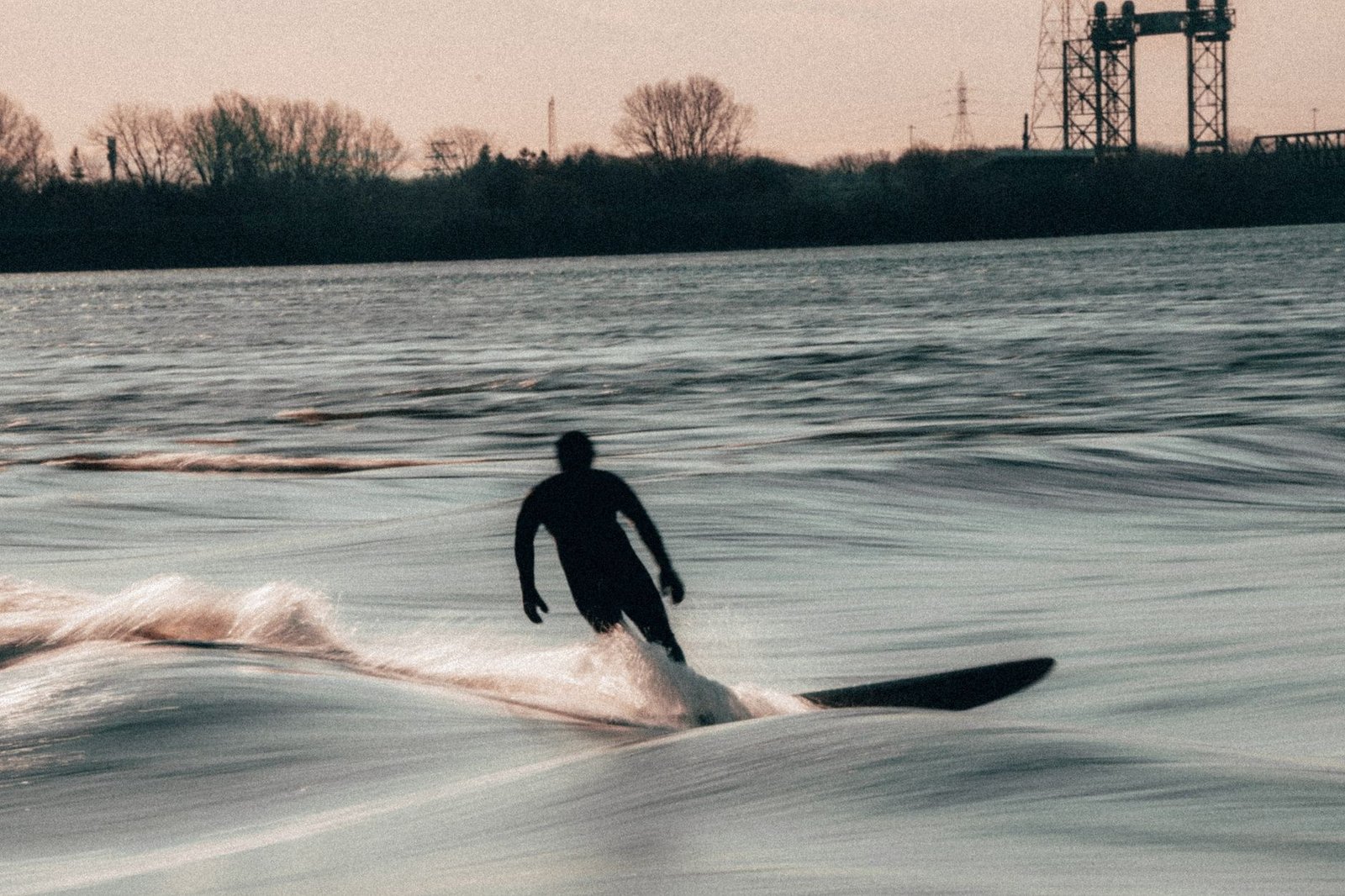
The Eisbachwelle (Eisbach wave) is on the southern edge of the park, at the entrance on Prinzregentenstraße. Surfers are usually there all year, and spectators line the banks. The official page presents it as somewhere to watch and does not set out any rules for surfing it. If you want to ride it yourself, look for current information before you go.
A good first walk goes from the wave to the Japanese Tea House, past the small waterfalls, up to the Monopteros and on to the Chinese Tower. The Tea House was built in 1972 for the Summer Olympics and stands on an artificial island in the Schwabinger Bach. Public tea ceremonies were scheduled from April to October in 2026, and the Japan Festival takes place around the tea house in summer. Check the official page for next season’s dates.
The meadows around the Monopteros are central and busy on warm days. On the other side of the Schwabinger Bach is the Schönfeldwiese, which is a nudist area. That is worth knowing before you put down a picnic blanket with visiting relatives.
Beer gardens and places to eat
The beer garden at the Chinese Tower has around 7,000 seats and is one of the largest in Bavaria. The 25-metre pagoda is based on a design from 1789 and was last rebuilt after the Second World War. In summer you share the benches with brass bands, cyclists, families and locals. During Advent a Christmas market is held here, so it is a meeting point all year, not only in summer.
The city also names the Seehaus on Kleinhesseloher See, the Hirschau, the Aumeister in the far north, the Minihofbräuhaus and several kiosks. The official page gives no opening hours or prices for any of them, so check each venue’s own website, especially outside summer.
What works with children
Next to the Chinese Tower beer garden is a historic Biedermeier-style carousel, so adults can sit down while children ride. Behind the tower is the Rumfordschlössl, a Neoclassical building from 1791. It is now a nature and culture centre for children and teenagers, with programmes on nature, the environment and culture. Its own information has current programmes and any booking rules.
Kleinhesseloher See is the largest body of water in the park. In summer you can hire pedal boats and rowing boats from the rental on the northern shore near the Seehaus. Swimming in the lake is not allowed. In spring, ducks, geese and their young are out along the shore. Children enjoy watching them, but the city asks visitors to keep their distance and not to feed the animals.
For older children there is the wild bee nature trail. It is about three kilometres long, has eight information stations, and you can reach it from Studentenstadt U-Bahn station or from the Aumeister. In the northern part you may also see sheep grazing.
Quiet corners through the year
When the south is crowded, go north. The city suggests a route from Kleinhesseloher See to the Hirschau, then to the Schwammerlweiher pond and on to the Aumeister or the Oberföhring weir. The stretch along the Oberstjägermeisterbach stream is the most secluded. The Libellenteich is another calm spot by the water.
The Oberföhring weir was built in the 1920s. It raises the Isar by about six metres and feeds the 64-kilometre Mittlere Isar Canal towards Landshut. A wide footbridge lets you cross the river on foot, and since 2022 the weir has carried large-scale graffiti by the Munich street artists Loomit, Lando and Bert.
The year follows a simple pattern. In spring, chicks appear on the lake and the new wildflower meadows on the Schönfeldwiese and Werneckwiese come into bloom. Summer brings boats and open-air theatre in the Amphitheater. In 2026 the Munich Summer Theater performed Shakespeare’s Twelfth Night there from Thursday to Saturday with free admission, and moved to the Mohr-Villa Freimann in bad weather. Autumn and winter are good for long walks in the north, watching the Eisbach surfers and the Advent market. The park is home to 50 to 60 species of breeding birds, as well as hedgehogs, foxes and beavers.
FAQ
Is the English Garden free and open all year?
Yes. The official city guide states that the park is open year-round and admission is free. Beer gardens, the boat rental and cultural venues set their own hours, which the city page does not list, so check their own websites.
Can I swim in the park?
Not in Kleinhesseloher See, where swimming is not allowed. The official page does not cover swimming in the streams, so do not assume it is permitted. Boating on the lake is the popular alternative in summer.
Where can children play while adults relax?
The Chinese Tower is the easiest choice: the historic carousel stands right next to the beer garden. Kleinhesseloher See also works, with boat hire on the northern shore and the Seehaus close by.
How do I get there by public transport?
Depending on your destination, take the U3 or U6 underground lines, the bus to Chinesischer Turm, or the tram to Tivolistraße. Many paths are flat and paved, but the path to the Monopteros is not accessible.
Official sources: muenchen.de
Last checked: 11 October 2026 against the pages linked above. Prices, opening hours and programmes change; the venue’s own site always has the current details.
Sources
- muenchen.de: English Garden: Munich's largest park, accessed 11 October 2026
Munich, for internationals
One email a week: what changed for internationals in Munich, the week's news from Germany, and one guide worth reading. No spam, unsubscribe any time.