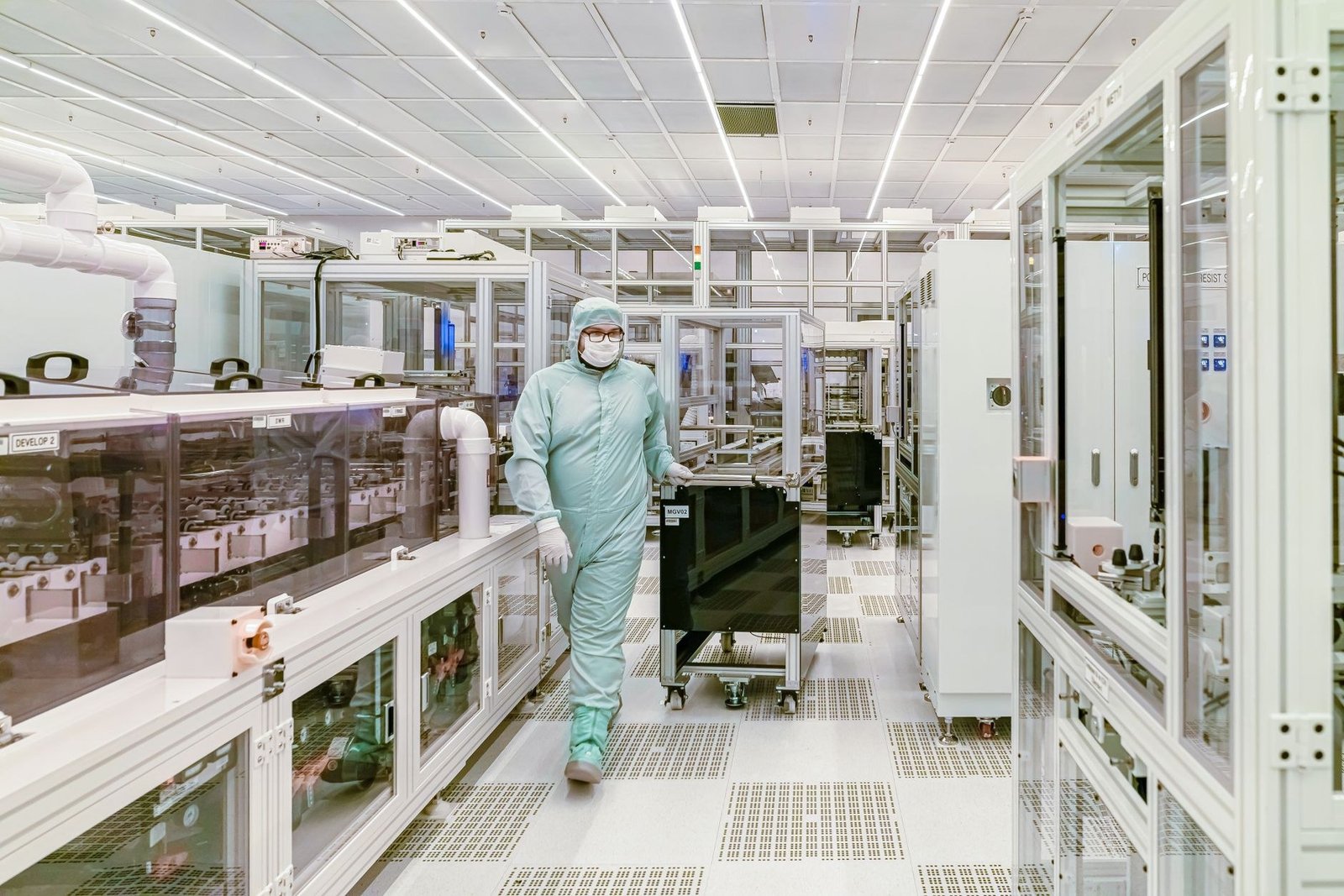
Global Foundries says construction of the expansion at its chip factory in Dresden, Germany, has reached its highest point. Tweakers reports that the company has also announced FDX Fusion, a manufacturing technology meant to deliver chips with performance comparable to 7 nanometre chips for AI used in physical devices.
What happened
According to Tweakers, the announcement covers two milestones that Global Foundries describes as important for what it calls “physical AI”. The first is a construction milestone: the expansion of the Dresden plant has reached its highest point. The second is a technology plan: the next generation of the company’s advanced chip production technology, called FDX Fusion.
Physical AI means AI systems that work in the real world rather than only in data centres or apps. Tweakers gives examples such as systems that use cameras, sensors and robot arms to detect what is happening around them and take action. The chips the expanded Dresden factory will produce are intended for this type of use.
Tweakers notes that the company is not promising true 7 nanometre chips. Global Foundries speaks of performance levels comparable to those of 7nm chips. The company may combine several techniques to match competitors that do manufacture real 7 nanometre chips. Even so, Tweakers cites the German technology site Computerbase, which calls the plans a step forward for Global Foundries, since the company has not produced high-end chips for a long time.
FDX Fusion is meant to produce chips that combine different types of electronics on one piece of silicon. The company lists analogue functions, mixed analogue and digital components, embedded memory and high-performance radio communication.
There is an important condition. Tweakers reports that the development of FDX Fusion depends on approval from the German government under the European subsidy scheme Important Project of Common European Interest (IPCEI) Advanced Semiconductor Technologies (AST). It is not yet known when FDX Fusion could be ready for production.
The wider investment is more certain. Global Foundries is investing 1.1 billion euros in its German production capacity, including the Dresden expansion. This should raise the plant’s annual output to more than one million 300mm chip wafers, a figure the company aims to reach by the end of 2028. At that point, according to the company, Dresden will be the largest chip production facility in Europe that manufactures chips for other companies.
Why it matters if you live in the Netherlands
The Tweakers report does not mention the Netherlands directly, so the relevance for residents here is mainly European rather than local. Several points in the source still matter to people living and working in the Netherlands.
More chip production in Europe. Global Foundries makes chips for other companies, a business model known as contract manufacturing. If the company meets its target, Europe’s largest facility of this kind will be in Dresden by the end of 2028. For European firms that design chips but do not make them, that means a large production option within the EU.
Industries that employ many internationals. Tweakers reports that Global Foundries supplies chips to the automotive, aviation, industrial IoT (internet of things) and defence sectors, and that the company sees growth opportunities for physical AI in those markets. If you work in engineering, manufacturing, logistics or technology in one of these fields, the chips designed for cameras, sensors and robotics are the kind of components your industry may come to rely on.
European subsidy money at work. The most advanced part of the plan depends on IPCEI, a European scheme for which national governments must give approval, in this case Germany. For readers who follow EU industrial policy, this is a clear example of how Brussels-backed subsidy schemes shape where advanced technology gets built.
No immediate change for consumers. Nothing in the report suggests that prices or products in Dutch shops will change in the short term. The chips are intended for industrial and physical AI applications, and the advanced technology has no confirmed production date.
What to watch next
The key decision is whether the German government approves Global Foundries’ participation in the IPCEI Advanced Semiconductor Technologies scheme. According to Tweakers, the development of FDX Fusion depends on that approval, so any news on it will show whether the 7nm-class plans go ahead.
The second point to follow is a production timeline for FDX Fusion. The company has not said when the technology could be ready for manufacturing. Until it does, the 7nm-class performance remains a goal rather than a product.
Third, watch the capacity target. Global Foundries aims to pass one million 300mm wafers a year in Dresden by the end of 2028. Whether it reaches that figure on time will show how far Europe has moved towards making more of its own chips.
Finally, keep an eye on the sectors the company names: automotive, aviation, industrial IoT and defence. Tweakers reports that Global Foundries sees growth for physical AI in these markets, so announcements from customers in those industries may be the first sign of where the Dresden chips end up.
Source: Tweakers
Sources
- Tweakers: Global Foundries wil in Duitse fabriek chips met 7nm-prestaties maken voor AI, accessed 11 October 2026
The Netherlands, for internationals
One email a week: the week's news for internationals in the Netherlands, new practical guides and what changed in the cities. No spam, unsubscribe any time.