This guide is for internationals who have just moved to The Hague and want to get rid of their rubbish correctly from the first week. By the end you will know how your street collects waste, which bin takes what, how to deal with bulky items and the waste depots, and how to avoid a fine.
- Find out how your street collects waste
- Which bin takes what
- Glass, textiles, appliances and frying oil
- Bulky waste (grofvuil)
- Waste drop-off centres and the Afvalpas
- Fines and what never goes in household waste
- FAQ
Find out how your street collects waste
The Hague does not use one system for every address. How you put out your rubbish depends on where you live, so the first thing to do after moving in is check your own address. According to The Hague International Centre’s waste and recycling page, there are three main situations.
- Bags on the street: in some neighbourhoods you leave trash bags on the street on a specific weekday.
- Wheelie bins: in other neighbourhoods each household has separate wheelie bins for different kinds of waste, and each kind is collected on certain days each week.
- Neighbourhood containers: elsewhere you take your waste to large storage containers at fixed waste collection points.
To find out which applies to you, search your address in the municipality’s household waste calendar. It shows which days each type of waste is collected. If nothing comes up when you enter your address, you live in an area served by neighbourhood containers.
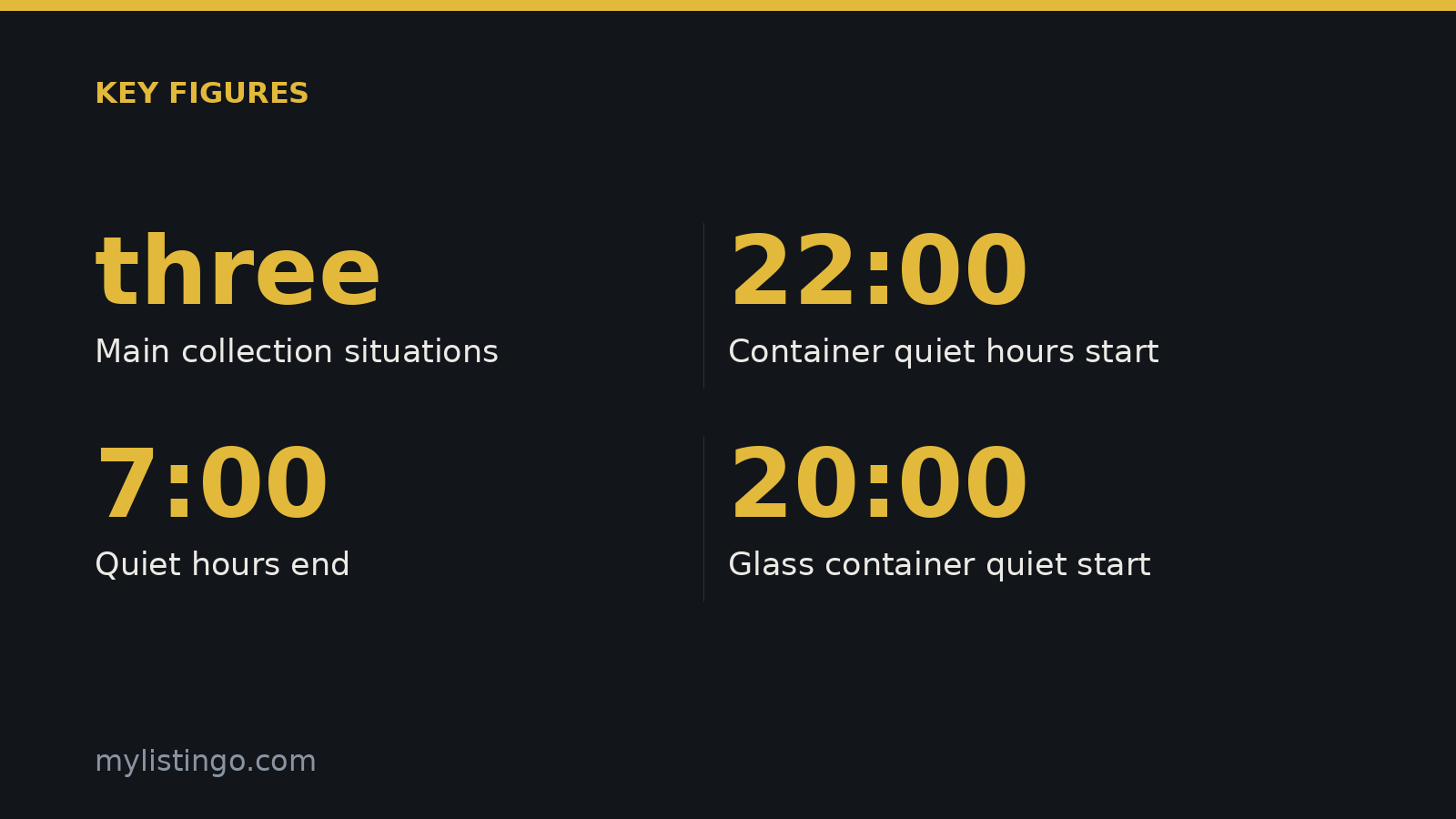
You can use those containers any day of the week. Neighbours will hear you, though, so do not use them between 22:00 and 7:00.
Which bin takes what
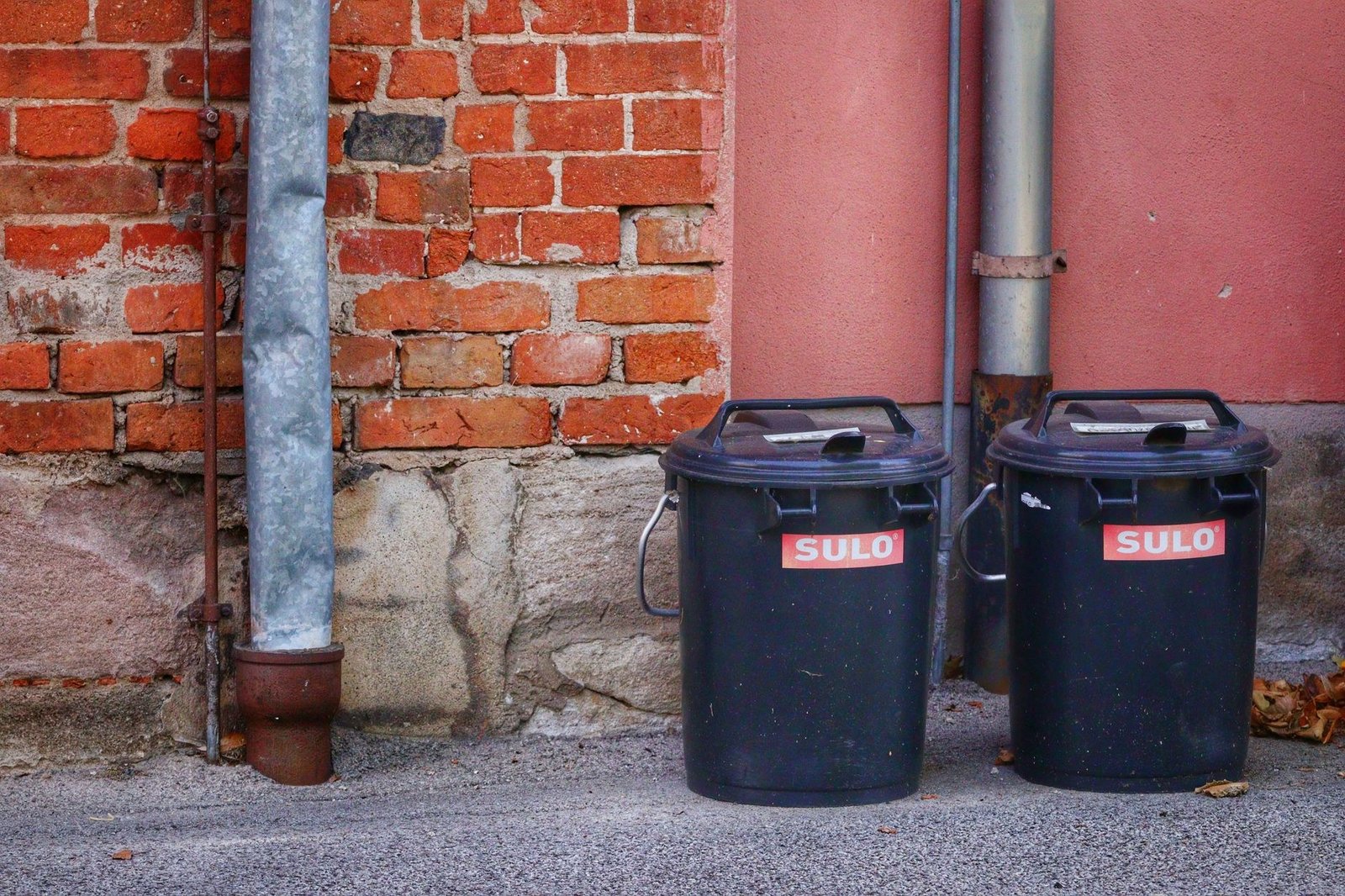
If your street uses wheelie bins, each colour is for one waste stream. Getting this right matters, because putting waste in the wrong place can lead to a fine.
- Green bin: organic waste
- Blue bin: paper and cardboard
- Orange bin: plastic, metal and drink cartons
- Grey or black bin: all remaining waste
Each stream has a few rules that newcomers often miss.
Plastic, tins and drink cartons should be empty. They do not have to be completely clean. Only plastic packaging belongs here. Other plastic items, such as toys, plastic plates or toothbrushes, go in your regular household waste.
Organic waste (food waste, known as GFT) should not include biodegradable plastic. It takes too long to turn into compost, so it is not accepted.
Paper must be dry and clean. Wet or greasy paper does not belong in the blue bin.
The same separation applies if you use neighbourhood containers or street bags. The streams that must always be kept apart from your regular waste are paper, glass, textiles, plastic, tins and drink cartons, electric and electronic appliances, and organic waste.
Glass, textiles, appliances and frying oil
Some recyclable waste does not go in your household bins at all.
Glass goes in glass containers. Do not use them between 20:00 and 7:00, because breaking glass is loud. Note that this window starts earlier than the one for general neighbourhood containers.
Textiles are collected in special containers and at The Hague’s city farms (kinderboerderijen).
Electric and electronic appliances are not part of the regular collection. If you are replacing a broken appliance, such as a washing machine, you can give the old one to the shop where you buy the new one. When you buy an appliance in the Netherlands you pay a small disposal tax, and the shop must then take your old appliance. If you are not buying a new one, take it to a waste drop-off centre or put it out as bulky waste.
Used frying oil should be left to cool, poured into a bottle and taken to one of the city farms or a waste drop-off centre. It can be reused as fuel.
Not everything has to be thrown away. An appliance that might still work can go to a repair café. Clothes and household items someone else could use can go to a thrift shop or recycled goods shop, called a kringloopwinkel.
Bulky waste (grofvuil)
Bulky waste, or grofvuil, means items too large for your normal waste, such as furniture, mattresses or large appliances. It must never go in your regular household waste or next to a container.
You have two options: put it out as bulky waste through the municipality, or take it to a waste drop-off centre yourself. The International Centre page does not explain how to book a bulky-waste collection, how many items you can put out, or whether there is a charge. Those details are set by the Municipality of The Hague, so check them with the municipality before you put anything on the street. Do not leave items outside on the assumption that someone will pick them up.
If you are clearing out a whole flat at the end of a lease, combining a kringloopwinkel for usable items with a trip to a drop-off centre for the rest is often the simplest approach.
Waste drop-off centres and the Afvalpas
Some waste is difficult to dispose of and is not collected by the municipality. This can include bulky waste, garden waste, construction and demolition waste, some appliances and used oil. You take these to a waste drop-off centre.
To get in, you need an afvalpas, a waste pass. Each household can get one for free. Apply for it soon after you register at your address so you have it ready before you need it, especially if you are planning renovations or a big clear-out.
The International Centre page does not list opening hours, locations, quantity limits or charges for particular materials at the drop-off centres. The municipality sets those rules, so check its information before your visit.
If you live just outside the city, the system is different. Waste management in Delft, Leidschendam-Voorburg and Rijswijk is handled by Avalex, which publishes its own guide on separating waste, general FAQs and rules for bulky waste. A Hague Afvalpas is for The Hague, so residents of those municipalities should follow Avalex’s rules instead.
Fines and what never goes in household waste
The Hague enforces its waste rules. According to the International Centre, you can be fined €200 for not putting each kind of waste in the right place. The fines partly exist to raise recycling rates and keep the city clean.
Never put the following in your regular household waste:
- bulky waste (grofvuil)
- domestic chemical waste (KCA), such as batteries, paint or chemicals
- company waste
- sharp objects or glass in garbage bags, because people passing by and garbage collectors could cut themselves
- loose plastic bags
- boxes with rubbish or other loose garbage
The official page gives €200 as the amount for incorrect separation. It does not give separate amounts for other offences, such as leaving bulky items on the street without arranging a collection. The municipality decides how to deal with each case, so the safest course is to use the correct bin, container, collection or drop-off centre every time.
FAQ
How do I know which collection days apply to my address?
Search your address in The Hague’s household waste calendar. It shows which days each type of waste is collected for bags or wheelie bins. If your address returns no results, your area uses neighbourhood containers, which you can use any day of the week, but not between 22:00 and 7:00.
How much is the fine for putting waste in the wrong place?
The Hague International Centre states that you can be fined €200 for not putting each kind of waste in the right place. It does not list other fine amounts, so the municipality decides on other situations case by case.
Does the Afvalpas cost anything?
No. Each household can get an afvalpas for free. You need it to enter a waste drop-off centre, where you can take items such as bulky waste, garden waste, construction and demolition waste, some appliances and used oil.
Can I put a plastic toy or toothbrush in the orange bin?
No. The orange bin is only for plastic packaging, tins and drink cartons. Other plastic items, such as toys, plastic plates and toothbrushes, belong in your regular household waste in the grey or black bin.
Official sources: thehagueinternationalcentre.nl
Last verified: 22 October 2026 against the official pages linked above. Rules and fees change; the official page always wins. General information, not legal or tax advice.
Sources
- thehagueinternationalcentre.nl: Waste and recycling, accessed 22 October 2026
The Hague, for internationals
One email a week: what changed for internationals in The Hague, the week's news from the Netherlands, and one guide worth reading. No spam, unsubscribe any time.