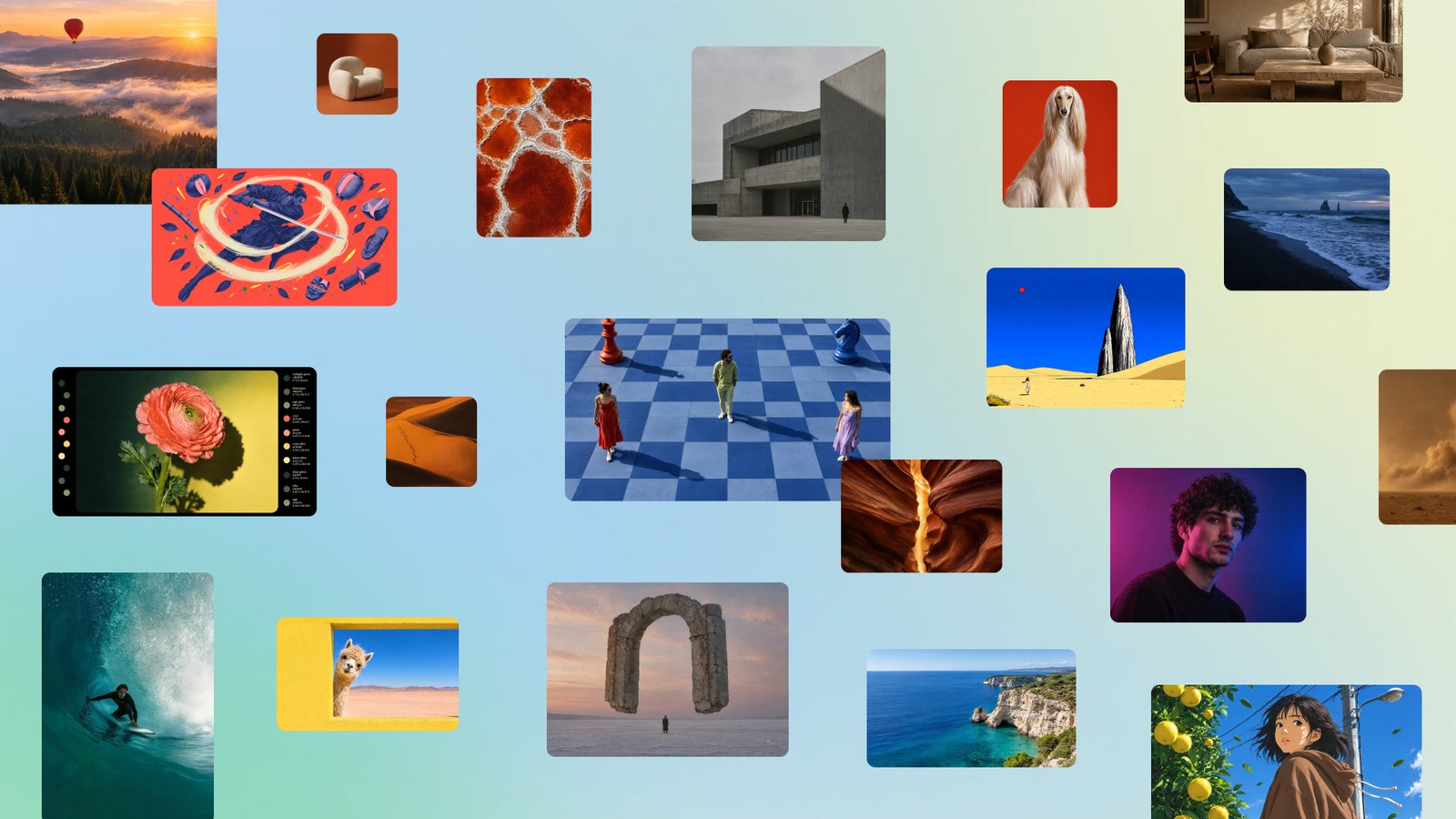
Canva has built its own image generator instead of renting one from OpenAI or Google. The company unveiled Canva Craft on Thursday, a model that plans a design before it draws a single pixel. Canva says this two-stage approach delivers greater precision, consistency and control than single-pass rivals.
The model outputs images at up to 2K resolution. It supports more than 30 aspect ratios, covering everything from Instagram stories to printed menus. Canva trained Craft on millions of human-made templates from its own library, including presentations, infographics and social posts.
Why planning first matters
Most image models generate in one pass and hope the result holds together. Craft splits the job in two. The first stage maps out layout, text placement and object positions. The second stage renders the actual image against that plan.
That split helps with the tasks Canva users complain about most. Legible text inside an image is notoriously hard for diffusion models. So is placing three objects in a specific order. Canva claims Craft handles both more reliably because the structure is decided before rendering begins.
Fourth place, not first
The model currently sits fourth on Design Arena’s leaderboard, a crowdsourced benchmark for AI design outputs. It trails OpenAI’s GPT-Image-2.5 Sunburst, GPT-Image-2.5 Flare and GPT-Image-2. That is a respectable debut, but it is not a lead.
Canva is betting that ranking matters less than placement. Craft lives inside the editor where millions of people already work. Users do not need a new subscription or a separate tab. They open the three-dot menu on the left rail, pick Dream Lab and type a prompt.
Moderation and agent access
Canva says Craft ships with input and output moderation, privacy controls and reporting tools. The company also plans to let external AI agents connect to the model through the open Model Context Protocol. Faster Craft-fast and Craft-ultrafast variants are promised later.
Craft is available now to all users worldwide at no extra charge. That free access is the sharpest part of the launch. Competitors charge per image or bundle generation into paid tiers, and Canva is undercutting all of them while sitting inside a tool people already pay for.
The company has spent two years pushing AI into every corner of its editor. Prompt-based editing arrived in April, alongside layered edits that change part of an image without touching the rest. Craft is the first model Canva owns outright rather than licenses.
Owning the model changes the economics. Canva no longer pays a per-image fee to a third party for every design generated on its platform. It also controls the moderation rules and the roadmap, which matters as regulators scrutinise AI image tools more closely.
The Verge reports that Canva positions Craft as a direct challenge to OpenAI, Microsoft and Google. For a design tool that started as a drag-and-drop template editor, shipping a competitive foundation model is a significant shift in ambition.
Source: The Verge — Canva’s first AI image model plans designs before generating them
Related reading: Walmart Opens Its Website to AI Shopping Agents and Meta Pauses Muse Sharing After 6,800 AI Chat Links Surface.
The Netherlands, for internationals
One email a week: the week's news for internationals in the Netherlands, new practical guides and what changed in the cities. No spam, unsubscribe any time.