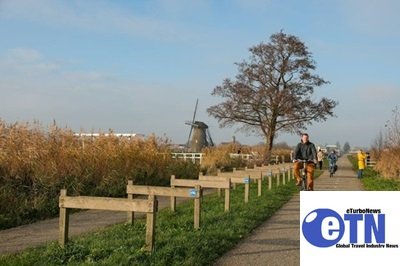
The Netherlands didn’t invent the bicycle, but it perfected the art of building cities around it. In 2026, as cities worldwide grapple with congestion, air pollution, and the need for sustainable urban transport, Dutch cycling infrastructure remains the benchmark that urban planners from Tokyo to Toronto travel thousands of kilometres to study.
By the Numbers
The statistics tell a compelling story. The Netherlands now has over 37,000 kilometres of dedicated cycling paths — more than the entire Dutch motorway network. In Amsterdam, 63% of all trips under 7.5 kilometres are made by bicycle. Utrecht’s Vredenburg station houses the world’s largest bicycle parking facility with space for 22,500 bikes. Across the country, cycling saves an estimated 6,500 premature deaths annually through improved air quality and physical activity. The economic benefits are equally impressive: the Dutch cycling economy — including manufacturing, retail, tourism, and infrastructure — is valued at €8.3 billion annually and supports over 70,000 full-time equivalent jobs.
The Hague’s Ambitious Expansion
The Hague has emerged as one of the country’s most ambitious cycling cities. The municipality’s “Fietsplan 2025-2030” commits €185 million to cycling infrastructure, including heated cycle paths on key commuter routes to prevent ice formation during winter months. The controversial yet successful transformation of the Grote Marktstraat into a bike-priority street has reduced car traffic by 41% while boosting retail footfall by 18%. Local businesses that initially opposed the changes have become some of their strongest advocates after seeing revenue increases average 22% in the first year.
“We looked at the data and made the decision that cars are guests, not rulers, in our city centre,” explains The Hague’s mobility alderman. “The economic benefits have exceeded every projection. People on bikes stop more often, spend more per visit, and return more frequently than drivers.”
The Hague has also pioneered the “Fietsstraat” concept — streets designed from the ground up for bicycle priority, where cars are explicitly treated as visitors. The city now has 14 Fietsstraten covering 8.5 kilometres of urban road network, and surveys show that 73% of residents support expanding the programme despite initial resistance from motorist groups.
Technology Meets Tradition
Dutch cycling infrastructure is increasingly high-tech. Smart traffic lights in Rotterdam and Eindhoven detect approaching cyclists and adjust signal timing to create “green waves” during rush hours. The “Bike Predict” AI system, deployed in Amsterdam in early 2026, uses computer vision cameras at major intersections to anticipate cyclist behaviour and prevent conflicts with motor vehicles before they occur. The system has already reduced cyclist-vehicle collisions by 31% at the ten busiest Amsterdam intersections where it has been installed.
Meanwhile, the national “Doorfietsroute” programme continues to build high-speed intercity cycling highways — wide, smooth, well-lit routes connecting cities that make 20-kilometre bike commutes not just possible but pleasant. The route between Amsterdam and Haarlem, completed in 2025, already carries 8,000 daily riders. Twenty additional Doorfietsroutes are under construction or in advanced planning, with the goal of creating a 1,200-kilometre national network by 2032. Electric bicycle adoption has accelerated this trend: e-bikes now account for 42% of all bicycle sales in the Netherlands, and their average speed of 22 km/h makes longer commutes practical for a broader demographic.
Dutch cities are also experimenting with bicycle parking innovations. The world’s first fully automated bicycle parking tower opened in Nijmegen in early 2026, using robotic arms to retrieve and store bicycles in a structure that occupies just 35 square metres of ground space but accommodates 240 bikes. Similar systems are being considered for densely built neighbourhoods in Amsterdam and Utrecht where ground-level bike parking has reached saturation.
Lessons for the World
The Dutch model’s success is not mysterious. It rests on three pillars: separate infrastructure (bikes are never forced to share space with fast-moving cars), network connectivity (paths form a coherent grid, not isolated fragments), and political consistency (cycling investment has enjoyed cross-party support for five decades). As climate pressures mount and urban populations grow, the world’s cities have a standing invitation to learn from the country that chose the bicycle and never looked back. The Dutch Cycling Embassy, a public-private partnership, now advises over 60 cities worldwide, from Bogotá to Bengaluru, helping them adapt Dutch principles to local conditions and constraints.
Health and Environmental Benefits
The public health dividend from Dutch cycling infrastructure is staggering. Regular cycling reduces the risk of cardiovascular disease by 46%, Type 2 diabetes by 33%, and all-cause mortality by 28% according to a comprehensive 2025 study published in The Lancet, which tracked 45,000 Dutch commuters over 12 years. The Netherlands spends approximately €900 million annually on cycling infrastructure, but saves an estimated €19 billion in healthcare costs, reduced absenteeism, and environmental benefits — a return on investment of more than 20 to 1 that few other public expenditures can match. Cycling also eliminates an estimated 8.5 million tonnes of CO₂ emissions annually compared to equivalent car journeys, making Dutch bikes one of the country’s most effective climate action tools.
Rural Cycling Networks and Tourism
While urban cycling infrastructure receives most attention, the Netherlands has also developed world-class rural and recreational cycling networks. The national LF-Routes network spans 4,500 kilometres of signposted long-distance cycle routes crisscrossing the country, connecting national parks, historic towns, and coastal areas. Cycle tourism contributes €1.8 billion annually to the Dutch economy, with over 12 million domestic and international cycling holidays taken each year. The popularity of electric bicycles has transformed rural cycling accessibility, with e-bike rentals now available at virtually every train station and tourism office, enabling visitors without exceptional fitness to explore the Dutch landscape on two wheels.
Related: Digital Privacy and Data Rights: 2026 Turning Point | Central Bank Digital Currencies Reshape Global Finance
The Netherlands, for internationals
One email a week: the week's news for internationals in the Netherlands, new practical guides and what changed in the cities. No spam, unsubscribe any time.