This is general information about the Dutch system, not medical or insurance advice — consult a huisarts or a licensed adviser.
You land in Amsterdam, sign a rental contract, open a bank account, and then hit the wall that trips up almost every newcomer: you cannot see a doctor until you have registered, and you cannot register for much of anything until you have a BSN and a DigiD login. The Dutch healthcare system runs on paperwork and passwords before it ever runs on stethoscopes. Learn the digital plumbing first, and the rest gets much easier.
The BSN and DigiD come before the doctor
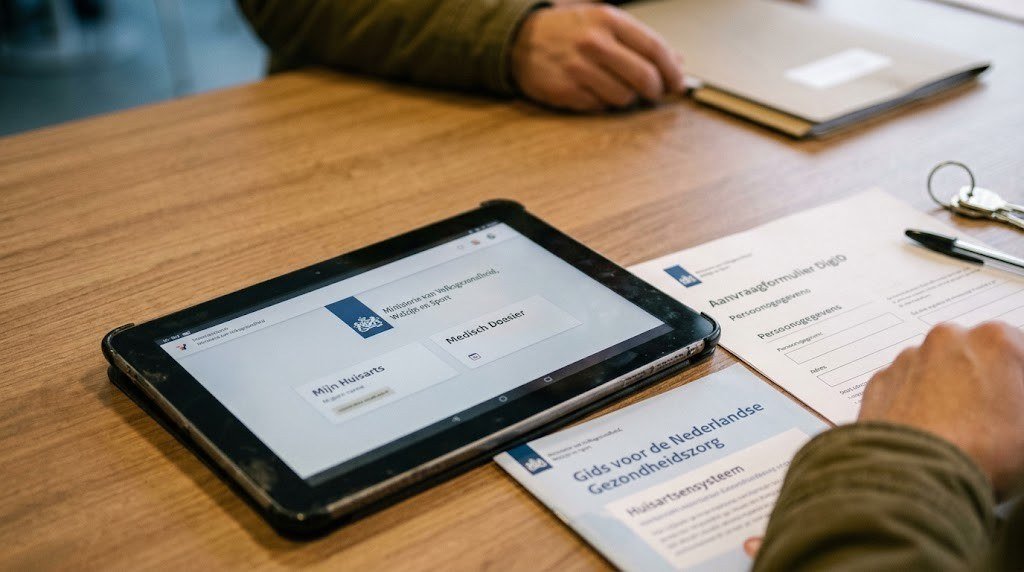
Everything starts with the BSN, the citizen service number you receive after registering with your municipality. Without it, insurers and clinics have nowhere to file you. Once the BSN is in hand, the next step is DigiD, the national digital identity used to log into government services, insurers, and health portals. Think of DigiD as the master key. You will reach for it constantly, so set it up early and add the app, which lets you approve logins from your phone instead of typing codes by hand.
Registering with a huisarts, your gatekeeper
The huisarts, or general practitioner, is the front door to Dutch care. Specialists, most prescriptions, and hospital referrals flow through this one relationship, so registering with a local practice is not optional busywork. Many practices run a digital portal such as MijnGezondheid.net, where you can book appointments, request repeat prescriptions, read results, and message the practice. Outside office hours, non-emergencies go to the huisartsenpost, the after-hours GP service. For anything life-threatening, the number is 112.
Insurance you are legally required to hold
Living in the Netherlands means taking out basisverzekering, the mandatory basic health insurance, usually within four months of arrival. The basic package is defined by the government, so coverage is broadly similar between insurers even as prices differ. On top of it sits aanvullende verzekering, optional supplementary cover for things like dental or physiotherapy. Budget for the eigen risico too, the annual deductible you pay out of pocket before basic coverage kicks in for certain care. To compare policies without wading through sales pitches, the independent Zorgverzekeringslijn and comparison site Zorgwijzer are sensible starting points.
Where the apps and AI actually help
This is where a tech-literate expat has an edge. The GGD, the municipal public health service, runs apps for vaccination records and public health services that spare you a phone queue. Patient portals keep your history in one login rather than scattered across letters. And AI symptom-checkers have quietly entered Dutch primary care, with some practices using triage tools to sort urgent cases from routine ones before a human picks up. These tools guide where you go, not what is wrong with you; the diagnosis stays with the huisarts.
Expect the digital layer to keep thickening as portals consolidate and triage tools spread across practices. The expats who settle in fastest are the ones who treat DigiD, the huisarts portal, and their insurance login as the first three things to set up, not the last.
For more coverage of digital healthcare in the Netherlands, visit Mylistingo.