This guide is for internationals who are renting, or about to rent, a home in Amsterdam and want to understand the rules before money changes hands. Once you have read it, you will know what the official guidance says about permits, rent limits, deposits and fees, your protections as a tenant, and where to go when a landlord breaks the rules.
- Do you need a housing permit?
- Rental sectors and how your rent is capped
- Before you sign: deposits, fees and key money
- Your protections once you move in
- Getting help and reporting problems
- FAQ
Do you need a housing permit?
Many newcomers hear the word huisvestingsvergunning (housing permit) early in their search and are unsure whether it applies to them. The official overview of tenant rights for the Amsterdam Area, Overview of housing rights in the Amsterdam Area by I amsterdam, does not cover housing permits. It does not say which homes need one, who qualifies, what it costs or which documents you must provide.
That means this guide cannot give you a rule here. Whether a specific home needs a permit is for the Municipality of Amsterdam to decide, case by case. Ask the municipality directly before you sign a contract or pay anything, and get the answer in writing if you can. If a landlord or agency tells you a permit is not needed, treat that as a claim to check, not a confirmed fact.
Rental sectors and how your rent is capped
You may see Amsterdam’s rental market described as three sectors. The official page does not set out a three-sector breakdown. It names two parts of the market: social housing, which has a maximum rent threshold, and the private sector. Where your home falls matters, because it affects which body can settle a dispute and whether you may qualify for financial help.

Every home in the Netherlands has a designated rental value based on a national points system called the woningwaarderingsstelsel. Points are awarded for the quality, size, location and facilities of the home, and the total number of points indicates the maximum rent for that property. You can use this limit to judge whether your rent, or a rent increase, is reasonable for the quality of the home you are getting.
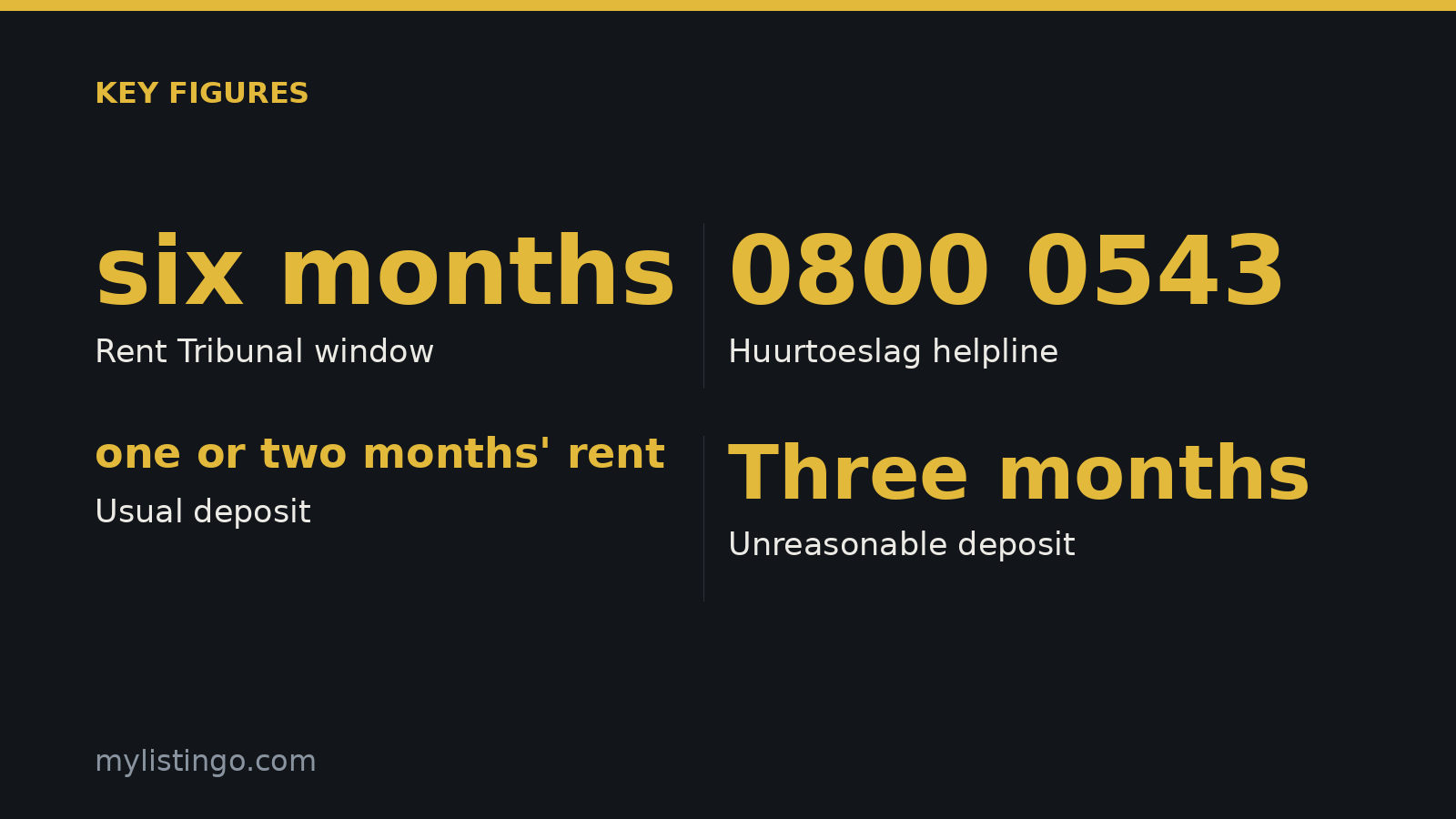
A rent that looks too high is not always final. If your basic rent is above the maximum for social housing, but under Dutch law the home should fall within the social housing threshold, you can ask the Rent Tribunal (Huurcommissie) for help. This must happen within the first six months of your contract. Miss that window and the option described on the official page no longer applies.
The sector also shapes your access to housing allowance (huurtoeslag), a contribution towards rent for tenants who earn less than a government-set income threshold. There is a maximum rent eligible for the allowance. Social housing normally falls within it, while private rentals are often too expensive to qualify. Your income and assets also count, and anyone who receives the allowance and later turns out to be ineligible must pay it back. A free helpline is available on 0800 0543.
Before you sign: deposits, fees and key money
Your tenancy agreement is a binding legal contract, so read it carefully before you sign. The official guidance is frank that most landlords follow the rules, but a small minority may try to exploit a newcomer’s lack of local knowledge, especially when housing is scarce.
Deposits are the first thing to check. A landlord may ask for one, and it usually amounts to one or two months’ rent. Three months is considered unreasonable. Some landlords also charge contract and administration expenses, and these can often be disputed. If you have paid too much in deposit or expenses, you can ask for free legal advice on getting some or all of it back. Unjust agency fees can also be challenged, and agencies can be held accountable if you are being charged too much rent.
Overnamekosten is the payment a departing tenant may ask for items they leave behind. It is only allowed for movable items such as curtains and carpets, and the price must be reasonable. The departing tenant may not charge for fixed masonry and carpentry work, such as plastering, a shower or central heating.
Key money (sleutelgeld) is a separate matter and is illegal. It covers any fee a landlord demands before you can move in, and also payments a departing tenant asks for without giving anything in return. In both cases you would be paying simply to receive the key. The official advice is clear: do not pay.
Your protections once you move in
Dutch law contains many rules that protect tenants, covering rent control, furnishing and service costs. The most important is security of tenure. A landlord cannot simply evict you. If there is a conflict, only a court can terminate your lease.
Maintenance is shared. You handle small and day-to-day repairs, while the landlord is responsible for major repairs and maintenance. If you disagree with your landlord about maintenance, the Rent Tribunal can handle the dispute.
Where the law has been broken, for example through an excessive deposit or unlawful fees, you have the right to challenge the landlord and ask for a refund.
Getting help and reporting problems
For most disputes the first step is the tenant support agency !WOON, which gives free and confidential advice on all rental matters. It has offices in each Amsterdam city district, and you can visit or call. For a dispute over the rental price, the official page recommends asking !WOON for advice before taking anything further.
The national Rent Tribunal is the independent government organisation that rules on disputes between tenants and landlords. Note its limit: it has no jurisdiction in the private sector. If you rent privately, only a court can rule on your dispute.
The official page does not describe a municipal procedure for reporting a landlord to the City of Amsterdam, or what happens after such a report. How the municipality deals with a complaint about a landlord is for the city to decide, case by case, so contact the municipality directly to ask about its process. The page does describe one city reporting route, for problems with neighbours. If neighbours regularly make a lot of noise at night, intimidate or threaten you, or cause another extreme form of nuisance, contact your landlord first, since they may be able to mediate. If that fails, you can report the problem to the city council yourself.
For more practical guides on settling in, visit Mylistingo.
FAQ
Do I need a huisvestingsvergunning to rent in Amsterdam?
The official overview of housing rights does not cover housing permits, so it gives no rules on when you need one, what it costs or which documents are required. The Municipality of Amsterdam decides this case by case, so ask the municipality directly before you sign a contract or make any payment.
How much deposit can a landlord ask for?
A deposit usually amounts to one or two months’ rent, and three months is considered unreasonable. If you have paid too much in deposit or in contract and administration expenses, you can get free legal advice on reclaiming some or all of it.
Can my landlord evict me if we disagree?
No. A landlord cannot simply evict you from your home. If there is a conflict, only a court can terminate your lease.
Can the Rent Tribunal help if I rent in the private sector?
No. The Rent Tribunal has no jurisdiction in the private sector, where only a court can rule on disputes. You can still get free and confidential advice from !WOON, which the official guidance recommends as the first step in a rent dispute.
Official sources: iamsterdam.com
Last verified: 10 October 2026 against the official pages linked above. Rules and fees change; the official page always wins. General information, not legal or tax advice.
Sources
- iamsterdam.com: Overview of housing rights in the Amsterdam Area | I amsterdam, accessed 10 October 2026
Amsterdam, for internationals
One email a week: what changed for internationals in Amsterdam, the week's news from the Netherlands, and one guide worth reading. No spam, unsubscribe any time.