AI News
  • Home
  • Choose country
    • Netherlands
    • United Kingdom
    • Germany
  • Editorial Policy
  • Contact
  • English
  • العربية
No Result
View All Result
AI News
  • Home
  • Choose country
    • Netherlands
    • United Kingdom
    • Germany
  • Editorial Policy
  • Contact
  • English
  • العربية
No Result
View All Result
AI News
No Result
View All Result

India’s Top Court Just Caught AI Faking Case Law

Ramo by Ramo
11 July 2026
in AI in Law
0
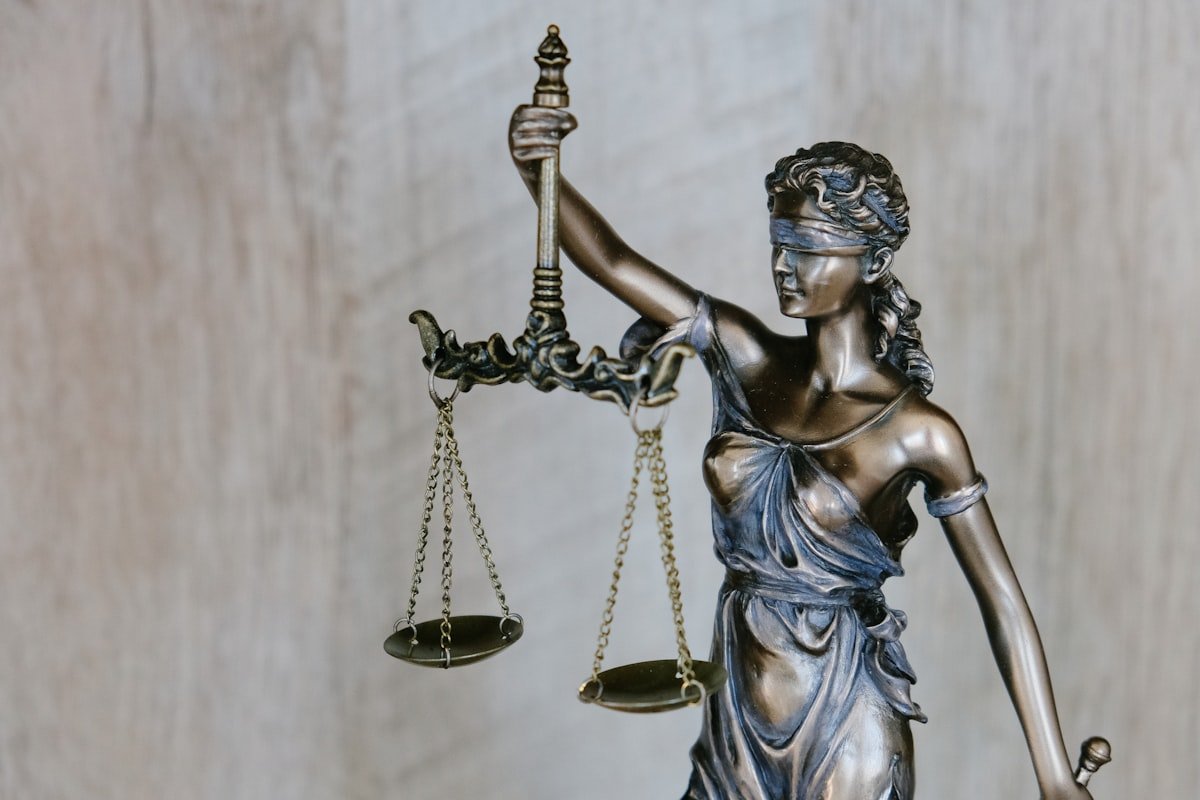
Scales of justice and gavel on a desk
0
SHARES
6
VIEWS
Summarize with ChatGPTShare to Facebook

Buried in the record of an Indian insolvency dispute sat case law that no judge had ever written. When India’s Supreme Court examined the orders passed by the National Company Law Tribunal and its appellate body, the NCLAT, it found citations to judgments that simply do not exist. The court set both orders aside. The fabricated precedents, most likely the product of AI hallucinations, have turned a routine corporate dispute into a warning shot for the legal profession.

How fake law reaches real judges

Generative AI systems are built to predict the next likely sequence of words, not to distinguish an actual Supreme Court precedent from one they have inadvertently invented. Conventional legal databases index authenticated judgments. A chatbot produces text that looks like one. When lawyers, and increasingly judicial officers, use these tools to summarise judgments, draft pleadings and speed up research, convincing fabrications can slip into filings unless a human checks every citation against the source.

Hallucination is the industry’s term for this failure, and it is not a bug that better prompting fixes. A model generating a plausible-sounding citation, complete with party names, a year and a paragraph of confident reasoning, is doing exactly what it was designed to do. The confidence is the danger. A fabricated case does not arrive flagged as uncertain. It arrives looking like law.

⚖
RECOMMENDED READ
Law and Artificial Intelligence
Bart Custers and Eduard Fosch-Villaronga
A rigorous overview of AI impact on legal practice, liability frameworks and regulation worldwide.
View on Amazon →affiliate link

That checking clearly did not happen here, and the failure ran through multiple layers. A tribunal decided a dispute on authority that never existed, an appellate tribunal let it stand, and only India’s highest court caught it.

The accountability gap

The uncomfortable question raised by the ruling is who answers for a fabricated citation once it enters the record. The lawyer who used the tool, the judge who relied on the research, the tribunal that reproduced it, or the company that built the model? Indian courts currently offer no framework for the answer. There are no judicial rules requiring advocates to disclose when AI helped prepare pleadings, and no prescribed standards for verifying AI-generated research before it is cited.

The absence of rules has not slowed adoption. Lawyers, law firms and judicial officers across India are experimenting with AI to compress weeks of research into hours, and the efficiency gains are real. That is precisely what makes the risk structural rather than incidental: the tools are spreading faster than the verification habits needed to use them safely.

Saakar Yadav, founder of legal research firm Lexlegis AI, argues the vulnerability is universal. Any court, firm or regulator that entrusts research to systems optimising for plausibility rather than truth is exposed, he told THE WEEK, and the future of legal AI will depend less on larger models than on verified legal corpora that keep machine reasoning anchored to authentic sources of law.

Other countries are further along

In the United States, multiple lawyers have already faced sanctions for filing briefs containing fictitious AI-generated precedents. Some federal judges now require counsel to certify that every citation has been independently verified and that nothing AI-generated has been filed without human review. Canada, Australia and the United Kingdom are having similar debates. India, despite rapid AI adoption across its legal profession, has yet to frame comparable safeguards.

American courts are also wrestling with subtler problems than fake citations. In the first quarter of 2026, federal courts issued diverging decisions on whether feeding case material into public AI tools waives legal protections. A court in the Southern District of New York held that using public generative AI tools could destroy privilege protections in a criminal matter, while courts in Michigan and Colorado found that civil litigants did not waive work product protections merely by using them. The ground rules are being written case by case.

THE WEEK reports that legal experts expect Indian courts to eventually consider practice directions requiring mandatory verification of AI-generated citations, disclosure of AI-assisted drafting in appropriate cases, and regular training for judges and lawyers on what these tools can and cannot do.

Courts derive their legitimacy from getting the law right. If invented authorities begin steering judicial reasoning, even occasionally, public confidence erodes in a way that is hard to rebuild. The Supreme Court has now put every tribunal in the country on notice, and the next fabricated citation that surfaces in an Indian courtroom will land in a very different climate. For more coverage of AI and the law, visit Mylistingo.

The Netherlands, for internationals

One email a week: the week's news for internationals in the Netherlands, new practical guides and what changed in the cities. No spam, unsubscribe any time.


SummarizeShare
Ramo

Ramo

Ramo is the editorial voice of Mylistingo — an AI and technology news platform based in The Hague, Netherlands. Covering artificial intelligence, machine learning, robotics, and the future of technology, Ramo delivers accurate, accessible reporting for both general audiences and industry professionals. Every article is fact-checked and written to meet Mylistingo's strict no-fabrication editorial standards.

Related Stories

Gavel and law books on a desk

California Passes SB 574: New AI Rules for Lawyers

by Ramo
3 September 2026
0

California's SB 574 would make lawyers verify AI output, disclose AI use in filings and protect client data. It now sits on Newsom's desk.

Parliamentary chamber in session

EU Labels ChatGPT a Search Engine Under the DSA

by Ramo
2 September 2026
0

The European Commission has designated ChatGPT a Very Large Online Search Engine, a first for an AI chatbot. OpenAI has four months to comply.

Anthropic gets its first court win over the Pentagon’s supply-chain risk label

Anthropic Wins First Round Against Pentagon Risk Label

by Ramo
28 August 2026
0

A federal judge has told the Pentagon it broke the law. On Thursday, a court ruled that the Trump administration illegally branded Anthropic a supply-chain risk, and the...

Judge Accused of Using AI to Rule Can’t Be Sued, Court Says

by Ramo
21 August 2026
0

A Nevada federal court says judicial immunity protects judges even if they let AI write their rulings. The fight over courtroom AI is moving venues.

Next Post
Global economic order and BRICS expansion concept visualization

BRICS Expansion Reshapes Global Economic Order in 2026: New Members, New Challenges

Leave a Reply Cancel reply

Your email address will not be published. Required fields are marked *

The Netherlands, for internationals

One email a week: the week's news for internationals in the Netherlands, new practical guides and what changed in the cities. No spam, unsubscribe any time.

Free European Bank Account
Open a 100% mobile bank account in minutes
Free virtual Mastercard, zero foreign transaction fees, and instant European IBAN setup with no paperwork.
Get Started Free
Sponsored · Advertise
Second-hand marketplace
Sell the clothes you no longer wear, or buy pre-loved for less
Selling on Vinted is free, with no seller fees. Join with this invite link.
Join Vinted
Sponsored · Advertise
Catawiki Exclusive Photobooks
Rare 1963 photobook of Iraq goes to auction
Nadhim Ramzi, Irak: The Land and the People, first edition, Baghdad 1963. Bidding runs until 25 Oct.
See the lot and bid
Partner · Advertise
For B2B sales
25,993 webshops in the Netherlands and Belgium in one list
Name, website, platform, KvK number, city and the contact address the shop publishes itself. Request 10 free sample rows.
See the list
Partner · Advertise

Recommended

How AI Is Predicting Sports Injuries Before They Happen

How AI Is Predicting Sports Injuries Before They Happen

10 July 2026
The Hague International Zone Welcomes New Cybersecurity Innovation Lab

The Hague International Zone Welcomes New Cybersecurity Innovation Lab

4 September 2026

Popular Story

  • Best Coffee Shops in The Hague 2026 — 10 Local Favorites

    Best Coffee Shops in The Hague 2026: 10 Local Favorites

    0 shares
    Share 0 Tweet 0
  • Robotaxis Arrive in Rotterdam: Netherlands Launches Europe’s Largest Autonomous Ride-Hailing Fleet

    0 shares
    Share 0 Tweet 0
  • Enterprises hedge AI model strategy after Claude fable 5 blackout

    0 shares
    Share 0 Tweet 0
  • Registration in Den Haag: How to Register at The Hague Municipality, Step by Step

    0 shares
    Share 0 Tweet 0
  • ASML’s Next-Gen High-NA EUV Machines Drive Eindhoven Expansion, Creating 20,000 New Jobs

    0 shares
    Share 0 Tweet 0
logo ainews

Mylistingo: daily news and practical guides for internationals in the Netherlands, in English.

Recent Posts

  • Websites Are Shutting Out AI Agents, and Banks Are Leading the Charge
  • Fired OpenAI safety staff warn AI safety cannot be solved alone
  • SNP launches Choose Scotland drive for second independence vote

Partner

Catawiki Exclusive Photobooks
Rare 1963 photobook of Iraq goes to auction
Nadhim Ramzi, Irak: The Land and the People, first edition, Baghdad 1963. Bidding runs until 25 Oct.
See the lot and bid
Partner · Advertise

Categories

  • AI & Tech
  • AI & Tech in the Netherlands
  • AI in Business
  • AI in Climate
  • AI in Education
  • AI in Finance
  • AI in Health
  • AI in Law
  • AI in Sport
  • Amsterdam
  • Economy & Finance
  • Future Tech
  • Machine Learning
  • Moving to the Netherlands
  • Netherlands News
  • Politics & Geopolitics
  • Robotics
  • Rotterdam
  • Social Topics
  • Sport
  • Startups
  • The Hague
  • Tools & Apps
  • Uncategorized
  • Utrecht
  • Weekend Reads

The Hague, for internationals

One email a week: what changed for expats, what's on, one guide worth reading.

  • Home
  • Advertise
  • Latest News
  • Contact Us
  • Data Deletion Instructions
  • Privacy Policy
  • Editorial Policy

  • English
  • العربية
No Result
View All Result
  • Home
  • Choose country
    • Netherlands
    • United Kingdom
    • Germany
  • Editorial Policy
  • Contact