Netherlands Charts Course for European Digital Sovereignty
The Netherlands is emerging as a key architect of Europe’s digital sovereignty strategy, leveraging its world-class digital infrastructure and strategic position as the continent’s internet gateway to push for greater technological independence from the United States and China.
With the AMS-IX internet exchange in Amsterdam handling a significant portion of Europe’s internet traffic, and Dutch data centres hosting critical cloud infrastructure for governments and enterprises across the EU, the Netherlands has both the technical foundation and the political will to lead.
Building European Alternatives
The Dutch government has committed over €2 billion to digital sovereignty initiatives through 2028, with funding directed at developing European cloud platforms, sovereign AI infrastructure, and open-source alternatives to proprietary software stacks dominated by American technology giants.
“Digital sovereignty isn’t about isolation — it’s about having choices,” explained the Dutch State Secretary for Digitalisation. “European businesses and governments should be able to store and process their data under European law, on European soil, with European values embedded in the technology.”
A flagship project, the Dutch-French-German Gaia-X hub, now hosts over 200 participating organisations offering sovereign cloud services that comply with GDPR by design. The Netherlands hosts three of the hub’s core data centres.
The AI Dimension
Perhaps the most urgent driver of the sovereignty push is artificial intelligence. Dutch policymakers have watched with concern as American and Chinese companies have consolidated control over foundation AI models, raising questions about data governance, algorithmic transparency, and strategic dependency.
In response, the Netherlands has invested heavily in developing European large language models trained on multilingual European datasets. TNO, the Dutch research organisation, launched its GPT-NL initiative in early 2026, training models that support all 24 official EU languages — a capability notably absent from most commercial AI offerings.
Chips and Supply Chains
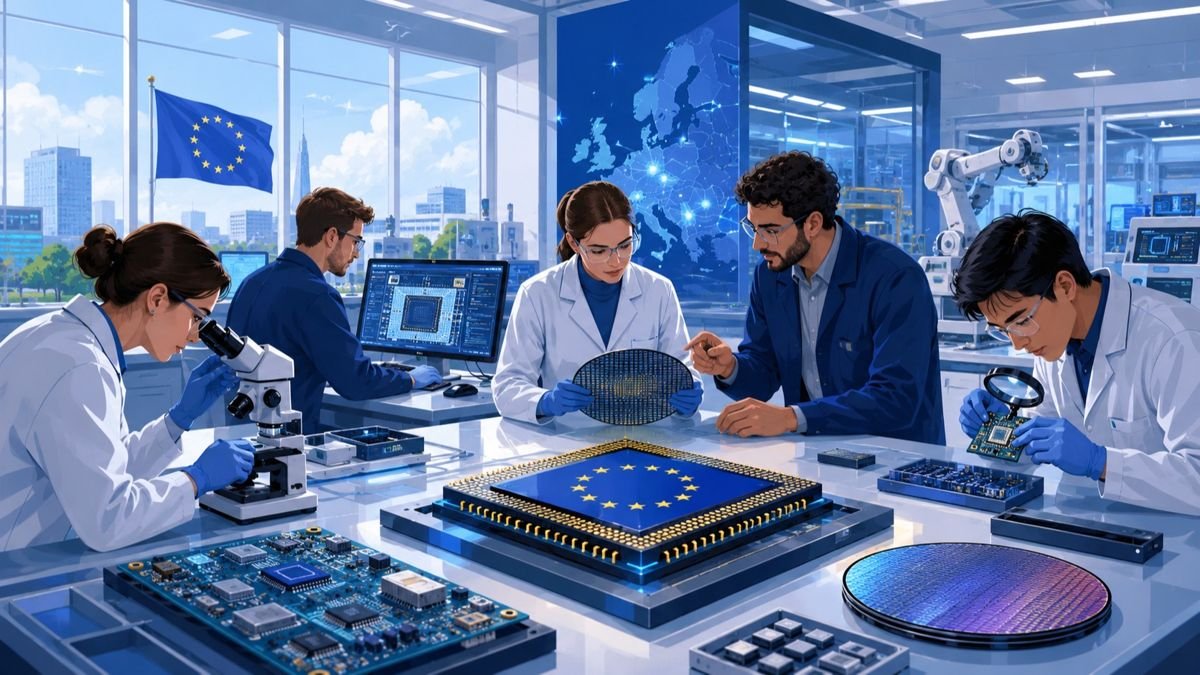
The Netherlands’ unique position as home to ASML, the world’s only manufacturer of extreme ultraviolet lithography machines essential for producing advanced semiconductors, gives it outsized influence in global technology supply chains. Dutch export controls on semiconductor equipment, coordinated with the EU and the United States, have become a critical lever in shaping the global technology landscape.
ASML’s EUV machines, each costing over €350 million and taking a year to assemble, remain the most sophisticated manufacturing tools ever built. The company’s headquarters in Veldhoven has become a pilgrimage site for world leaders seeking to understand — and secure access to — the future of computing.
As geopolitical tensions continue to reshape technology supply chains, the Netherlands’ role as a digital sovereignty leader appears set to grow. With its unique combination of infrastructure, industrial capability, and political commitment, the country is positioning itself at the centre of Europe’s technological future.