Nvidia and Google have both announced significant advances around AI reasoning, signaling a strategic pivot from simply making models faster to making them smarter. At separate events this week, the two tech giants laid out research breakthroughs and hardware roadmaps designed to push machines toward more human-like problem solving.
Nvidia details next generation GPU architecture for reasoning
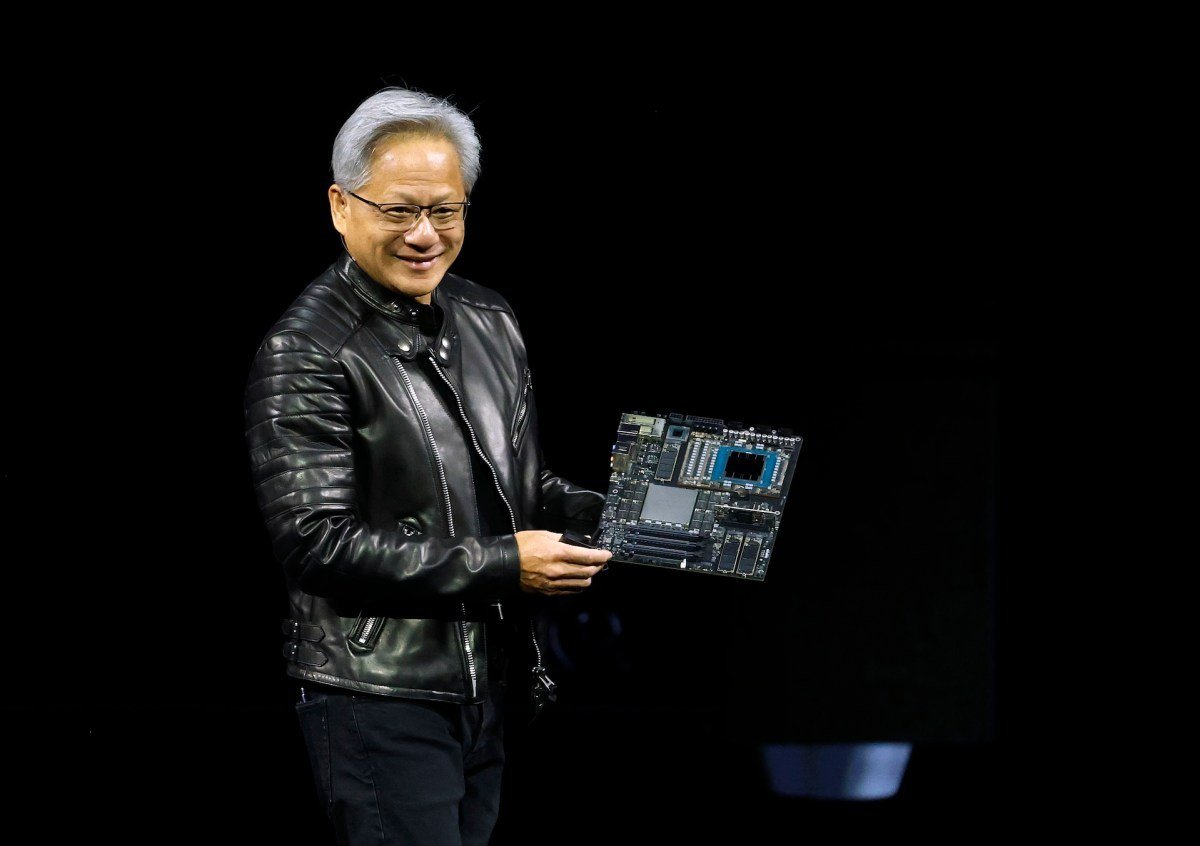
Nvidia used its annual GTC conference to unveil its next GPU architecture, code named Rubin. The company said the new design is specifically built to handle the intense computational demands of AI reasoning, where a model must evaluate multiple possibilities before returning a final answer. Nvidia chief executive Jensen Huang described reasoning as a fundamental shift in how AI is deployed, comparing it to a person working through a complex math problem step by step rather than blurting out the first thing that comes to mind.
The Rubin architecture will include dedicated circuits for attention mechanisms and sparse computation, two techniques central to modern large language models. Nvidia also revealed a new interconnect technology called NVLink 6 that will let multiple GPUs share memory and work on the same reasoning task simultaneously. The first Rubin based chips are expected to ship in late 2026.
Huang also showed off early results from internal Nvidia research on a technique called tree of thought reasoning. In this approach, a model generates several possible reasoning paths concurrently, using a scoring function to select the most promising route. Nvidia claims this mirrors the way an expert chess player examines multiple moves before choosing one. The approach, if widely adopted, could dramatically improve accuracy on tasks like medical diagnosis and legal analysis.
Google unveils Gemini reasoning model and new AI accelerator
On the same day, Google DeepMind published a research paper detailing its own reasoning breakthrough, a model called Gemini Pro 2. The system introduces a method the team calls chain of continuous thought, which lets the model maintain an internal monologue of intermediate steps even when processing images and video. Unlike earlier reasoning models that only worked on text, this version can, for example, watch a physics simulation and explain the forces at play step by step.
Google also announced a custom AI accelerator, the sixth generation Tensor Processing Unit, that it said is optimized for exactly this type of sequential reasoning workload. The chip features a new memory hierarchy that reduces the latency of reading intermediate results, which is critical when a model must pause to consider its next step. Google plans to deploy the TPU across its cloud data centers starting next quarter.
One of the more striking findings in the Google paper is a comparison showing that the chain of continuous thought approach requires less total computation than traditional methods that process the entire input at once. That efficiency gain could address one of the biggest criticisms of large AI models: their enormous energy consumption. Google researchers estimated that the new approach cuts per task energy use by as much as 40 percent on certain logic puzzles and mathematical proofs.
Industry observers see these announcements as a maturation of the AI field. For the past two years, the dominant narrative has been about building bigger models with more parameters. Now the focus is shifting toward making those models behave more like reasoning engines that can explain their conclusions. The implications extend beyond just technical benchmarks. In fields where errors carry high costs such as autonomous driving or medical imaging, the ability to reason through a problem could be the difference between a system that is merely impressive and one that is actually trustworthy.
The two companies are also signaling a change in how they will compete. Nvidia has long dominated the hardware for training AI models, but Google is now positioning its TPU line as a better fit for the inference and reasoning phase. For startups building on top of these platforms, the choice of chip may increasingly depend on which architecture best supports the reasoning techniques that researchers are still inventing. One thing is clear: the race for raw speed is giving way to a race for coherent thought. For more on how these developments affect early stage companies, read our analysis on Mylistingo.
The Netherlands, for internationals
One email a week: the week's news for internationals in the Netherlands, new practical guides and what changed in the cities. No spam, unsubscribe any time.