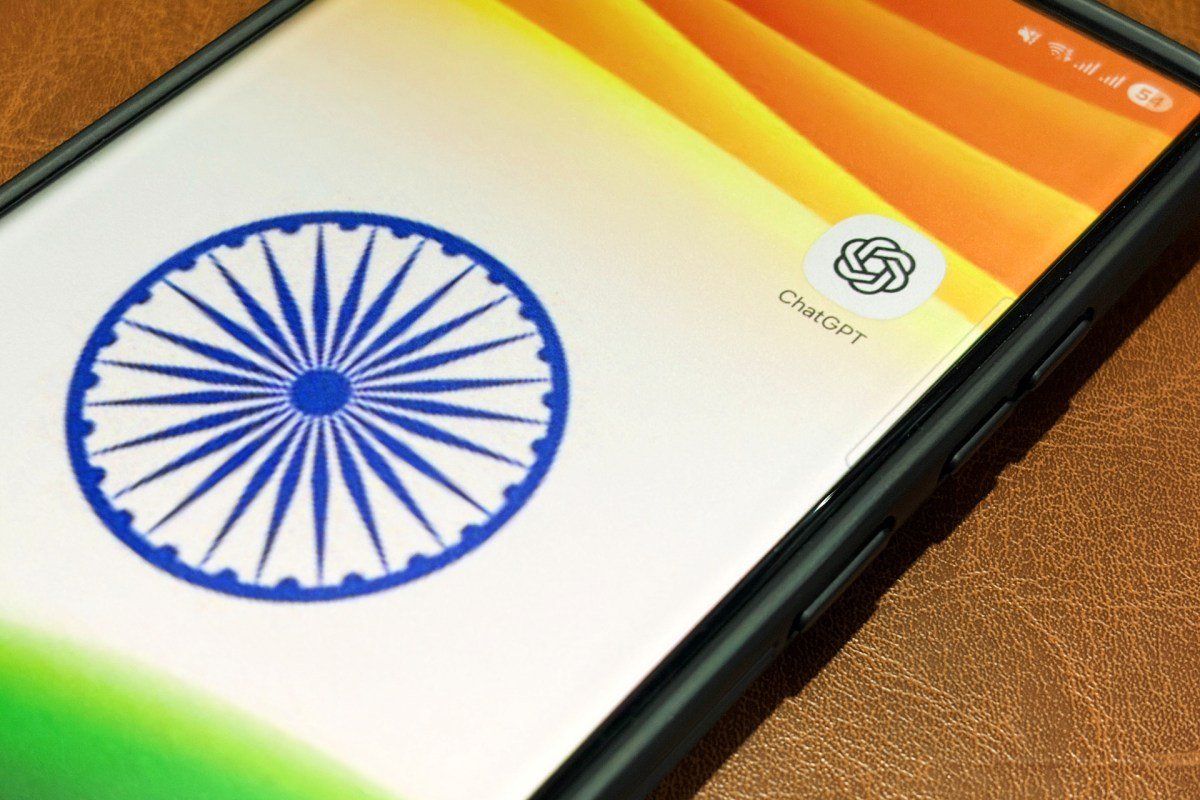
OpenAI is about to do something it has spent three years avoiding. Ads are coming to ChatGPT, and India is where the experiment begins.
The company confirmed it will start showing advertising to users on ChatGPT’s free tier and its lower-priced Go plan in India, the first time the assistant that reshaped how millions of people search, write, and code will carry commercial messages alongside its answers. For a product that has cultivated an image of clean, uncluttered utility, this is a meaningful shift, and the choice of market says a great deal about where OpenAI thinks its next chapter gets written.
Why India, and why now
India has become one of ChatGPT’s largest and fastest-growing audiences. OpenAI counts more than 100 million weekly active users in the country, a staggering figure for a market where the company has invested heavily in local relevance. A huge chunk of those users sit on the free tier or the cheaper Go plan rather than the pricier subscriptions that generate most of OpenAI’s consumer revenue elsewhere.
That imbalance is the whole story. Serving a hundred million people every week costs real money, and inference at that scale is not cheap. When most of your users are paying little or nothing, you need another way to make the arithmetic work. Advertising is the oldest answer in the consumer internet playbook, and OpenAI is now reaching for it in the market where the gap between usage and revenue is widest.
There is a strategic logic here beyond simple cost recovery. India is a price-sensitive market where free and low-cost products win, and where the ad-supported model has long underpinned everything from search to streaming to messaging. If OpenAI wants to keep those 100 million weekly users engaged without pushing them toward a subscription many will never buy, ads let it monetize the audience it already has rather than shrinking it.
The tension inside a chat assistant
Putting ads inside ChatGPT is trickier than slotting a banner onto a webpage. People come to the assistant for direct answers, and the trust in those answers depends on a sense that the model is responding to them, not to a sponsor. The moment a recommendation looks like it was bought, the value proposition starts to wobble.
OpenAI has not detailed exactly how the ads will appear or how aggressively they will show up, and that restraint matters. Get the format wrong and you erode the very engagement that makes the audience worth monetizing. Get it right and you build a second revenue engine that runs alongside subscriptions without cannibalizing them. Every consumer AI company watching this rollout knows the same thing: the design of the ad unit is the design of the business.
Confining ads to the free and Go tiers is telling. Paying subscribers on higher plans are, for now, spared. That draws a clean line between the customers who fund the product with cash and those who will increasingly fund it with attention, a split that mirrors how much of the internet already works.
A test case the whole industry is watching
What happens in India will not stay in India. OpenAI is treating this as a live experiment in one of its biggest markets, and the results will shape whether ads spread to free users elsewhere. If Indian users tolerate the format and advertisers see returns, the model becomes a template. If engagement dips or the experience feels compromised, it becomes a cautionary tale that other AI firms will study closely before making the same move.
The stakes reach beyond OpenAI. Rivals building free consumer AI face the identical economics, huge audiences and thin monetization, and most have avoided the ad question rather than answering it. By moving first in a market this large, OpenAI is effectively running the experiment on behalf of the entire category. Its competitors get to learn from the outcome without spending their own credibility to find out.
For hundreds of millions of people who have come to treat ChatGPT as a default tool, the change also marks a quiet turning point. The free version was never truly free, of course; someone was always paying to keep the servers running. Now the bill arrives in a more familiar form.
Watch how the ads are built, how users react, and how quickly the model migrates to other regions. OpenAI has spent years insisting ChatGPT was a product, not a media property. India is where that distinction starts to blur, and the answers it produces there will tell us what kind of company OpenAI intends to become.
For more coverage of OpenAI and the business of consumer AI, visit Mylistingo.
Source: Original Article
The Netherlands, for internationals
One email a week: the week's news for internationals in the Netherlands, new practical guides and what changed in the cities. No spam, unsubscribe any time.